
Asteia amoena
Asteia amoena
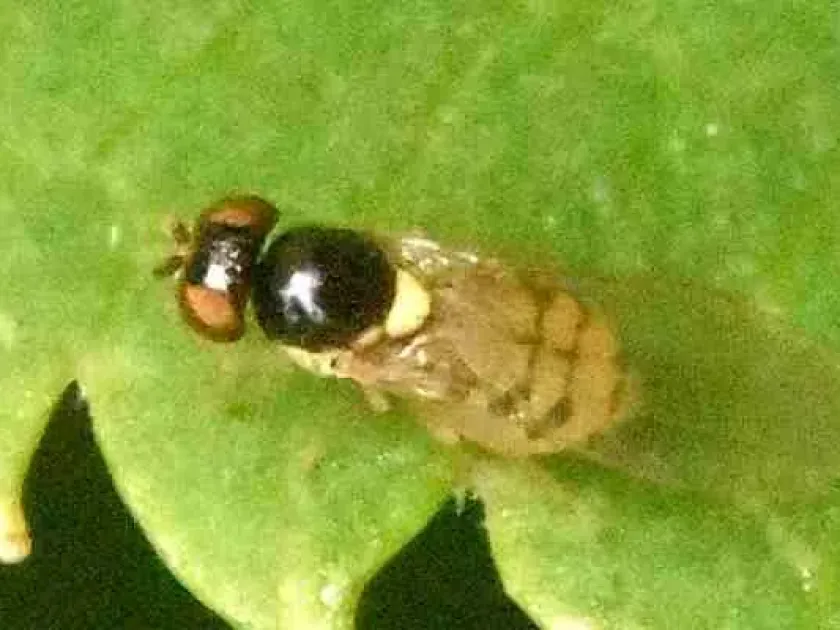
Description
How to identify
Asteia amoena is a small fly belonging to the family Asteiidae. These insects are known for their delicate bodies and specific wing venation patterns that help in accurate species identification.
The adult flies are minute, often overlooked by casual observers due to their small size and cryptic habits. They are most active during warm periods of the growing season.
The larval stage is responsible for the damage, as they reside within the plant tissues, specifically targeting the parenchyma cells of the leaves.
Their life cycle consists of a complete metamorphosis: egg, three larval instars, pupa, and adult, all of which are adapted to specific host plant environments.
Correct identification often requires expert analysis to distinguish this species from other common leaf-mining flies that occupy similar ecological niches.
What it damages
The primary damage caused by Asteia amoena involves the destruction of leaf tissues, which significantly impairs the photosynthetic capacity of the host plant.
Infestations are frequently found on various ornamental plants and certain vegetables, where the larvae mine through the foliage, creating distinct tunnels.
This feeding behavior causes the leaves to lose vigor, leading to yellowing, browning, and eventually premature abscission of the affected plant parts.
Beyond direct tissue destruction, the mining activities create entry points for secondary pathogens, such as fungi and bacteria, which can exacerbate the damage.
High population densities can cause significant stress to young plants, potentially resulting in stunted growth and a considerable reduction in final crop yield.
Signs of infestation
The most prominent sign of infestation is the appearance of winding, pale-colored mines on the leaves, which eventually turn brown as tissues die.
Affected leaves often exhibit curled or shriveled edges, and the overall plant canopy may show signs of thinning due to premature leaf drop.
Upon closer inspection, one might see small puparia attached to the surface of the leaves or hidden within the damaged necrotic areas of the foliage.
In cases of heavy infestation, stem integrity may be compromised, especially in tender herbaceous plants where larvae might also explore stems.
Adult flies are often observed hovering around the foliage or resting on the undersides of leaves during the early morning hours before they become most active.
Control measures
Effective management of Asteia amoena relies on an integrated pest management strategy that combines cultural practices with targeted chemical applications.
Sanitation is critical; all plant debris should be cleared and disposed of properly to eliminate overwintering sites for the pupae of this species.
Systemic insecticides are generally the most effective control method, as they are absorbed by the plant and reach the larvae feeding protected inside the leaves.
Environmental control in greenhouses, such as maintaining appropriate humidity and ventilation, can create unfavorable conditions for the fly's development.
- Deployment of sticky traps for monitoring and reducing adult populations.
- Implementation of crop rotation to break the pest's reproductive cycle.
- Encouraging natural predators and parasitoids that target dipteran larvae.
Taxonomy
- Latin name
- Asteia amoena
- Order
- Diptera (flies)
- Family
- Asteiidae
- EPPO code
- ASTIAM
Discussion
No discussions yet — be the first.