
Asteia
Asteia
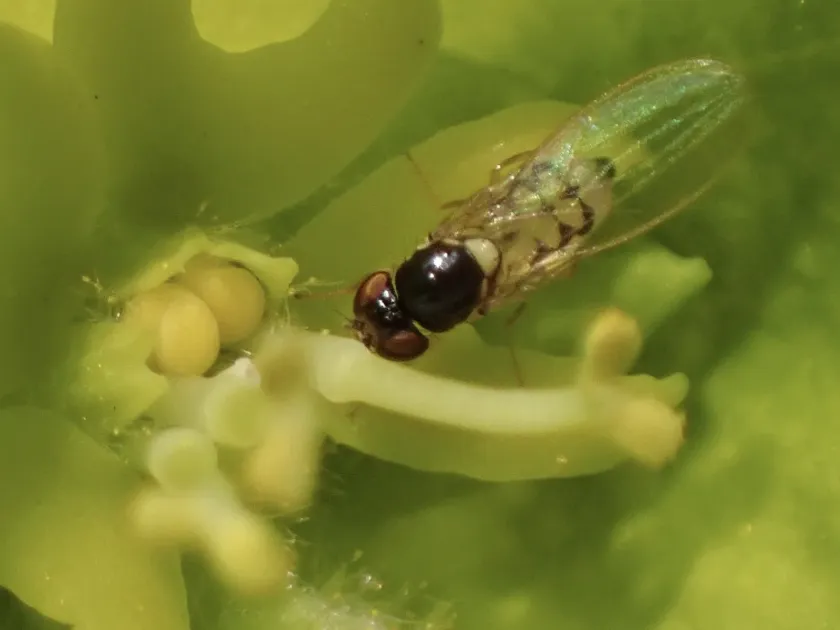
Description
How to identify
Asteia is a genus of small flies belonging to the family Asteiidae within the order Diptera. These flies are typically minute, ranging from 2 to 3 mm in length, which makes them difficult to observe under field conditions.
The morphology of these insects includes relatively clear wings and a generally light-colored body. Their tiny size is a significant challenge for farmers attempting to monitor populations without specialized trapping equipment.
Taxonomically, they are part of a family known for having diverse, albeit under-researched, species. Most adults are attracted to flowers or decaying organic matter, where they feed and reproduce.
Identification often requires careful inspection under a microscope, focusing on wing venation patterns. It is easy to mistake them for other small dipterans if the specific diagnostic features are not examined properly.
While populations of Asteia are often sporadic, they can thrive in stable environments. Understanding their preference for humid and sheltered habitats is key to predicting their potential presence in a greenhouse or orchard.
What it damages
The Asteia fly primarily impacts decorative plants and certain vegetable crops. The larvae cause damage by burrowing into the stem or leaf tissues, where they feed on the plant's internal fluids.
Infested plants often display reduced growth rates and stunted development. The structural damage caused by feeding leads to tissue weakening, making the plant more susceptible to environmental stress.
A significant risk associated with Asteia is the introduction of secondary infections. As the larvae tunnel through the plant, they create pathways for various bacterial and fungal pathogens to invade.
Damage is particularly severe in greenhouse environments where the fly can complete multiple generations undisturbed. Yield losses occur not only from direct tissue damage but also from the overall decline in plant health.
In many cases, the damage caused by Asteia is subtle in the early stages, often being confused with nutritional deficiencies or other minor agricultural pests.
When it appears
The active period for Asteia typically begins in mid-to-late spring. Warm temperatures are essential for the development of larvae and the maturation of adult flies.
Summer months are the peak period for infestation, especially in fields with dense foliage that provides shelter. Multiple generations can occur during a single season under favorable conditions.
In protected cultivation, such as greenhouses, Asteia can remain active throughout the winter if the climate is maintained at suitable temperatures, effectively bypassing natural seasonal dormancy.
Monitoring should intensify when temperatures consistently rise above 15°C. Using yellow sticky traps during this window is highly effective for detecting the first sign of adult activity.
As autumn approaches and temperatures drop, the population naturally declines. The insects enter a period of dormancy, usually as pupae, to survive the winter before resuming their life cycle.
Signs of infestation
The most visible signs of an infestation include small necrotic spots on the leaves. These often evolve into larger patches if the larvae continue their feeding activity within the leaf blade.
Leaf curling and deformation are common symptoms, particularly near the growing tips of the plants. This is often an indication that larvae are present in the stem or meristematic tissues.
Microscopic examination of the underside of the leaves may reveal tiny black spots, which are the excrement of the larvae. This is a reliable diagnostic sign for active infestations.
Chlorosis, or yellowing of the leaves, is another frequent sign caused by the impairment of the plant's vascular system due to larval burrowing and feeding damage.
If an infestation is suspected, gently shaking the foliage during the early morning can reveal the presence of adult flies as they take flight, providing a clear indication of a localized population.
Control measures
Management strategies for Asteia focus on cultural and physical control methods. Clearing away crop residues is crucial for breaking the life cycle and removing overwintering sites.
In greenhouses, installing screens on ventilation openings effectively blocks the entry of adult flies from the outside environment, significantly reducing the pressure on the crop.
Biological control methods, including the use of entomopathogenic fungi or predatory insects, can effectively suppress Asteia populations without the use of harsh chemicals.
Chemical intervention should be reserved for outbreaks that exceed economic thresholds. It is essential to choose systemic insecticides and rotate products to prevent the development of insecticide resistance.
- Maintain good field sanitation by removing weeds.
- Ensure optimal greenhouse humidity and ventilation.
- Use yellow sticky traps for regular population monitoring.
- Apply systemic insecticides only when necessary and according to label instructions.
Taxonomy
- Latin name
- Asteia
- Order
- Diptera (flies)
- Family
- Asteiidae
- EPPO code
- ASTISP
Discussion
No discussions yet — be the first.