
Shirabudin thrips
Ascirtothrips shirabudinensis
Description
How to identify
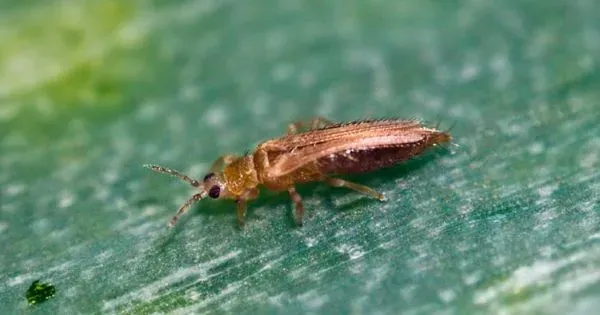
The Shirabudin thrips (Ascirtothrips shirabudinensis) belongs to the order Thysanoptera and the family Thripidae. These are minute, slender insects, typically measuring 1 to 1.5 millimeters in length, characterized by their light yellow to brownish coloration.
Identifying this species requires microscopic examination of structural features, specifically the morphology of the antennae and the wing venation patterns. Females are generally larger than males and possess a specialized ovipositor designed for inserting eggs into plant tissues.
What it damages
This pest primarily attacks a variety of vegetable and cucurbit crops. Significant economic losses have been recorded in melons, watermelons, and squashes, as well as several species of Solanaceae found in the Central Asian regions.
The insects feed by piercing the plant epidermis and sucking the cell sap. This feeding behavior disrupts essential physiological processes, including photosynthesis and transpiration, leading to stunted plant growth and overall reduced plant vigor.
When it appears
The biological cycle of the Shirabudin thrips is closely tied to environmental temperature. Being a thermophilic species, it thrives during the peak growing season when temperatures are optimal for rapid egg-laying and larval development.
The life cycle encompasses several stages: egg, two larval instars, prepupa, pupa, and adult. Due to favorable climate conditions, the insect can complete multiple generations within a single season, leading to rapid population growth on infested crops.
Signs of infestation
The initial signs of infestation include the appearance of silvery or pale spots on the leaves, which eventually coalesce into a mottled appearance. Affected tissues eventually dry out, curl up, and undergo premature senescence.
Careful inspection of the leaf undersides often reveals the presence of adult insects or small black spots, which are the excrement of the thrips. In severe cases, the damage extends to flower buds and developing fruit, causing significant deformation.
Control measures
Effective management requires an integrated approach, starting with robust agronomic practices such as strict crop rotation and the elimination of weeds that serve as alternative hosts for the pest population.
During outbreaks, chemical control using systemic or contact insecticides is necessary. It is crucial to rotate active ingredients to prevent the development of pesticide resistance and to ensure thorough coverage of the canopy for the best results.
Taxonomy
- Latin name
- Ascirtothrips shirabudinensis
- Order
- Thrips
- Family
- Thripidae
- EPPO code
- ANAPSH
Discussion
No discussions yet — be the first.