
African grass mouse
Arvicanthis
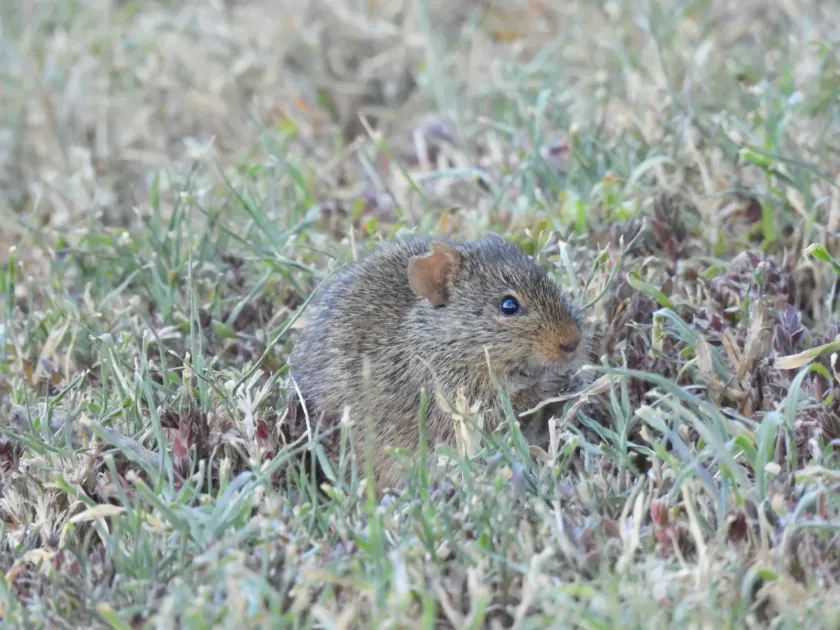
Description
How to identify
The African grass mouse (genus Arvicanthis) is a member of the Muridae family. These are diurnal rodents with a sturdy, thick-set appearance, characterized by coarse, grizzled fur with a distinctive speckled pattern.
Adult individuals grow up to 18 cm in length, possessing relatively short tails compared to other mouse species. They are highly social animals, often living in large colonies that build complex burrow systems or inhabit dense vegetation.
Equipped with sharp eyesight and rapid reflexes, these rodents are active during the day, which helps them evade predators in open agricultural landscapes. Their high adaptability makes them dominant competitors in many environments.
The biological cycle of the Arvicanthis species is heavily dependent on the availability of green forage and seeds. They can rapidly adjust their reproductive rates to environmental conditions, leading to sudden population booms.
Breeding is often year-round where climate and food sources allow. A high litter frequency allows these rodents to colonize large tracts of agricultural land in very short time frames, causing substantial economic losses.
What it damages
These rodents are major pests for grain crops, including wheat, rice, maize, and millet. They are particularly destructive during the grain filling and ripening stages, causing direct crop loss.
Beyond grains, they feed on legumes, vegetables, and the tender bark of young saplings. This feeding behavior can lead to the death of young orchard trees, requiring replanting and increased labor costs.
African grass mice do not just consume crops; they are notorious for hoarding large amounts of grain in their burrows. This behavior compounds the damage as they remove harvestable yields directly from the fields.
By consuming seeds before or during germination, they reduce crop density significantly. This uneven field coverage often forces farmers to perform resowing, which delays growth and increases overall production expenses.
The presence of mouse colonies creates bare patches in fields where vegetation has been consumed or trampled. These areas are prone to weed encroachment, which further reduces the competitive potential of the cultivated crop.
Signs of infestation
The most visible sign of an infestation is the presence of numerous burrow entrances clustered in specific areas. Debris from feeding and droppings are typically found around these burrow openings.
Well-worn paths or runways through dense vegetation are clear indicators of rodent activity. These trails facilitate movement between nesting sites and feeding grounds, becoming more prominent as the season progresses.
Damaged crops exhibit cleanly cut stems or grain husks with missing contents. Unlike insect damage, the gnaw marks left by rodent incisors are distinct and visible on plant tissues.
Observing the mice actively foraging during daylight hours is a strong signal of high population density. Frequent sightings suggest that the colony size exceeds the threshold for immediate control intervention.
In and around storage facilities, look for gnawed bags, spilled grain, and a musky, distinctive odor associated with heavy rodent traffic. Such signs necessitate immediate sanitary and deratization actions.
Control measures
Deep tillage is an effective cultural control method that destroys burrow systems and disrupts nesting sites. Maintaining clean field margins by removing excessive weeds reduces cover for the rodents.
Chemical control involving the use of rodenticides in bait stations is often necessary during peak population growth. Proper placement ensures that baits are consumed by pests while minimizing risks to non-target wildlife.
Effective farm management includes rapid harvesting to minimize the duration that crops are vulnerable. In some cases, physical barriers or protective fencing can be installed to safeguard high-value small-scale crops.
Biological control methods focus on fostering populations of natural predators such as owls, hawks, and snakes. Installing perches for raptors provides an eco-friendly way to manage rodent populations over large areas.
Continuous monitoring of the rodent population is crucial for timely action. Implementing a comprehensive strategy that combines preventive cultural techniques and targeted control is essential for successful protection.
Taxonomy
- Latin name
- Arvicanthis
- Order
- Rodents
- Family
- Muridae
- EPPO code
- ARVISP
Discussion
No discussions yet — be the first.