
Florida leaf weevil
Artipus floridanus
Description
How to identify
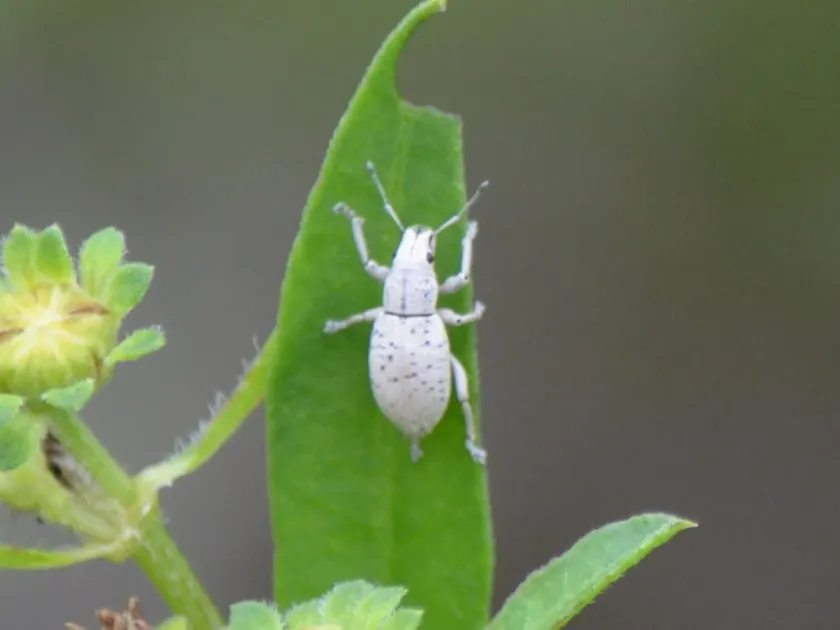
The Florida leaf weevil, scientifically known as Artipus floridanus, is a member of the Curculionidae family. These insects are easily recognized by their elongated snouts and hard, chitinous exoskeletons.
Adults are typically 7 to 9 mm in length and feature a pale gray or off-white coloration, often covered in minute scales that help them blend in with the bark of host trees.
The larvae are legless, C-shaped, and creamy white, commonly found residing in the soil. They possess a hardened brown head capsule designed for feeding on the roots of various plants.
The lifecycle consists of four stages: egg, larva, pupa, and adult. The insect typically undergoes metamorphosis within the soil profile, making it a challenging pest to target during its developmental stages.
Florida leaf weevils are particularly adapted to warm climates, where they can maintain multiple generations throughout the year, especially in regions with consistent irrigation and mild winters.
What it damages
This weevil is a significant agricultural pest, particularly for citrus growers. It attacks both the foliage and the root system, causing a dual impact on the health of the host plant.
Other than citrus, the weevil is known to infest ornamental plants like hibiscus, avocado, and various shrubs, making it a concern for nurseries and residential landscaping alike.
Larval feeding on the roots reduces the plant's nutrient and water uptake capacity. This can result in general plant stress, stunted growth, and increased susceptibility to soil-borne diseases.
Adult weevils feed on the leaves, creating jagged, irregular margins. This type of damage, known as "leaf notching," can significantly decrease the photosynthetic surface area if the infestation is severe.
Young trees are especially vulnerable to this pest. If left untreated, severe root damage can lead to the death of the tree, causing substantial economic losses in commercial fruit production.
Signs of infestation
The most distinctive sign of a Florida leaf weevil infestation is the characteristic notched pattern on the edges of the leaves, where adults have been feeding.
Adults are often spotted on the leaves or stems during the day. When disturbed, they typically exhibit a defense mechanism of dropping to the ground and feigning death, which makes them easy to miss.
In cases of severe root infestation, trees may exhibit signs of wilting even when soil moisture is adequate. Yellowing or thinning of the canopy is also a common symptom of damaged root systems.
During soil examination, small white larvae can be found near the root zone. Their presence is a clear indicator that the population cycle is well-established in the area.
Increased presence of ants or other insects in the canopy may sometimes correlate with leaf damage, as the weakened state of the plant makes it more vulnerable to secondary pest colonization.
Control measures
Effective management requires an integrated pest management (IPM) approach. Foliar applications of contact insecticides are recommended to target adult weevils during their period of peak activity.
Soil-applied systemic insecticides or biological agents like entomopathogenic nematodes can be utilized to manage the larval population within the soil environment, preventing further root damage.
Cultural practices, such as maintaining a weed-free area around the base of the tree, can help reduce the suitability of the environment for the weevil's egg-laying and larval survival.
Sticky bands or mechanical barriers applied to the trunks of young trees are highly effective in preventing adults from migrating into the canopy after emerging from the pupal stage in the soil.
Regular monitoring using bait traps or visual inspection of leaf edges allows for timely intervention, ensuring that population numbers remain below the economic injury threshold throughout the season.
Taxonomy
- Latin name
- Artipus floridanus
- Order
- Coleoptera (beetles)
- Family
- Curculionidae
- EPPO code
- ARTPFL
Discussion
No discussions yet — be the first.