
Arthroplea
Arthroplea
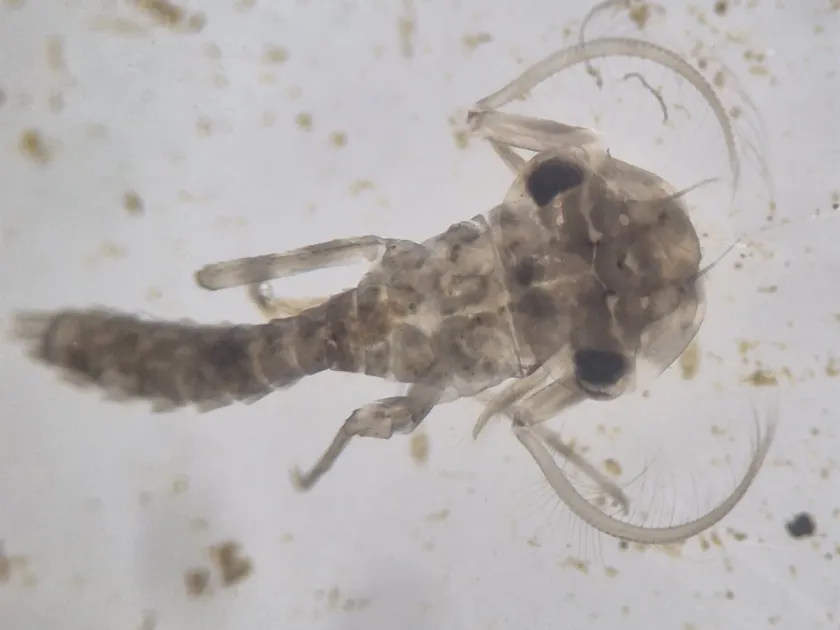
Description
How to identify
Arthroplea (Arthroplea congener) is a unique insect belonging to the order Ephemeroptera (mayflies), specifically the Heptageniidae family. Adult specimens are characterized by fragile bodies, translucent wings, and elongated caudal filaments.
The larvae of this genus are specialized for aquatic life. They possess distinct gill plates on the sides of their abdomen, which allow them to efficiently absorb dissolved oxygen in various aquatic environments.
Identifying this species in the field is challenging due to the high morphological similarity with other mayfly species. Specialists often rely on detailed microscopic analysis of the mouthparts and gill morphology for accurate species identification.
It is important to note that Arthroplea does not possess the chewing mouthparts required to consume terrestrial plant tissues, as their entire lifecycle is tied to water bodies.
Adult mayflies have a very short lifespan, often lasting only a few days, as their sole biological purpose is reproduction, and they do not interact with crops.
What it damages
Arthroplea is not classified as a pest of agricultural crops. These insects do not consume leaves, roots, stems, or fruits, and therefore do not cause any direct economic losses to farmers.
There are no documented instances in agricultural literature where this genus has acted as a pest. Conversely, their presence is often viewed as a positive indicator of water quality in nearby irrigation reservoirs.
Larvae primarily consume detritus, organic matter, and microscopic algae found on rocks and aquatic plants, playing a vital role as primary consumers in the aquatic food web.
Any interaction with cultivated plants is purely coincidental. Adults may occasionally land on vegetation near the water's edge, but they do not cause any harm to the plants' integrity.
Agronomists and ecologists consider this genus a beneficial part of the ecosystem, contributing to the stability of the local biodiversity and nutrient cycling.
When it appears
The mass emergence of adult Arthroplea typically occurs in late spring or early summer, synchronized with water temperature conditions that favor their metamorphosis.
The larval stage is the most significant phase, often spanning most of the year, which allows the species to adapt to seasonal changes in water conditions.
The activity of adult insects is short-lived and highly sensitive to environmental factors like air humidity and wind speeds, which are critical for their flight and mating rituals.
The timing of their emergence may occasionally coincide with the peak growing season of certain crops, leading to common misconceptions regarding their role in the field.
The distribution of this species is strictly limited to riparian zones and nearby water sources, preventing any large-scale encroachment onto agricultural fields.
Signs of infestation
The most prominent sign of their presence is the discovery of exuviae (cast-off larval skins) left behind on rocks or plant stems along the banks of water bodies after the adults emerge.
During the evening, one might observe the mating flights of adults above the water surface, which are harmless to the surrounding agriculture.
The absence of typical pest damage, such as leaf perforation, skeletonization, or wilting, confirms that this species has no negative impact on plant health.
There are no traces of fecal matter or feeding marks on the foliage near water sources, further distinguishing them from real agricultural pests.
No diagnostic monitoring is required for this species, as it represents no threat to the commercial production of any crops.
Control measures
No control measures are necessary for Arthroplea. Any attempt to manage this species would be irrational and detrimental to the ecological balance of the water source.
The application of insecticides near water bodies should be avoided to protect the environment and beneficial aquatic organisms that share the habitat with Arthroplea.
Proper maintenance of irrigation ditches and preservation of riparian habitats help ensure the health of these natural populations.
Since this species does not negatively affect crop productivity, there is no agronomic or economic justification for implementing any eradication methods.
The best strategy is to leave these populations undisturbed, as they serve as natural indicators of environmental health and are not considered pests in any context.
Taxonomy
- Latin name
- Arthroplea
- Family
- Arthropleidae
- EPPO code
- ARPLSP
Discussion
No discussions yet — be the first.