
Arrhopalites
Arrhopalites
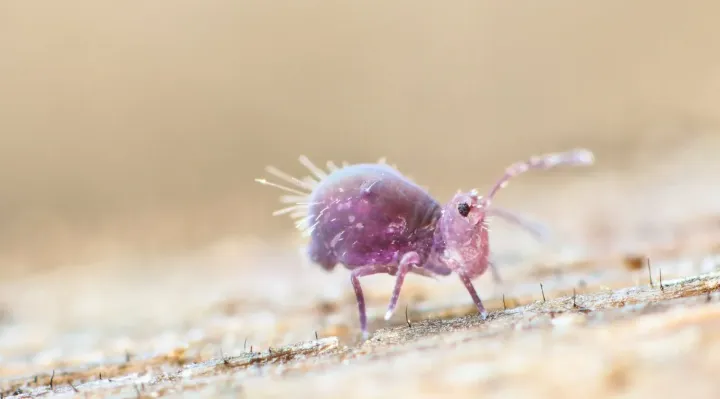
Description
How to identify
Arrhopalites is a genus of springtails (Collembola) belonging to the family Arrhopalitidae. These tiny arthropods are often mistaken for harmless organisms due to their microscopic size and cryptic behavior.
Adult specimens are characterized by a globular body shape, earning them the nickname "globular springtails." Their coloration varies from pale white to yellowish or even dark shades, depending on the environment.
They possess a specialized abdominal organ called a furcula, which allows them to perform rapid jumps when threatened. Typically, their body length ranges from 0.5 to 2 mm, making them hard to spot without a magnifying glass.
The biology of Arrhopalites is closely tied to high humidity levels. They thrive in soil substrates rich in organic matter, preferring environments with decomposing plant debris.
Their life cycle includes several molting stages and incomplete metamorphosis. Populations can grow exponentially in warm, constantly wet conditions often found in greenhouses or indoor pots.
What it damages
Arrhopalites primarily damage young plants, seedlings, and nursery stock in protected environments. They pose the greatest threat to weak or vulnerable plants with compromised immune systems.
While they naturally feed on organic matter, they will turn to young roots, cotyledons, and stems when food is scarce. They cause mechanical tissue damage that leaves plants vulnerable to secondary invaders.
They represent a major threat to vegetable seedlings such as cucumbers, tomatoes, and cabbage. In cool, wet conditions, they can completely destroy young sprouts in seed trays.
In ornamental horticulture, plants like African violets, orchids, and others requiring consistently moist media are highly susceptible. Root damage often leads to stunting and pathogen entry.
The presence of these pests is usually a strong indicator of poor cultural practices, specifically excessive watering and poor drainage, which foster a perfect breeding ground.
Signs of infestation
The most common sign of infestation is observing tiny, jumping organisms on the soil surface or in drainage saucers immediately after watering. They tend to float to the surface when soil is saturated.
Plant symptoms include stunted growth, yellowing of lower leaves, and wilting despite adequate moisture. This indicates significant root system impairment preventing normal nutrient uptake.
Characteristic signs include small, irregular feeding lesions on stems where they touch the soil. In severe cases, the plant collar may be entirely girdled, leading to death.
A specific layer or film on the soil surface is often associated with high springtail activity. High moisture and stable temperatures are the key triggers for visible population spikes.
Feeding marks on leaves that touch the damp soil are another indicator of Arrhopalites presence, especially in seed germination chambers or humid indoor settings.
Control measures
The first step in management is to adjust the watering regime. Ensuring that the top layer of soil dries out between waterings is often sufficient to significantly reduce population numbers.
Replacing the top layer of substrate with fresh, sterilized sand helps disrupt the life cycle, as it creates an inhospitable environment for movement and reproduction.
In cases of heavy infestation, systemic insecticides (such as imidacloprid-based products) can be used as a soil drench. Always apply to damp soil to protect the root system from potential chemical burn.
Biological control methods are highly effective, including the use of entomopathogenic fungi or predatory mites that naturally predate on springtails in the soil.
- Improve soil aeration through regular light cultivation.
- Use sterile, high-quality potting mixes.
- Remove excess plant debris from the surface of pots.
Taxonomy
- Latin name
- Arrhopalites
- Family
- Arrhopalitidae
- EPPO code
- ARRTSP
Discussion
No discussions yet — be the first.