
Arixyleborus rugosipes
Arixyleborus rugosipes
Description
How to identify
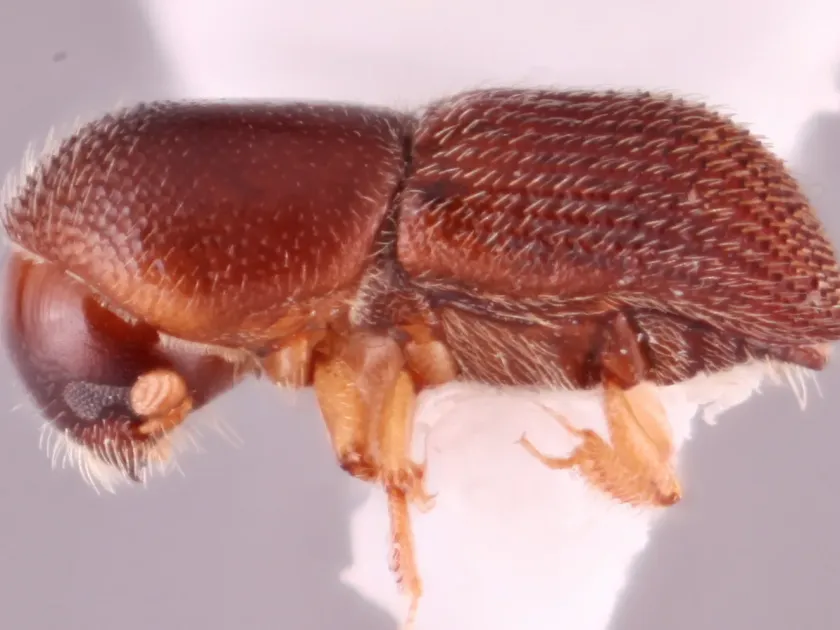
Arixyleborus rugosipes is a species of bark and ambrosia beetle belonging to the Curculionidae family, subfamily Scolytinae. These small, cylindrical beetles are specialized wood-borers that play a significant role in forest ecology and timber damage.
The morphology of the beetle is adapted for a tunneling lifestyle. The species name rugosipes refers to the distinctively rugose or rough structure on their legs, which is a key diagnostic feature used by entomologists during classification.
Like other ambrosia beetles, this species maintains a complex symbiotic relationship with specific fungi. The adults possess mycangia—specialized organs used to transport fungal spores to new host trees, ensuring a steady food supply for their future offspring.
Taxonomically, the identification of Arixyleborus rugosipes requires careful examination of pronotal characteristics and elytral declivity. Due to the high diversity within the genus, accurate species determination often involves expert analysis.
These insects are primarily found in tropical and subtropical climates where high humidity supports the vigorous growth of the ambrosia fungi that are essential for the survival of the beetle larvae.
What it damages
The beetle primarily attacks weakened, stressed, or recently felled timber. By boring deep radial galleries into the wood, they compromise the structural integrity of the log and promote the degradation of timber quality.
The damage caused by Arixyleborus rugosipes is twofold: mechanical damage from the galleries themselves and biological damage caused by the symbiotic fungi. These fungi colonize the tunnel walls, causing dark staining that significantly devalues the wood.
In high-density infestations, the cumulative damage can lead to the death of young saplings, especially if they are already under environmental stress, such as drought or nutritional deficiency.
The galleries serve as entry points for a variety of secondary pathogens, including bacteria and other wood-decaying fungi. This complex of secondary infections often accelerates the deterioration of the host plant significantly.
The economic impact is most severe in the forestry industry, where infested timber loses its commercial value due to the presence of beetle holes and fungal staining, rendering it unsuitable for high-quality furniture or construction use.
When it appears
In its native tropical range, the beetle can remain active throughout the year, provided that temperatures and moisture levels are favorable. The activity cycles are closely linked to the availability of suitable host material.
The flight periods of adult beetles often peak after the rainy season, which is when the beetles disperse to colonize new trees. During this time, they are highly sensitive to chemical cues emitted by distressed plants.
Developmental temperatures for Arixyleborus rugosipes typically range between 25°C and 30°C. Within this range, the life cycle from egg to adult is relatively rapid, allowing for multiple generations per year.
The life cycle is entirely internal, with the exception of the brief adult dispersal phase. This makes the population dynamics highly dependent on the survival rates of the larvae protected deep within the xylem.
Integrated pest management programs monitor the season of activity using ethanol-baited traps. These traps provide crucial data on the population density and help predict when preventive measures should be implemented.
Signs of infestation
The most visible sign of an active infestation is the presence of fine wood dust, often called "boring dust," accumulating on the bark surface or around the base of the tree near the entry points.
Small, circular entrance holes appear on the surface of the trunk. In some species, these may be accompanied by resin or gum exudation if the tree is attempting to repel the beetle by flushing the tunnels.
If a cross-section of infested wood is examined, one can observe dark, stained radial tunnels. These tunnels are often blackened by the growth of the symbiotic fungus that the beetles introduce into the galleries.
Signs of systemic stress in the tree, such as premature yellowing of leaves, branch dieback, or loss of turgor, may indicate a heavy infestation that has disrupted the tree’s water-conducting tissues.
While external signs are often minimal in the early stages, the sound of movement or the fine dust deposits are often the first indicators that a tree has been colonized by the beetle population.
Control measures
Effective management begins with strict forest hygiene. Removing infested timber immediately and preventing the accumulation of logs in the field is the most reliable way to disrupt the beetle’s reproductive cycle.
Chemical control usually involves the application of insecticide sprays to the bark. This is only effective when applied just before or during the peak flight season to prevent the beetles from successfully initiating new galleries.
Promoting the overall health and vigor of forest stands through proper thinning and nutritional support makes trees less attractive and more resistant to beetle colonization.
- Placement of ethanol or pheromone-baited traps.
- Sanitary logging of heavily infested trees to reduce population pressure.
- Strategic timing of harvesting to avoid beetle flight seasons.
Biological control methods are still being researched and include the use of natural predators and parasitoids that target the beetles within the wood, though success in large-scale plantations remains a challenge.
Taxonomy
- Latin name
- Arixyleborus rugosipes
- Order
- Coleoptera (beetles)
- Family
- Curculionidae
- EPPO code
- ARXYRU
Discussion
No discussions yet — be the first.