
Arixyleborus mediosectus
Arixyleborus mediosectus
Description
How to identify
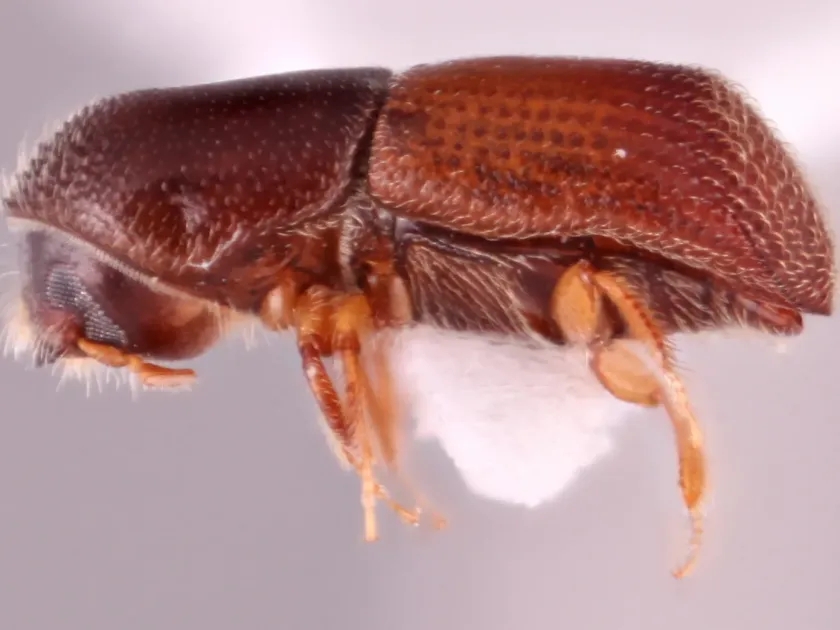
Arixyleborus mediosectus is a small species of beetle belonging to the subfamily Scolytinae (bark and ambrosia beetles) within the family Curculionidae. These insects are classified as ambrosia beetles due to their unique symbiotic relationship with fungi.
The adult beetle possesses a cylindrical, dark-colored body, which is structurally adapted for traversing narrow tunnels bored into the woody tissue of host trees.
The life cycle of this beetle is intrinsically linked to the fungus they cultivate. Adult females carry fungal spores in specialized structures known as mycangia, ensuring the inoculation of new galleries.
Their population dynamics are heavily dependent on environmental humidity and the physiological state of the host tree, as the fungi require specific conditions to thrive within the tunnels.
Accurate identification requires microscopic examination or analysis of gallery patterns, as the species is morphologically similar to other members of the tribe Xyleborini.
What it damages
This pest typically targets stressed, diseased, or fallen trees, although high populations can lead to attacks on healthy forest timber during periods of drought or severe weakness.
The primary damage is caused by the boring activity of the beetles, which creates a network of tunnels deep into the sapwood and heartwood, compromising the structural integrity of the tree.
As the beetles farm their symbiotic ambrosia fungi within these galleries, the fungi cause dark staining of the wood. This significantly reduces the quality and market value of the timber.
Frequent boring disrupts the xylem and phloem tissues, which hampers the tree's ability to transport water and nutrients, eventually leading to branch dieback or total tree death.
In forest ecosystems, the presence of these beetles serves as an indicator of poor stand health, as they accelerate the decomposition process of dying trees.
Signs of infestation
The most visible sign of an infestation is the appearance of tiny entry holes, often less than 2mm in diameter, on the bark surface of the trunk or larger branches.
A fine, wood-colored dust known as frass is often seen accumulating near these holes or in bark crevices, indicating that active boring is taking place inside the wood.
A section of the affected wood reveals intricate branching tunnels, often with dark, discolored walls caused by the growth of symbiotic fungi rather than the beetle's own metabolic waste.
General symptoms of host decline, such as canopy thinning, premature yellowing of leaves, or foliage wilting, become apparent as the beetle population increases within the wood.
In some cases, the tree may show external stress responses, although successful attacks are most frequent on trees that have already lost their ability to mount effective chemical defenses.
Control measures
The cornerstone of management for this pest is rigorous sanitation, which involves the prompt removal and processing of infested logs and fallen debris from the forest floor.
Maintaining proper forest density and soil health helps trees remain resilient against attacks, reducing the likelihood of successful colonization by ambrosia beetles.
In high-value areas like botanical gardens or commercial nurseries, contact insecticides may be applied to the trunk during peak flight periods to prevent adult beetles from boring in.
Biological control, focusing on preserving natural predators and parasitoids that target bark beetles, is a sustainable approach to long-term population suppression.
- Sanitary logging of infested trees.
- Elimination of woody debris.
- Use of pheromone-based monitoring traps.
- Enhancement of tree vitality through silvicultural care.
Taxonomy
- Latin name
- Arixyleborus mediosectus
- Order
- Coleoptera (beetles)
- Family
- Curculionidae
- EPPO code
- ARXYME
Discussion
No discussions yet — be the first.