
Arixyleborus hirsutulus
Arixyleborus hirsutulus
Description
How to identify
Arixyleborus hirsutulus is a species of bark beetle belonging to the Curculionidae family and the Scolytinae subfamily. These insects are classified as wood-boring pests.
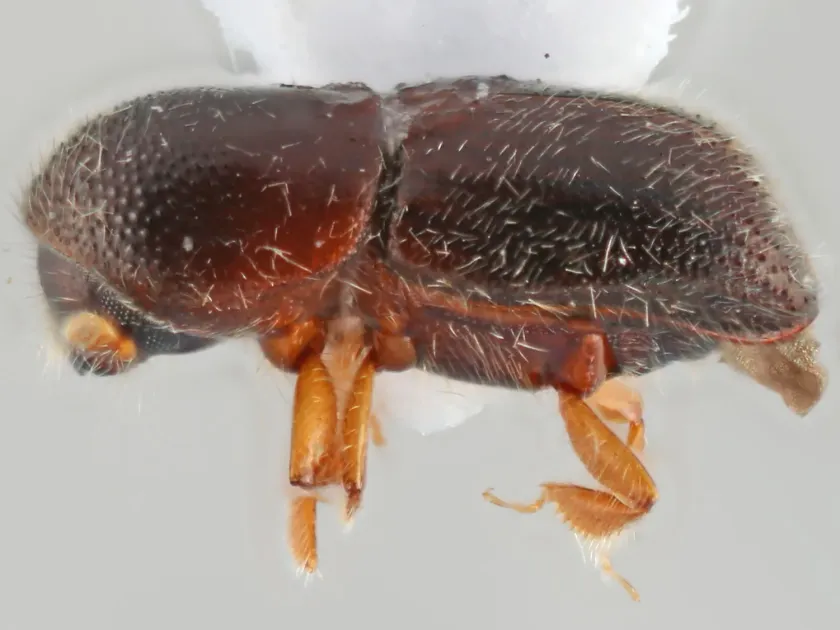
The adult beetle is typically very small, measuring between 2 and 3 millimeters in length, and possesses a cylindrical body structure adapted for boring into timber.
The scientific name, hirsutulus, refers to the dense, hair-like setae covering the beetle's elytra (wing covers), which helps in distinguishing this species from others.
These beetles are dark brown to black in color, allowing them to remain well-hidden within the crevices of tree bark during their initial colonization phase.
Like other ambrosia beetles, they maintain a symbiotic relationship with specific fungi, which they inoculate into the wood to provide food for their larvae.
What it damages
Arixyleborus hirsutulus causes significant damage to various deciduous tree species by excavating galleries deep into the sapwood and heartwood of the host plant.
The damage disrupts the tree's vascular system, hindering the transport of water and nutrients, which eventually leads to the wilting and decline of the tree.
The fungi introduced by the beetle during the boring process further weaken the wood, creating necrotic zones that serve as entry points for secondary bacterial and fungal infections.
Economic damage is twofold: the physiological decline and potential death of the trees, and the degradation of timber quality, rendering it unsuitable for commercial use.
In high-density infestations, these beetles can rapidly cause canopy dieback, affecting not just individual trees but potentially entire forest stands or orchard sectors.
Signs of infestation
The most prominent sign of an infestation is the appearance of small, circular entry holes on the bark, often accompanied by fine, light-colored frass (sawdust).
Tree distress signs, such as yellowing leaves, premature leaf drop, or branch dieback, often occur after the beetles have already established their galleries inside the trunk.
Close inspection of the wood may reveal stained tunnels, a direct consequence of the ambrosia fungi colonies spreading within the galleries excavated by the beetles.
Resin or sap bleeding from the trunk can occur in some tree species as a physiological response to the boring attempt by the beetles.
Regular visual monitoring of the trunk surface, especially during warm seasons, is crucial to identify early signs of colonization before significant structural damage occurs.
Control measures
Sanitation is the primary management practice: removing and destroying infested trees is essential to reduce the local beetle population and prevent further spread.
The use of pheromone-based traps is highly recommended for monitoring purposes and for mass-trapping efforts in sensitive nursery or forest areas.
Chemical control using systemic insecticides can be applied to high-value trees, though its effectiveness is limited once the beetles have penetrated deep into the wood.
Maintaining optimal tree health through proper fertilization and irrigation helps prevent the stress that makes trees more susceptible to bark beetle attacks.
Promoting biodiversity by protecting natural predators, such as parasitoid wasps and predatory beetles, remains a key component of sustainable long-term forest management.
Taxonomy
- Latin name
- Arixyleborus hirsutulus
- Order
- Coleoptera (beetles)
- Family
- Curculionidae
- EPPO code
- ARXYHI
Discussion
No discussions yet — be the first.