
Arixyleborus granulifer
Arixyleborus granulifer
Description
How to identify
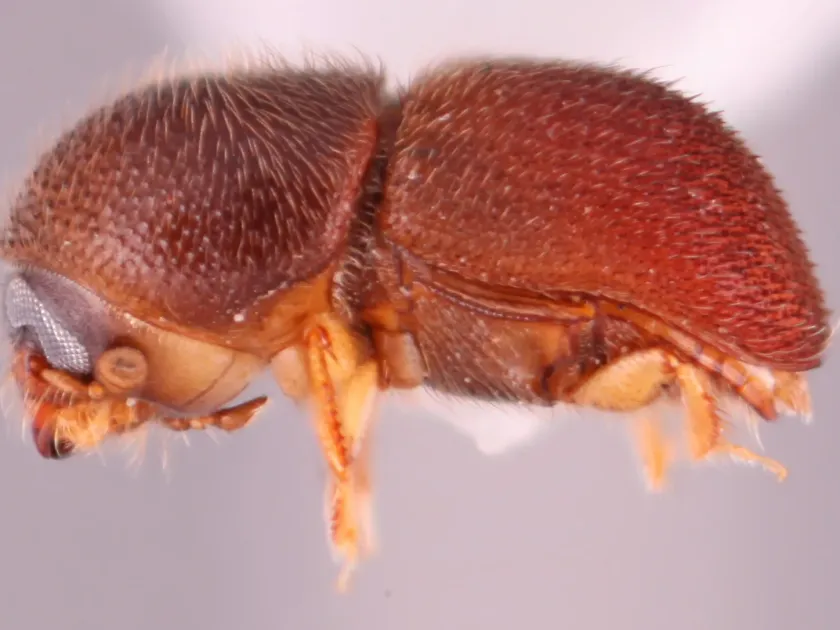
Arixyleborus granulifer is a small beetle belonging to the Curculionidae family and the Scolytinae subfamily. These insects are known for their small size, typically measuring between 2 to 3 millimeters in length.
The beetle is characterized by its cylindrical, robust body, which is usually dark brown or black in color. Its name comes from the small granulate structures found on its elytra, which provide a distinct appearance under magnification.
This species is a type of ambrosia beetle, meaning it maintains a symbiotic relationship with specific fungi. The adult beetles carry fungal spores in specialized structures called mycangia and introduce them into the tunnels they bore into the wood.
The entire life cycle of the beetle occurs inside the wood of the host tree. This internal development provides protection against environmental fluctuations and many natural predators, making control measures quite challenging.
Active adults are most frequently observed during periods of flight when they emerge to colonize new host plants. Their mobility allows them to spread efficiently throughout forest stands and plantation areas.
What it damages
Arixyleborus granulifer primarily attacks deciduous trees. They have a preference for stressed or weakened trees, but they are also capable of infesting healthy specimens when population levels are high.
The primary damage is caused by both adults and larvae boring galleries deep into the sapwood and heartwood. This activity mechanically disrupts the tree's vascular system, hindering the transport of water and nutrients.
In addition to physical damage, the introduced fungi cause wood staining and necrosis. This fungal growth leads to the development of dark discolorations, often referred to as "blue stain," which lowers the timber's quality.
When trees are heavily infested, the cumulative impact of boring galleries and fungal infection causes rapid decline, premature leaf fall, and eventually the death of the tree.
Economic losses in the timber and fruit industry can be significant, particularly in tropical and subtropical regions where environmental conditions favor the rapid reproduction of this species.
Signs of infestation
The most reliable sign of an infestation is the presence of tiny, circular exit or entrance holes on the bark surface. These holes are often accompanied by fine frass (wood dust) accumulating on the bark or at the base of the tree.
In some tree species, the infestation may trigger the production of sap or resin around the entry points as a defensive response, often resulting in visible streaks on the trunk.
General signs of tree distress, including thinning of the crown, yellowing of leaves, and dieback of branches, are late-stage indicators that the internal vascular system has been severely compromised.
Peeling back the bark reveals intricate networks of galleries within the wood. These galleries are often dark-colored due to the presence of the symbiotic fungal mycelium, which is a hallmark of ambrosia beetle activity.
A faint, musty smell may be noticeable near heavily infested trunks, caused by the fungal growth within the tunnels that the beetles cultivate to sustain their brood.
Control measures
Sanitation is the cornerstone of management. Removing and destroying infested trees promptly is essential to reduce the local population of the beetle and prevent further spread.
Proper forest hygiene, including the removal of logging residues, stumps, and fallen branches, is crucial, as these materials provide breeding grounds for the pests.
Chemical control is difficult due to the protected lifestyle of the beetles. Systemic insecticides may be used in high-value trees, but they are most effective as a preventive measure rather than a cure for established infestations.
Integrated Pest Management (IPM) programs often utilize pheromone-based traps to monitor beetle activity, allowing for targeted timing of control applications when adult beetles are actively seeking new hosts.
- Regular forest health surveys.
- Burning of severely infested wood materials.
- Maintaining high tree vigor through irrigation and fertilization.
- Encouraging natural predator populations.
Taxonomy
- Latin name
- Arixyleborus granulifer
- Order
- Coleoptera (beetles)
- Family
- Curculionidae
- EPPO code
- ARXYGF
Discussion
No discussions yet — be the first.