
Arixyleborus canaliculatus
Arixyleborus canaliculatus
Description
How to identify
Arixyleborus canaliculatus is a member of the Curculionidae family and the Scolytinae subfamily. These small beetles are known as wood-borers that thrive in diverse forest ecosystems.
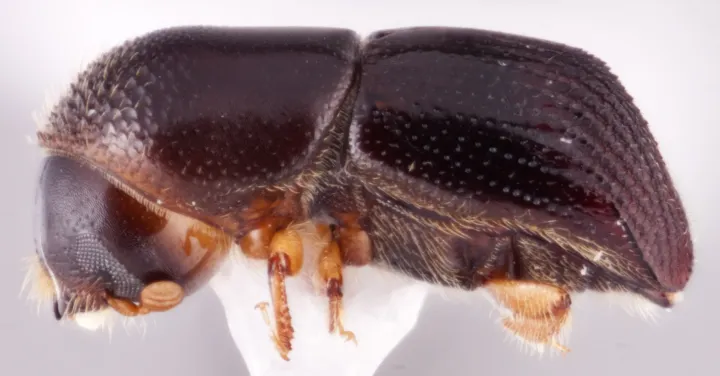
The adults are cylindrical in shape, typically dark brown or black in color. Their small size allows them to penetrate bark effectively to begin gallery formation.
As an ambrosia beetle, this species maintains a symbiotic relationship with specific fungi. These fungi are carried by the beetles in specialized structures called mycangia and serve as a food source for their larvae.
The larvae are legless, white-colored, and develop within the galleries bored by the parent beetles. Identification often requires examining the structure of the elytral grooves, which is a diagnostic feature for this species.
Their population dynamics are closely linked to the health of the host trees, making them particularly successful in stressed or damaged timber environments.
What it damages
This beetle species causes significant damage to various wood-producing tree species. It targets both deciduous and some coniferous trees, often focusing on weakened individuals.
The damage is primarily caused by the tunneling activity of both adults and larvae. These galleries disrupt the xylem and phloem, preventing the transport of essential water and nutrients throughout the tree.
In addition to structural damage, the introduction of ambrosia fungi into the tunnels leads to further degradation of the wood. The fungus clogs the vessels, which can accelerate the death of the host tree.
High infestation rates can lead to large-scale mortality in forest stands or commercial plantations. This results in significant economic losses for timber production and forest management.
Trees affected by this pest show reduced wood quality, rendering the lumber unsuitable for commercial use, which complicates forest harvesting operations.
Signs of infestation
The most visible sign of infestation is the presence of tiny entry holes on the bark surface. These holes are frequently accompanied by frass (bore dust), which is produced during the excavation process.
Crown dieback, yellowing leaves, or premature leaf drop are common symptoms that indicate the internal conducting systems of the tree have been severely damaged by the galleries.
Upon removing the bark, one can observe complex, branching tunnel networks. Within these galleries, a dark staining caused by the symbiotic fungi is typically visible.
Tree response to infestation may include sap or resin exudation at the entry points. In severe cases, the tree structure becomes weakened, increasing the risk of windthrow and wood decay.
Monitoring for the presence of bore dust at the base of trees or along the trunk is a critical step in identifying active infestations early on.
Control measures
Managing Arixyleborus canaliculatus requires an integrated pest management (IPM) approach. Prevention through silvicultural practices is the most effective way to avoid outbreaks.
Sanitation is key; promptly removing and destroying infested logs or dead trees prevents the beetle population from spreading to healthy parts of the stand.
Maintaining tree vitality through appropriate water and nutrient management helps trees develop natural defenses, making them less attractive to the beetles.
When necessary, the use of pheromone-baited traps allows foresters to monitor flight periods and manage population densities effectively before severe outbreaks occur.
- Regular forest health surveys;
- Timely removal of infested materials;
- Use of systemic insecticides for high-value trees;
- Ensuring proper planting density to reduce competition stress.
Taxonomy
- Latin name
- Arixyleborus canaliculatus
- Order
- Coleoptera (beetles)
- Family
- Curculionidae
- EPPO code
- ARXYCA
Discussion
No discussions yet — be the first.