
Arixyleborus
Arixyleborus
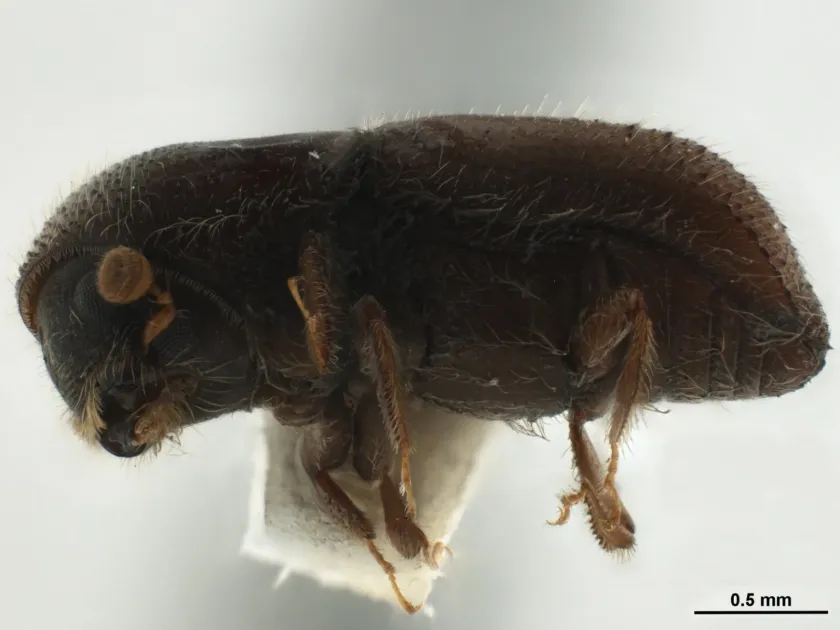
Description
How to identify
The genus Arixyleborus belongs to the family Curculionidae, subfamily Scolytinae. These are small wood-boring beetles that are closely related to other members of the Xyleborini tribe.
Adult beetles are generally cylindrical, ranging in color from reddish-brown to dark brown or black, with a body length typically between 2 and 3 millimeters.
These insects are known as ambrosia beetles because they have a symbiotic relationship with specific fungi. They carry fungal spores in specialized body structures called mycangia.
The larvae of Arixyleborus do not consume wood directly; instead, they feed on the fungal mycelium that grows along the gallery walls constructed by their parents.
Morphological identification of specific species within this genus is complex and often requires microscopic examination of the pronotum and elytra features.
What it damages
Arixyleborus species primarily infest trees in tropical and subtropical regions, impacting a wide variety of both native and plantation woody species.
While they typically target weakened or stressed trees, dense populations can successfully colonize healthy, standing timber, posing a significant risk to forest health.
Host plants include diverse tree species, with significant impacts reported on members of families such as Dipterocarpaceae and Fabaceae.
By boring deep galleries into the sapwood and heartwood, the beetles disrupt the tree's vascular system, leading to moisture stress and nutrient transport failure.
Severe infestations result in canopy dieback, reduction in timber quality, and in extreme cases, the total mortality of the affected host tree.
Signs of infestation
One of the primary indicators of an infestation is the presence of small, circular exit holes on the bark, often accompanied by piles of boring dust or frass.
Discoloration of the foliage and premature wilting of branches are common visible symptoms, resulting from the fungal infection transported by the beetles.
Inside the trunk, the beetles create complex, branching tunnel systems that appear dark due to the cultivation of the symbiotic fungi on the tunnel walls.
Bark removal on suspected trees often reveals galleries concentrated in the outer layers of the wood, which can be easily identified upon close inspection.
In some cases, the presence of these beetles can be detected by monitoring sap flow or resin exudation, though this is less consistent in tropical species.
Control measures
Sanitation is the most effective management tool; infected trees should be promptly felled, removed, and destroyed to prevent the emergence of new adult beetles.
Maintaining high levels of tree vigor through proper silvicultural practices is essential to minimize the risk of successful colonization by Arixyleborus.
Integrated pest management programs often utilize pheromone-based traps to monitor population levels and track the seasonal activity of the adults.
Chemical control via trunk sprays can be attempted, although its efficacy is often limited by the beetle's habit of spending most of its life cycle inside the wood.
Regular forest health surveillance is crucial for early detection and rapid response, preventing localized outbreaks from spreading across larger woodland areas.
Taxonomy
- Latin name
- Arixyleborus
- Order
- Coleoptera (beetles)
- Family
- Curculionidae
- EPPO code
- ARXYSP
Discussion
No discussions yet — be the first.