
Giant red shrimp
Aristeomorpha foliacea
Description
How to identify
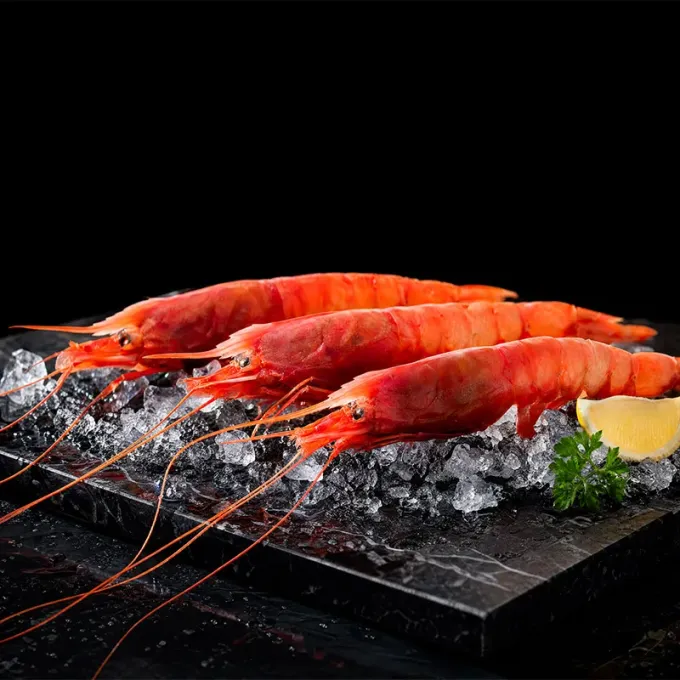
The giant red shrimp (lat. Aristeomorpha foliacea) is a member of the order Decapoda within the family Aristeidae.
It is a deep-sea crustacean typically found at depths ranging from 200 to 1000 meters in oceanic environments, such as the Mediterranean Sea.
This species is highly recognizable by its vibrant red exoskeleton and long, slender body, reaching sizes of up to 22 cm.
As a marine organism, its entire biological life cycle is dependent on high-salinity water and specific oceanic pressure levels.
It is strictly a marine scavenger and predator, playing a role in the benthic food web rather than interacting with terrestrial flora.
What it damages
The giant red shrimp does not pose any threat to crops, vegetables, or ornamental plants in any agricultural setting.
There is no record of Aristeomorpha foliacea causing damage to roots, foliage, or fruit, as it cannot survive on land or in soil.
This species lacks the physical adaptations required to forage on agricultural land or consume terrestrial plant matter.
Agricultural damage caused by such marine life is biologically impossible and fundamentally inconsistent with the species' natural habitat.
Any concern regarding this species as a plant pest is entirely misplaced and does not require attention from agricultural professionals.
Control measures
No pest control or management strategies are necessary for this species, as it is not an agricultural pest.
Agricultural protocols do not include measures against marine crustaceans, ensuring that resources are focused on actual crop threats.
Conservation efforts for this species are focused on sustainable fishery management rather than agricultural intervention.
Farmers should consult with local agricultural extension services to identify true pests affecting their specific crops.
Environmental awareness is crucial to distinguish between deep-sea resources and terrestrial agricultural threats.
Taxonomy
- Latin name
- Aristeomorpha foliacea
- Family
- Aristeidae
- EPPO code
- ARSMFO
Discussion
No discussions yet — be the first.