
Argyrotaenia sphaleropa
Argyrotaenia sphaleropa
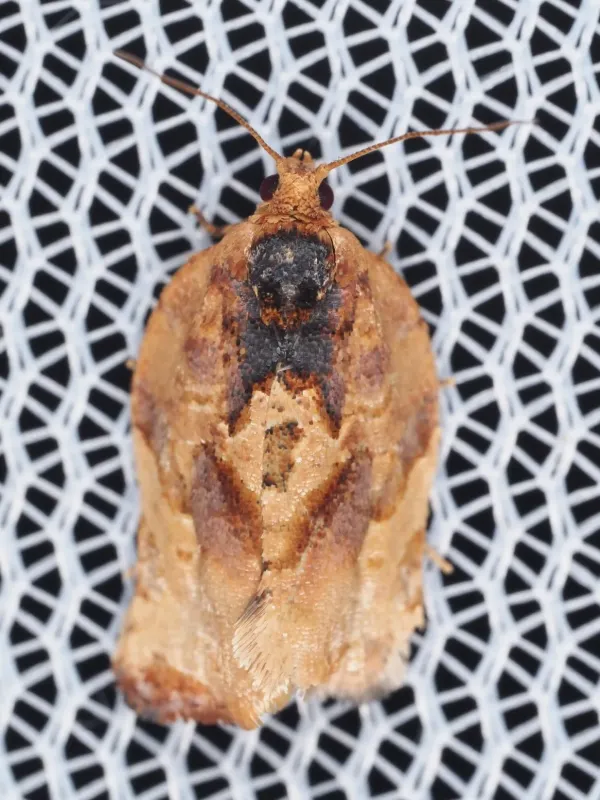
Description
How to identify
Argyrotaenia sphaleropa is a moth species belonging to the family Tortricidae. The adult moth is small, typically spanning 15–20 mm, with mottled brown and grey forewings that provide excellent camouflage against tree bark and foliage.
The larvae, or caterpillars, undergo several developmental stages, starting as light-colored and becoming darker as they mature. The head capsule is usually dark, which is a key identification feature for early-stage larvae.
The life cycle of this species is highly variable and temperature-dependent. In tropical and subtropical regions, the pest can complete several overlapping generations annually, making management constant throughout the growing season.
This species is a known polyphagous pest, meaning it attacks a wide variety of botanical families. Its ability to switch hosts allows it to survive even when primary orchard crops are not available.
Females deposit eggs in flattened masses, usually on the upper surface of leaves. These egg clusters darken as the embryos develop, eventually becoming visible as individual larval heads before hatching.
What it damages
Larval feeding is the primary cause of economic damage. Caterpillars feed on young leaves, floral buds, and developing fruit. They often use silk to web leaves together, creating protective shelters while they feed.
In vineyards, this pest is particularly destructive because larvae feed directly on the grape bunches. These injuries create open wounds that serve as entry points for pathogens such as Botrytis cinerea (grey mould).
Fruit damage manifests as shallow surface scars or deeper excavations, depending on the age of the fruit. This significantly reduces the quality and marketable value of the harvest, especially for fresh-market products.
Severe infestations can lead to substantial foliage loss, reducing the plant's photosynthetic capacity. This causes general tree stress and can adversely affect bud development for the following season.
- Consumption of buds and floral structures.
- Leaf skeletonization and webbing.
- Direct damage to developing fruit surfaces.
- Increased secondary infection rates by fungal pathogens.
When it appears
Adult flight activity typically begins in early spring, coinciding with bud burst. Moths are primarily nocturnal, making them difficult to observe during daylight hours without specialized monitoring equipment.
The first generation of larvae emerges in late spring, coinciding with the rapid growth of new vegetative parts of the plant. This period is critical for early-season scouting and protection efforts.
Subsequent generations often overlap during the summer months. It is common to find multiple larval stages present simultaneously on the same plant, necessitating continuous vigilance by orchard managers.
Environmental factors, especially temperature and humidity, dictate the duration of each life stage. High temperatures generally accelerate the life cycle, leading to more frequent generations per year.
Overwintering occurs primarily as larvae in protected locations, such as under bark scales, within dried leaf rolls, or in debris on the orchard floor, until favorable spring temperatures trigger activity.
Signs of infestation
The most diagnostic sign of infestation is the presence of webbed or rolled leaves. When these structures are disturbed, the larva often drops on a silk thread to escape.
Visible feeding damage on fruit skin, often characterized by dark, necrotic spots or irregular scars, indicates recent larval activity. These injuries are often accompanied by frass (larval excrement).
Wilting of flower clusters during the blooming period is a sign that larvae are feeding on the reproductive organs. This often leads to poor fruit set if the infestation level is high.
Observing adult moths near artificial light sources or in pheromone traps is a clear signal that the pest population is active and egg-laying is likely underway in the vicinity.
Holes in the foliage or irregularly shaped leaf margins are common symptoms. In severe cases, the entire canopy may show a sparse, ragged appearance due to intense leaf consumption.
Control measures
Integrated Pest Management (IPM) is the most effective approach for controlling this tortricid moth. It combines biological monitoring with cultural practices to minimize chemical intervention.
Cultural control involves removing infested plant parts and clearing orchard floor debris where the larvae may seek shelter for overwintering. Sanitation significantly lowers the overwintering population.
Biological control methods, including the use of pheromone mating disruption and B.t. (Bacillus thuringiensis) based products, are highly effective against younger larvae and preserve beneficial predators.
Chemical control should be timed based on the monitoring data. Applications are most effective during the early larval stage, before the caterpillars have created protective webs or entered the fruit.
Monitoring using species-specific pheromone traps is essential to determine the precise timing for treatments, ensuring maximum efficacy and reducing unnecessary pesticide applications in the orchard.
Taxonomy
- Latin name
- Argyrotaenia sphaleropa
- Order
- Lepidoptera (butterflies)
- Family
- Tortricidae
- EPPO code
- ARGTSH
Discussion
No discussions yet — be the first.