
Four-banded leafroller
Argyrotaenia quadrifasciana
Description
How to identify
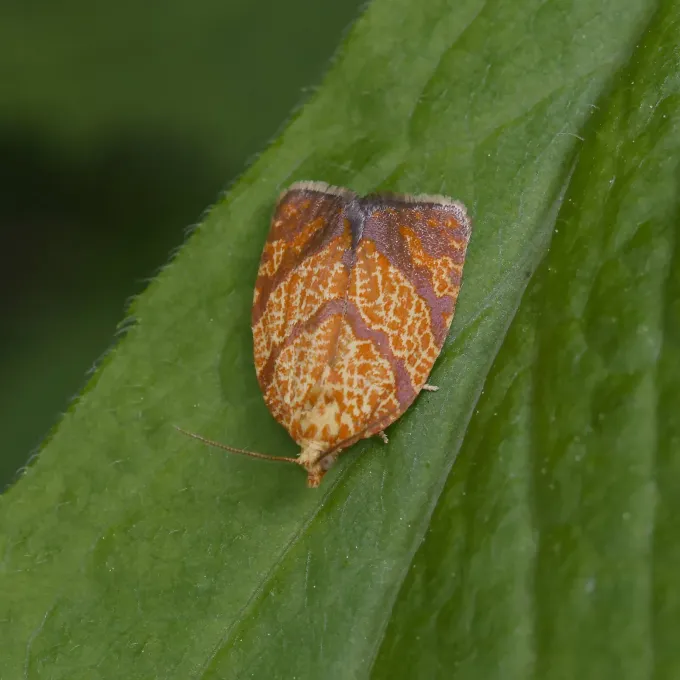
The four-banded leafroller (Argyrotaenia quadrifasciana) is a species of moth in the Tortricidae family. The adult moth has a wingspan of 15–20 mm and is characterized by four distinct dark bands on its forewings.
The larvae, or caterpillars, are typically 12–16 mm long, displaying a greenish or yellowish-green body with a dark, shiny head capsule, making them easily distinguishable.
This species overwinters as young larvae within tightly woven silken cocoons, which are typically hidden in bark crevices or among leaf litter at the base of host trees.
The insect undergoes a complete life cycle comprising egg, larva, pupa, and adult stages. Depending on the geographical region, it produces one or two generations per year.
Pupation occurs within the feeding area, often inside leaves folded or rolled together with silk, which provides the pupa with necessary protection from predators.
What it damages
The four-banded leafroller is a polyphagous pest known to infest a wide range of fruit crops, including apple, pear, plum, cherry, and various stone fruits.
In early spring, the larvae feed on developing buds and emerging leaves, tying them together with silk to form shelters, which hinders the plant's normal growth.
As the season progresses, the larvae shift their feeding habits to developing fruit, causing shallow, irregular gouges on the skin that significantly lower fruit marketability.
These feeding wounds not only disfigure the fruit but also serve as entry points for various pathogens, potentially leading to rot and secondary infections.
Severe infestations can lead to substantial foliage loss, which stresses the tree, reduces its vigor, and negatively impacts the following year's fruit set.
When it appears
The emergence of overwintered larvae begins in early spring, coinciding with the bud break stage of fruit trees, as temperatures start to rise above the growth threshold.
The adult moth flight for the first generation generally occurs from late May through June, with adults being most active during dusk and early night hours.
Females deposit eggs on the upper surface of leaves. After an incubation period of about two weeks, the young larvae hatch and begin to establish their feeding sites.
A second generation often develops during mid-summer, when the larval population shifts its focus toward ripening fruits, which are highly susceptible at this stage.
As autumn approaches and temperatures drop, the larvae seek protected sites to spin their overwintering cocoons, marking the end of the active feeding season.
Signs of infestation
The most reliable sign of an infestation is the presence of rolled or folded leaves held together by fine silken threads, often containing a larva inside.
Spider-like webbing on flower clusters, young shoots, or the surface of developing fruits is a clear indicator that a leafroller colony is present.
Small, dark, pellet-like frass particles found on the surface of leaves or within fruit indentations are typical indicators of larval feeding activity.
Superficial skin damage on fruits, characterized by darkened, sunken, or scarred areas, often confirms the presence of this specific leafroller species.
Premature fruit drop, accompanied by visible webbing and larval feeding marks on the stem or fruit base, serves as an alert for significant population density.
Control measures
Cultural control practices, such as removing loose bark and cleaning up fallen leaves in the autumn, can help reduce the number of overwintering larvae in the orchard.
Monitoring using pheromone traps is essential to track moth flights accurately, allowing for the precise timing of insecticide applications to target the most vulnerable larval stages.
Biological control options, including the use of specific Bacillus thuringiensis formulations, are highly effective against young larvae while sparing beneficial natural enemies.
Chemical control should be applied based on economic thresholds, focusing on the periods shortly after egg hatch and before the larvae enter the fruit or protected leaf rolls.
- Apply dormant oil sprays if overwintering pressure is high.
- Install pheromone traps for monitoring.
- Ensure uniform spray coverage during the larval stage.
Taxonomy
- Latin name
- Argyrotaenia quadrifasciana
- Order
- Lepidoptera (butterflies)
- Family
- Tortricidae
- EPPO code
- ARGTQA
Discussion
No discussions yet — be the first.