
Pine tube moth
Argyrotaenia pinatubana
Description
How to identify
The adult Pine tube moth is a small moth with a wingspan of about 12 to 15 mm. Its forewings are typically rusty or reddish-brown, marked with dark transverse bands.
The larvae are approximately 10 mm long when mature. They are pale green with dark heads, making them well-camouflaged when residing within their needle tubes.
Taxonomically, this insect belongs to the family Tortricidae, known for the larvae's habit of rolling or tying leaves or needles together.
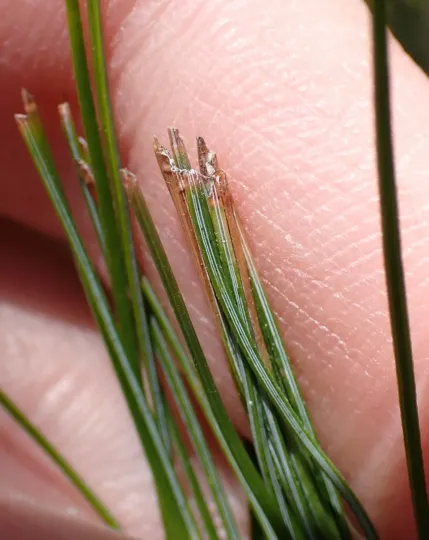
Identification is most reliably achieved by observing the unique tubes constructed from needles bound together by silken threads.
The pupa stage occurs within the larval tube, where the insect transforms into its adult form, protected by a thin layer of silk and needle fragments.
What it damages
The primary host species is the eastern white pine (Pinus strobus). The larvae are highly specialized feeders on the foliage of this particular conifer species.
Larvae feed on the needles, eating the inner tissues and leaving behind the epidermis, which causes the needles to wither, turn brown, and eventually drop.
Heavy infestations can lead to significant defoliation, giving the tree a scorched appearance and reducing its overall photosynthetic capacity during the growing season.
The creation of tubes, where needles are stitched together, is the primary source of aesthetic damage, especially in ornamental nurseries and managed landscapes.
While mature trees can usually withstand light to moderate damage, repeated defoliation weakens the tree, making it susceptible to other environmental stresses.
When it appears
The Pine tube moth typically completes one or two generations per year, depending on the geographic latitude and local climate conditions.
Adult moths emerge in the spring to mate and lay eggs on the needles of the host tree. This marks the beginning of the new life cycle.
Larval activity is most intense during the summer months when the insects are actively feeding and constructing their characteristic needle tubes.
Overwintering usually occurs in the pupal stage, protected within a tube on the branches or occasionally within the needle litter at the base of the tree.
Monitoring should be focused on late spring and early summer when the first generation of larvae begins to actively build tubes on new growth.
Signs of infestation
The most obvious sign of infestation is the presence of bundled needles tied together with silk. These tubes are easily seen hanging from the pine branches.
Brown, discolored needles that appear stunted or withered are a clear indication of previous or ongoing feeding damage by the larvae.
- Silken webbing visible at the base of needle clusters.
- Small, translucent "mines" on the surface of the needles.
- Increased needle drop under the canopy of the pine tree.
- Presence of larval frass (droppings) accumulated inside the needle tubes.
Visual inspection of the outer crown is the most effective way to detect early signs of infestation before the population reaches damaging levels.
Control measures
For small ornamental trees, hand-picking and destroying the needle tubes is a highly effective and environmentally safe method of control.
Biological control using microbial insecticides, such as Bacillus thuringiensis, can be used to treat infested trees, especially during the early larval stages.
Chemical control with systemic insecticides may be necessary in nurseries, but must be applied early in the season before the larvae build protective tubes.
Promoting a healthy environment for natural predators, such as parasitic wasps and predatory beetles, can help keep the population in check naturally.
Proper landscape management, including regular tree inspection, prevents minor infestations from becoming significant problems for the health of the pines.
Taxonomy
- Latin name
- Argyrotaenia pinatubana
- Order
- Lepidoptera (butterflies)
- Family
- Tortricidae
- EPPO code
- ARGTPI
Discussion
No discussions yet — be the first.