
Argyrotaenia oculatana
Argyrotaenia occulatana
Description
How to identify
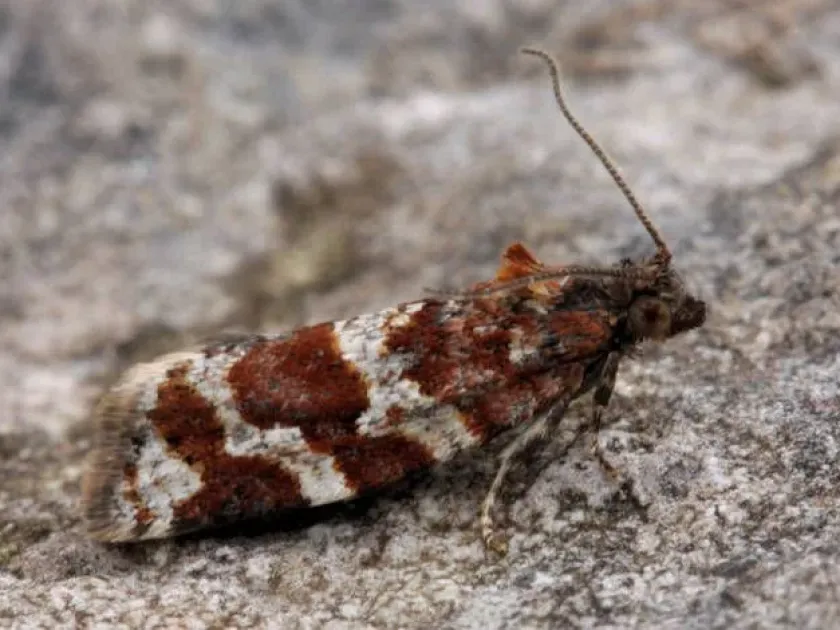
Argyrotaenia oculatana is a moth species belonging to the Tortricidae family. The adult moth typically has a wingspan of 15–20 mm, showing distinct color patterns.
The forewings are often mottled with dark bands and lighter spots, providing excellent camouflage when the moth rests on tree bark during the daylight hours.
The larvae, or caterpillars, undergo several developmental stages, transitioning from a pale yellowish color to a light green body with a dark, sclerotized head capsule.
Pupation occurs within carefully constructed silk shelters made of rolled leaves. The pupae are brown and possess the ability to wriggle if disturbed.
Females deposit eggs in overlapping clusters, often on the upper surface of leaves, mimicking the appearance of scales which can be difficult to spot without close inspection.
What it damages
This pest is a generalist feeder known to affect a wide range of crops, including apples, pears, and various stone fruits, causing significant economic damage.
During the early spring, larvae feed on developing buds, destroying them before they can even flower, which severely reduces the tree's total yield capacity.
As the season progresses, larvae roll leaves into tight tubes or clusters held together by silk webbing. Inside, they consume the leaf tissue, leaving only the veins.
When fruit is present, the caterpillars often feed on the skin, creating shallow depressions or scarring. This physical damage ruins the marketability of the produce.
Wounds caused by larval feeding on fruit often serve as infection sites for fungal pathogens, leading to fruit rot and further losses during storage and transit.
When it appears
The insect overwinters as a larva, hiding in dense silk cocoons tucked away in deep bark crevices, branch crotches, or protected spots among leaf litter.
Emergence and spring activity coincide with the bud-break phase of the host plants, as the larvae emerge to feed on the tender, newly formed plant tissues.
Adult moths typically fly during the late spring and early summer months, with the exact timing governed by local weather conditions and accumulated heat units.
Depending on the climatic zone, the species can complete multiple generations per year, creating a continuous threat throughout the primary growing season.
Late-season larvae prepare for the upcoming winter by seeking sheltered overwintering sites as temperatures begin to drop in the autumn.
Signs of infestation
The primary sign of infestation is the presence of damaged or hollowed-out buds that fail to develop properly during the early spring growth period.
Rolled or folded leaves bound with white, sticky silk webbing are the most obvious indicators of larval presence within the canopy of fruit trees.
Skeletonized leaves, where only the vascular network remains due to larvae consuming the soft tissue, confirm active feeding by younger caterpillar instars.
Scarring and small, irregularly shaped craters on the surface of developing fruit are distinct signs that the pest has moved from foliage to fruit feeding.
Frass (larval excrement) found on leaf surfaces or near rolled-leaf clusters serves as a clear indication that a population is currently active in the area.
Control measures
Cultural control measures include removing leaf litter and scraping loose bark to eliminate suitable overwintering sites for the larvae.
Pheromone traps are essential tools for monitoring adult moth populations, allowing growers to time their insecticide applications for maximum effectiveness.
Biological control, such as using products based on Bacillus thuringiensis, offers a targeted approach that protects beneficial predatory insects in the orchard.
Chemical applications should be managed carefully, applying treatments when the first-instar larvae are actively hatching to ensure the highest mortality rates.
- Pruning trees to open the canopy for better spray penetration and air circulation.
- Encouraging natural predators like lacewings and parasitic wasps to suppress pest populations.
- Consistent scouting throughout the orchard to determine if intervention thresholds are met.
Taxonomy
- Latin name
- Argyrotaenia occulatana
- Order
- Lepidoptera (butterflies)
- Family
- Tortricidae
- EPPO code
- ARGTOC
Discussion
No discussions yet — be the first.