
Gray-banded leafroller
Argyrotaenia mariana
Description
How to identify
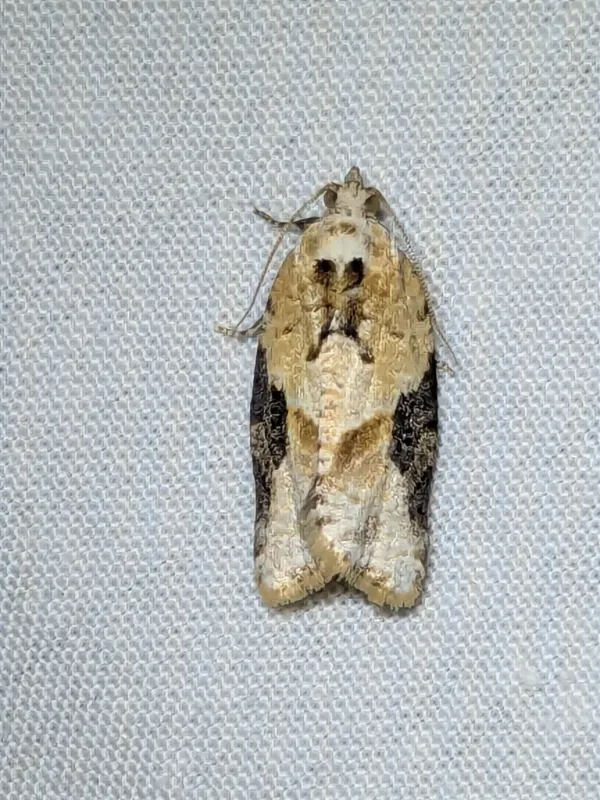
The Gray-banded leafroller, scientifically known as Argyrotaenia mariana, belongs to the Tortricidae family. These moths are characterized by a wingspan of approximately 15–20 mm, with wings featuring distinct gray and brown bands, which provide effective camouflage on tree bark.
The larval stage is the most critical for agricultural impact. The larvae start as tiny caterpillars with a dark-colored head and body that transitions from light green to an olive-brown shade as they mature and grow throughout their developmental stages.
The life cycle involves overwintering as second-instar larvae, typically tucked away in sheltered locations like crevices in the bark or rolled leaves. When spring arrives, these larvae resume their activity, feeding on the emerging buds and succulent new leaves.
Depending on the climatic zone and temperature conditions, the species can produce multiple generations per year. This multivoltine nature poses a significant risk to orchard health, as population numbers can build up rapidly throughout the growing season.
Adult moths are primarily nocturnal and elusive, making them difficult to spot during daylight hours. Utilizing pheromone traps is the industry standard for monitoring their population levels and determining the precise timing for intervention.
What it damages
This pest primarily infests pome fruits, with apple and pear being the most favored hosts. However, it is also capable of causing significant damage to stone fruits like cherries and plums, indicating a broad host range within orchard environments.
Early-season larvae feed on developing buds and flowers, often webbing them together. As the season progresses, they shift to foliage, creating characteristic leaf-rolling damage that stunts growth and interferes with the plant's photosynthetic efficiency.
The most severe damage occurs when larvae feed directly on the fruit. They create shallow, irregular gouges or tunnels under the skin, which not only renders the produce unmarketable but also invites secondary infections like fruit rot and fungi.
In nursery settings and young orchards, the Gray-banded leafroller can destroy terminal shoots. This leads to stunted growth, loss of structural development, and uneven canopy shape, which can set back the orchard's productivity for several years.
Economic damage is twofold: direct loss of marketable yield due to scarring and blemishes, and the significant cost incurred by growers to implement intensive control programs to keep the infestation from reaching epidemic proportions.
Control measures
Integrated Pest Management (IPM) is essential for controlling this leafroller. Cultural practices such as cleaning bark and removing debris around the tree base can destroy the primary overwintering sites, significantly reducing the initial population pressure.
Pheromone-based mating disruption is a highly effective strategy for commercial orchards. By saturating the area with synthetic pheromones, growers can prevent male moths from finding females, effectively suppressing the next generation without chemical spraying.
Biological control agents, including parasitic wasps and Bacillus thuringiensis-based products, provide an excellent alternative to conventional insecticides. These options are particularly effective against young larvae and help maintain the ecological balance in the orchard.
Chemical applications should be strictly timed based on pheromone trap monitoring and degree-day models to hit the larvae during their most vulnerable stage. Rotating pesticide classes is vital to prevent the development of resistance in local populations.
Regular orchard inspections, focusing on leaves and fruit clusters, allow for early detection. Promptly removing and destroying infested fruit helps to slow the spread of the pest and prevents the larvae from reaching maturity and completing their cycle.
Taxonomy
- Latin name
- Argyrotaenia mariana
- Order
- Lepidoptera (butterflies)
- Family
- Tortricidae
- EPPO code
- ARGTMA
Discussion
No discussions yet — be the first.