
Walnut leaf roller
Argyrotaenia juglandana
Description
How to identify
The walnut leaf roller (Argyrotaenia juglandana) is a moth species belonging to the family Tortricidae, order Lepidoptera. It is recognized as a significant pest of walnut trees in several regions.
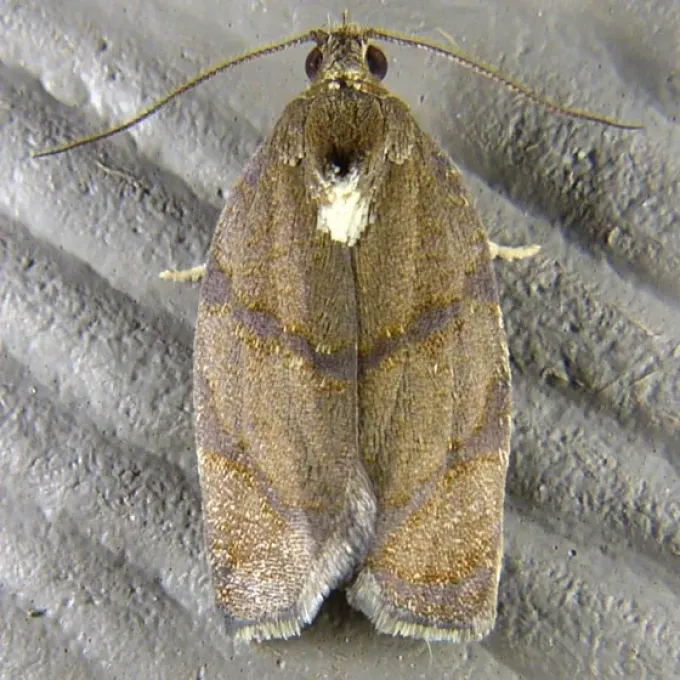
Adult moths typically have a wingspan ranging from 20 to 25 mm. Their forewings feature a mottled brown and tan appearance, often with dark, irregular banding patterns.
The larval stage is characterized by a soft-bodied caterpillar, which ranges in color from pale green to olive, usually possessing a distinct, dark-colored head capsule.
These larvae are known for their silk-spinning behavior, which they use to bind leaves together to create protective shelters for feeding and pupation.
Argyrotaenia juglandana is primarily active during the warmer months, with its population density closely tied to the availability of its host plants in orchard environments.
What it damages
The primary host for this pest is the walnut tree (Juglans regia). The larvae feed on the foliage, which is essential for the tree's overall vigor and energy production.
Heavy infestations can lead to significant defoliation, which stresses the tree, reduces its growth rate, and may negatively impact the quality and quantity of nuts produced.
In addition to foliage, the larvae may feed on developing fruit, causing blemishes or structural damage that renders the nuts unmarketable or susceptible to secondary rot.
Repeated yearly defoliation can weaken walnut trees, making them more susceptible to other stressors such as droughts, diseases, or bark-boring insects.
Economic damage is most severe in commercial walnut orchards where the yield reduction can lead to substantial financial losses for the grower.
When it appears
The adult emergence typically begins in late spring, around May or June, marking the start of the breeding season for the first generation.
The life cycle is temperature-dependent, with one or two generations occurring annually, depending on the climate and local weather conditions of the orchard.
The insect typically overwinters as young larvae tucked away in silken hibernacula within the bark crevices or sheltered areas of the tree canopy.
As temperatures rise in the spring, larvae emerge to begin feeding on young, tender leaves, which marks the start of the primary damage phase.
Peak larval activity generally occurs in early-to-mid summer, necessitating strategic monitoring and timely interventions to minimize crop loss.
Signs of infestation
The most distinctive symptom of an infestation is the presence of rolled or folded leaves bound together by thin, white silk threads produced by the larvae.
Upon closer inspection, foliage will often show signs of skeletonization, where the green tissue is consumed, leaving behind only the tough leaf veins.
Presence of "frass" or dark-colored larval excrement located within or near the silken shelters is a clear indicator that active feeding is occurring.
Brown, withered leaf clusters hanging in the canopy indicate older feeding sites where larvae have moved on or transitioned into the pupal stage.
- Rolled leaves tied together with silk.
- Skeletonized leaf surfaces.
- Accumulation of larval excrement on leaves.
- Young fruit showing signs of scarring or damage.
- General thinning of the canopy due to defoliation.
Control measures
Cultural control measures, such as removing and destroying infested leaf clusters during the growing season, can effectively reduce local population pressure.
Orchard sanitation, including the removal of dead bark and cleaning tree trunks, helps eliminate the overwintering sites for the larvae.
Integrated Pest Management (IPM) involves using pheromone traps to monitor adult flight, ensuring that chemical or biological treatments are applied at the precise timing.
Biological control agents, particularly formulations containing Bacillus thuringiensis, provide a selective way to manage larvae while preserving beneficial insects.
When necessary, chemical control involves the application of registered insecticides during the early larval stage to stop damage before it reaches the economic threshold.
Taxonomy
- Latin name
- Argyrotaenia juglandana
- Order
- Lepidoptera (butterflies)
- Family
- Tortricidae
- EPPO code
- ARGTJU
Discussion
No discussions yet — be the first.