
Argyrotaenia impositana
Argyrotaenia impositana
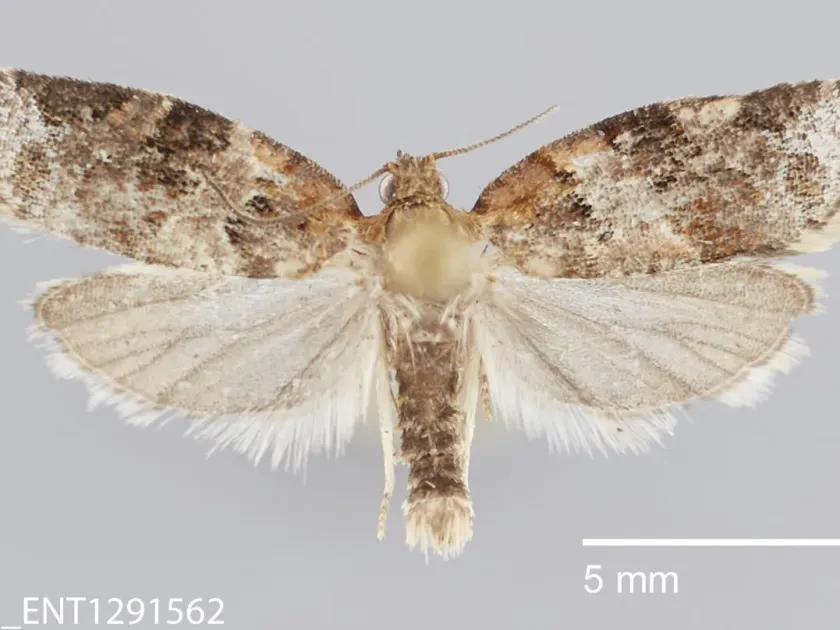
Description
How to identify
Argyrotaenia impositana is a member of the Tortricidae family within the order Lepidoptera. The adult moth typically has a wingspan ranging from 12 to 16 mm, featuring a subtle pattern of brown and gray bands on its forewings.
The larvae, often referred to as leafrollers, undergo several instars during their development. Their coloration varies from pale green to darker green, often characterized by a distinctive brown head capsule.
Because these moths are nocturnal and possess effective camouflage, they are difficult to spot during the day. Monitoring for adults is most successful using synthetic sex pheromone traps deployed in the field.
The lifecycle is closely synchronized with the phenology of host plants. The timing of larvae emergence usually corresponds with the bud-break phase of host shrubs, providing the insects with immediate access to nutrition.
Pupation occurs within a silken chamber created by the larva, which rolls or folds leaves together. This hidden pupal stage is protected from many external environmental factors and some contact insecticides.
What it damages
This pest primarily infests members of the Ericaceae family, including blueberries, cranberries, and huckleberries. In commercial settings, it can also occasionally affect other woody ornamental or fruit trees.
The primary damage is caused by larvae feeding on newly developing foliage and flower buds. This feeding activity can lead to substantial reduction in leaf area, which in turn affects the plant's overall photosynthetic capacity.
The destruction of flower buds is particularly harmful to commercial growers. Damaged blossoms often fail to set fruit or produce malformed berries, significantly reducing both the quality and quantity of the harvest.
High population densities can cause severe defoliation, leading to plant stress. Stressed plants are subsequently more susceptible to secondary infections, such as bacterial or fungal pathogens entering through feeding sites.
Furthermore, the presence of webbing and larval excrement within the canopy creates a poor aesthetic appearance and can lead to fruit contamination issues during the harvest process.
When it appears
The activity of A. impositana is strictly governed by temperature. As soon as temperatures rise in the spring, usually exceeding 10-12 degrees Celsius, overwintering larvae resume feeding and growth.
The flight period for the first generation of adults typically begins in late spring. This period can be extended, meaning that different development stages may exist on the plant simultaneously.
The summer months are characterized by the development of successive generations. Depending on the regional climate, multiple generations may occur, with peak damage often observed during the mid-summer period.
As the season nears its end, larvae prepare for hibernation. They seek protected niches within the host plant, such as bark crevices, leaf debris, or dormant bud scales, to enter diapause.
Winter survival is highly dependent on the availability of these sheltered locations. Management of crop debris during the dormant season is a key factor in limiting the population success of this pest.
Signs of infestation
The most visible indicator of an infestation is the presence of rolled or folded leaves, which are bound together by fine, silvery strands of silk produced by the larvae.
Upon closer inspection, one can find the larvae themselves or their granular frass (excrement) tucked inside these leaf folds, which confirms that the leaves are being used as a feeding site.
Damage to the terminal shoots is also common. Growers may notice stunted or wilting growth at the tips of branches, often accompanied by silk webbing that spans across developing flower clusters.
- Rolled, distorted, or skeletonized leaf margins.
- Silk webbing connecting leaves or flower buds.
- Early fruit drop or necrosis of floral buds.
If a suspected shoot is lightly shaken, larvae may drop on a silk thread or quickly retreat deeper into their leaf shelter, which is a classic behavior of the Tortricidae family.
Control measures
An integrated pest management (IPM) strategy is essential for controlling A. impositana. This involves a combination of monitoring, biological control, and targeted chemical applications.
Cultural control practices, such as the removal and destruction of infested plant material and the cleanup of leaf litter in autumn, help reduce the number of overwintering larvae on the farm.
Pheromone traps are a critical tool for monitoring adult activity. They enable growers to time insecticide applications accurately, targeting the most vulnerable stage of the insect's life cycle.
Biological insecticides, specifically those containing Bacillus thuringiensis (Bt), are highly effective at controlling young larvae and are considered safe for non-target species like pollinators.
When infestation levels exceed the economic threshold, systemic or contact insecticides may be required. Rotation of chemical classes is recommended to prevent the development of resistance within the pest population.
Taxonomy
- Latin name
- Argyrotaenia impositana
- Order
- Lepidoptera (butterflies)
- Family
- Tortricidae
- EPPO code
- ARGTIM
Discussion
No discussions yet — be the first.