
Willow leafroller
Argyroploce salicella
Description
How to identify
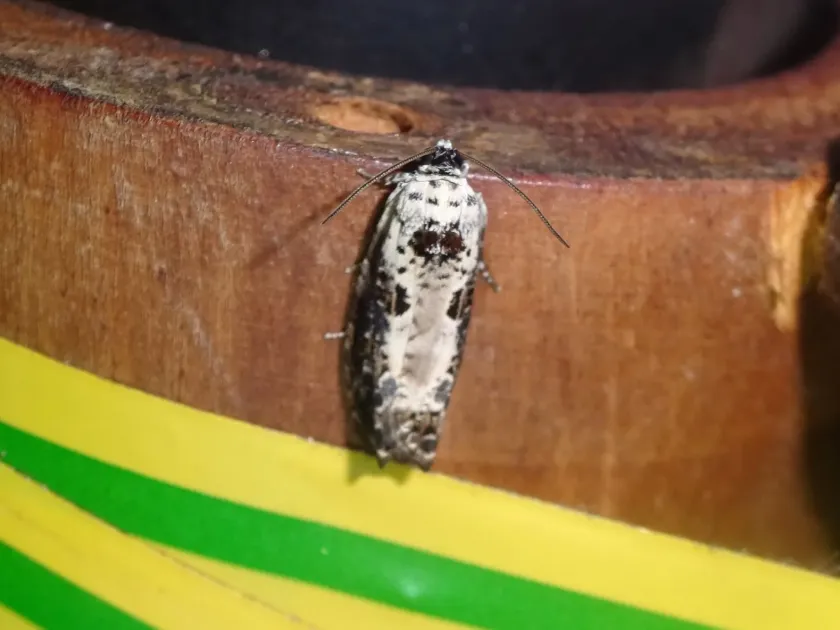
The willow leafroller (Argyroploce salicella) is a moth belonging to the family Tortricidae. The adult moth typically has a wingspan of 18–24 mm, with forewings featuring intricate brown and grey patterns that allow them to blend perfectly with the bark of host trees.
The larvae are typically pale or greyish-green with a dark, sclerotized head capsule. They possess a series of small, dark tubercles on each body segment. When disturbed, the larvae demonstrate characteristic wriggling movements to escape predation.
What it damages
The primary hosts for this insect are various species of the genera Salix (willow) and Populus (poplar). The larvae feed on the foliage and young shoots, resulting in reduced vigour and stunted growth of the host plant.
While mature trees can often withstand moderate infestation, young specimens and ornamental varieties are highly susceptible to disfigurement. Continuous feeding cycles can lead to significant biomass loss and weakened resistance to secondary pathogens.
When it appears
Adult moths are generally active from June to August, typically exhibiting crepuscular behavior. Mating and oviposition occur during the warmer summer months, followed by the hatching of larvae that feed until autumn.
The species overwinters as young larvae protected within silk-lined hibernacula constructed in bark crevices or among plant debris. As temperatures rise in the spring, the larvae resume feeding activity, becoming a noticeable problem by late spring.
Signs of infestation
The most distinctive sign of infestation is the presence of leaves tied together with silk webbing. Inside these clusters, the larvae feed safely, often leading to the wilting and browning of the affected leaves within the nest.
Frass (larval droppings) accumulation at the base of the webbed clusters is a clear indicator of active feeding. Advanced stages of infestation may result in premature leaf drop and the presence of localized necrotic patches on younger stems.
Control measures
Sanitation is a vital first step in control; pruning and destroying webbed leaf clusters helps significantly reduce the population. This practice is most effective when performed during the early stages of larval development in the spring.
- Encourage natural predators like parasitic wasps and birds.
- Use biological controls such as Bacillus thuringiensis (Bt).
- Apply selective insecticides if pest pressure exceeds economic thresholds.
For landscape trees, ensuring optimal water and nutrient supply can help the plant recover from the stress caused by larval feeding, making it less attractive to subsequent pest generations.
Taxonomy
- Latin name
- Argyroploce salicella
- Order
- Lepidoptera (butterflies)
- Family
- Tortricidae
- EPPO code
- ARGPSA
Discussion
No discussions yet — be the first.