
Gentian tortrix
Argyroploce gentiana
Description
How to identify
The Gentian tortrix (Argyroploce gentiana, synonymous with Endothenia gentianaeana) is a member of the order Lepidoptera and the family Tortricidae.
The adult moth has a wingspan ranging from 16 to 22 mm, featuring complex patterns of gray and brown spots that provide effective camouflage on plant surfaces.
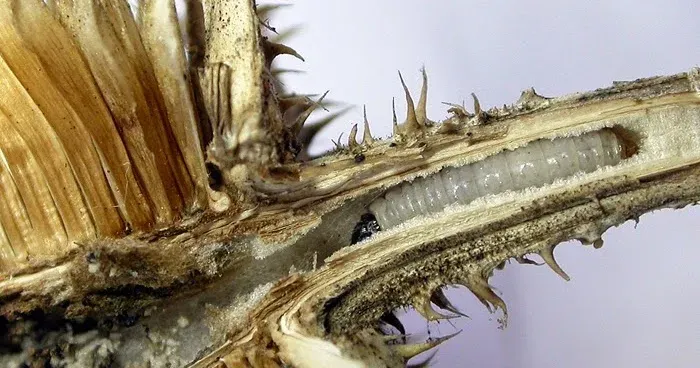
The larvae, which are the main feeding stage, grow up to 15 mm in length, possessing a light-colored body and a distinct brown head capsule.
Pupation typically occurs inside the host plant's tissues, such as within the seed capsules or stems, where the larva has spent its development period.
Due to the cryptic behavior of the larvae, identifying the pest often requires inspecting the internal parts of the plant's reproductive organs.
What it damages
This moth primarily targets plants of the genus Gentiana, often causing significant problems in horticultural and wild flower settings.
Larvae feed predominantly on the reproductive structures, specifically boring into ovaries and seed capsules to consume the developing seeds.
Stem boring also occurs, where the larvae tunnel through the plant tissue, which can disrupt nutrient flow and cause the plant to wilt or stunt.
The damage caused by the Gentian tortrix is particularly detrimental to seed production, threatening the survival of rare or ornamental gentian species.
Heavy infestations can lead to the total destruction of the seed crop, significantly impacting the nursery propagation of these specific plants.
When it appears
The Gentian tortrix typically completes one generation per year, with adult moths being most active during the warmer summer months from June through August.
Eggs are laid singly or in small clusters on the sepals or young flower buds of the host plant, ensuring immediate access to food upon hatching.
Once hatched, the larvae quickly bore into the plant tissue, a behavior that protects them from predators and environmental stressors.
The insects overwinter as mature larvae, hiding within the dry, hollowed-out remains of stems or seed pods of their host plants until the following spring.
Temperature patterns in early spring are crucial as they dictate the timing of pupation and the subsequent emergence of the adult moth population.
Signs of infestation
The most reliable sign of an infestation is the presence of small entry holes on the seed capsules, often accompanied by larval frass (excrement).
Flowers and seed capsules may appear withered, browned, or deformed, which is often the first visible symptom noticed by gardeners and growers.
Inside an infested capsule, the interior is typically found hollowed out and filled with larval excrement, indicating that the seeds have been entirely consumed.
Stems that have been bored into may show external signs of swelling or localized necrosis, which indicates systemic damage to the plant's structure.
Observant growers may find silk strands around the entry points, as larvae use them to secure their position before boring into the plant tissue.
Control measures
Sanitation is a primary control method, involving the manual removal and destruction of infested flower heads and seed capsules before the larvae can pupate.
Clearing plant debris during the autumn and winter months is essential to destroy the overwintering larval population residing in old stems.
Biological control using Bacillus thuringiensis sprays is effective if applied early in the season when larvae are still exposed on the plant surface.
Systemic insecticides may be used as a last resort to manage outbreaks, though timing must be precise to avoid damaging beneficial insect populations.
- Use pheromone traps to monitor adult flight activity.
- Implement proper spacing to reduce the spread of the moth.
- Encourage natural predators like parasitic wasps to help suppress populations.
Taxonomy
- Latin name
- Argyroploce gentiana
- Order
- Lepidoptera (butterflies)
- Family
- Tortricidae
- EPPO code
- ARGPGE
Discussion
No discussions yet — be the first.