
Argyroploce aprobola
Argyroploce aprobola
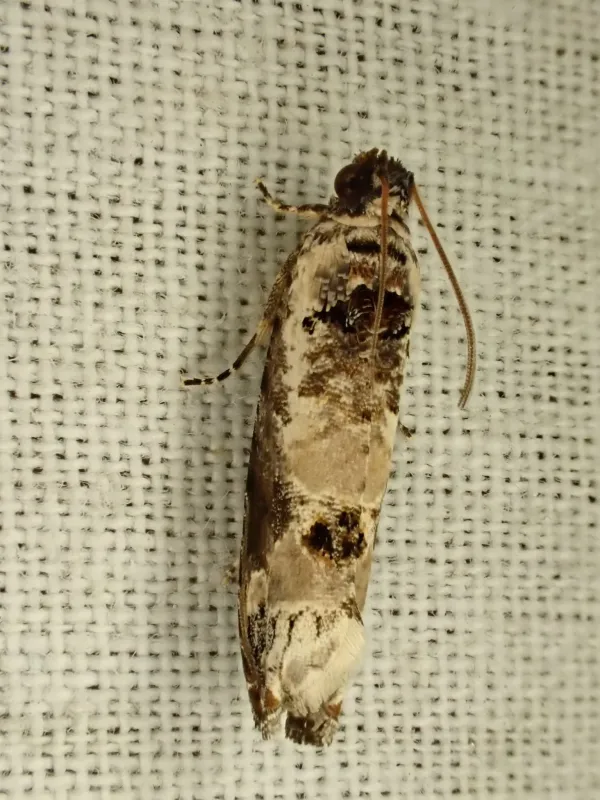
Description
How to identify
Argyroploce aprobola belongs to the family Tortricidae, order Lepidoptera. It is a small moth, with an adult wingspan typically ranging from 15 to 20 millimeters.
The forewings exhibit a mottled brownish or ochre pattern with darker bands, providing effective camouflage against tree bark and leaf surfaces where the moths rest during the day.
The larvae, or caterpillars, progress through several instars, transitioning from a pale color to a greenish or brownish tone, usually accompanied by a distinctive dark head capsule.
Pupation occurs within tightly woven cocoons made of silk and plant debris, often hidden inside rolled leaves or crevices on the plant stem, protecting the pupae from predators.
Identification often requires careful inspection as many Tortricidae species look similar; the use of pheromone-baited traps is a standard practice for accurate species detection in agricultural fields.
What it damages
This pest is a significant polyphage that affects a diverse range of plant species, including tea bushes, mango, litchi, and various ornamental shrubs in gardens.
Larvae cause direct damage by feeding on young, tender leaves and developing shoots, which results in severe leaf deformation and the stunting of overall plant growth.
Under heavy infestation conditions, the caterpillars can attack inflorescences and small fruit buds, leading to substantial yield losses and poor fruit quality at harvest.
The damaged leaf and shoot tissues act as entry points for secondary infections, such as fungi or bacteria, which can accelerate the decline of the infested host plant.
In nurseries, Argyroploce aprobola poses a critical threat by destroying the terminal growing points of young saplings, rendering them unfit for commercial distribution and planting.
When it appears
Adult moth activity typically peaks during warmer months, which provide favorable climatic conditions for mating and oviposition on suitable host plants.
In tropical and subtropical climates, the life cycle may occur continuously throughout the year, allowing for multiple overlapping generations in a single growing season.
The highest damage occurs during the peak vegetative stage, as the availability of new foliage provides the necessary nutrition for the rapid larval development of the pest.
In temperate regions, the species typically overwinters in the pupal stage, hidden within leaf litter or protected sheltered spots, waiting for the spring temperatures to emerge.
Farmers should begin seasonal monitoring as soon as new growth appears on the plants to identify early infestations before they reach economic threshold levels.
Signs of infestation
The most prominent sign of infestation is the rolling or tying together of young leaves with silk webbing, creating a protective enclosure for the larvae to feed safely.
The presence of fine, dark granular frass (excrement) scattered inside or near the rolled leaves is a definitive indicator of an active caterpillar infestation.
Leaves affected by feeding exhibit yellowing, necrosis, and premature drop, which can lead to sparse foliage and visible damage to the canopy of the plant.
When reproductive parts are targeted, buds fail to bloom properly and often wither, causing a direct reduction in the reproductive potential and yield of the plant.
- Webbing found in leaf axils
- Rolled or deformed leaf blades
- Dark frass granules on leaf surfaces
- Wilting of terminal shoots
- Boreholes in young fruit and flower buds
Control measures
Cultural management is the first line of defense: regular pruning and destruction of infested shoots can significantly reduce the larval population before it spreads.
Biological control options include the deployment of natural predators or the application of biopesticides based on Bacillus thuringiensis to target young larvae effectively.
Chemical intervention should be timed specifically with the hatching of the first instar larvae, as older caterpillars are difficult to reach due to their protective rolled-leaf shelters.
Pheromone traps are highly effective for monitoring population trends and can be used for mating disruption, reducing the overall reproductive success of the moth population.
Strict phytosanitary measures regarding the movement of nursery stock are essential to prevent the spread of Argyroploce aprobola into new, uninfested growing regions.
Taxonomy
- Latin name
- Argyroploce aprobola
- Order
- Lepidoptera (butterflies)
- Family
- Tortricidae
- EPPO code
- ARGPAP
Discussion
No discussions yet — be the first.