
Argyroploce
Argyroploce
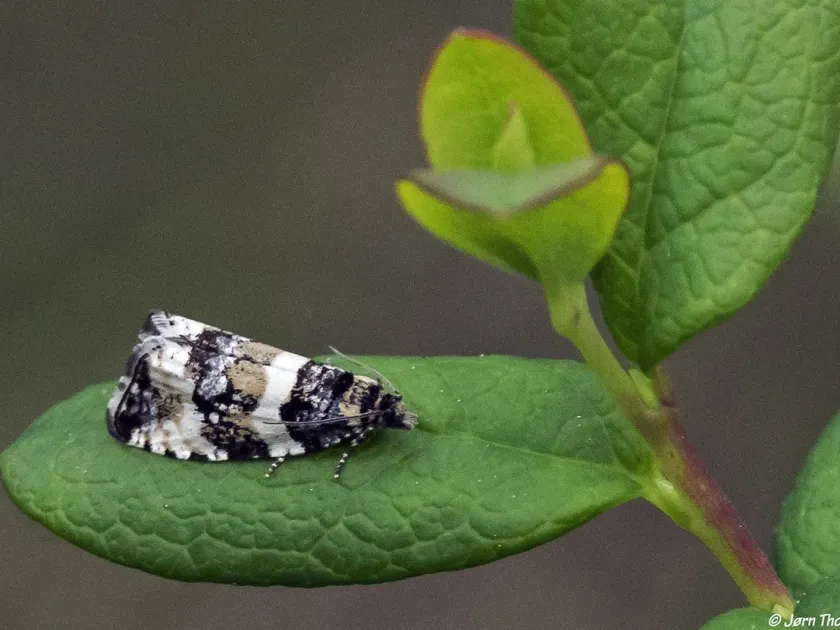
Description
How to identify
The genus Argyroploce belongs to the Tortricidae family, commonly known as leafrollers, within the order Lepidoptera. These moths are relatively small, with a wingspan typically ranging from 15 to 25 mm, and possess intricate patterns on their forewings that provide excellent camouflage.
Adult moths are primarily crepuscular or nocturnal, making them difficult to spot during the day. Their coloration varies from greyish-brown to earthy tones, allowing them to blend perfectly with the bark or twigs of their host plants.
Larvae, or caterpillars, pass through several developmental stages. They are highly active and, when disturbed, can drop from leaves using a silk thread, which is a common defensive behavior within the Tortricidae family.
Pupation occurs inside dense cocoons, often constructed within folded leaves or in crevices of the tree bark. The duration of the pupal stage varies significantly depending on the local ambient temperature.
The biology of Argyroploce is characterized by high adaptability to various environments, enabling these insects to thrive across diverse climatic regions and host multiple generations per season.
What it damages
Argyroploce species are polyphagous pests that affect a wide variety of trees and shrubs. They pose a significant threat to fruit orchards as well as ornamental garden plants.
The most substantial economic damage is observed in pome and stone fruit trees, including apples, pears, plums, and cherries. Caterpillars feed on leaves, buds, and young fruit, severely impacting crop yields.
Beyond orchards, these pests are frequently found on forest trees like oak, willow, and aspen. Infestations can lead to the weakening of young saplings, causing stunted growth and increased susceptibility to disease.
Feeding damage disrupts the plant's vascular system and exposes tissues to secondary infections, such as fungi or bacteria. This often necessitates intensive management to maintain the overall health of the tree.
Caterpillars of younger instars are particularly damaging as they bore into buds or developing shoots, effectively destroying the plant's apical dominance and future growth potential.
When it appears
The flight period for adult moths generally begins in the spring, coinciding with the flowering phase of host plants, and may persist throughout the summer depending on the number of generations.
Females typically deposit eggs singly or in small clusters on the undersides of leaves, petioles, or tree bark. Embryonic development usually takes one to two weeks, heavily dependent on cumulative heat units.
Upon hatching, larvae immediately begin feeding, often skeletonizing leaves or creating tunnels in buds. Peak feeding activity is observed during the late spring and early summer months.
Depending on the latitude and climate, Argyroploce can undergo one, two, or even three generations per season, requiring consistent monitoring throughout the vegetative period.
The overwintering stage is typically the late-instar larva, which seeks refuge in protective cocoons hidden within bark fissures or among fallen leaf litter.
Signs of infestation
The most prominent sign of an infestation is the presence of rolled or webbed leaves. Inside these structures, one can usually find the larvae or their accumulated frass (waste material).
Affected flower buds often wither and drop prematurely, resulting in a loss of fruit set. When caterpillars attack the developing fruit, they leave holes, surface scarring, or cause uneven ripening.
Damage to young shoots is evidenced by wilting or curling of the terminals. This happens because the larva feeds on the internal tissues, interrupting the flow of nutrients to the shoot tip.
During the dormant season, careful inspection of the tree trunk and bark can reveal small, camouflaged cocoons, which indicate the presence of overwintering larvae in the immediate vicinity.
- Rolled leaves tied together with silk.
- Withered or blackened buds.
- Holes and scars on young fruits.
- Accumulation of frass on leaf surfaces.
Control measures
Integrated pest management starts with pheromone traps, which are crucial for monitoring moth populations and determining the exact timing for insecticide applications to minimize chemical use.
Cultural practices are essential, such as pruning and destroying infested shoots, as well as clearing away leaf litter to reduce the overwintering population of the pest.
During periods of mass egg hatching, biological insecticides or systemic chemicals targeting young larvae are highly effective in curbing the population before significant damage occurs.
Installing sticky bands around tree trunks is a simple yet effective mechanical method to capture migrating larvae, preventing them from reaching the canopy where they cause the most harm.
Maintaining optimal tree vigor through balanced irrigation and fertilization helps the plants withstand feeding pressure and supports quicker recovery after pest attacks.
Taxonomy
- Latin name
- Argyroploce
- Order
- Lepidoptera (butterflies)
- Family
- Tortricidae
- EPPO code
- ARGPSP
Discussion
No discussions yet — be the first.