
Diving bell spider
Argyroneta aquatica
Description
How to identify
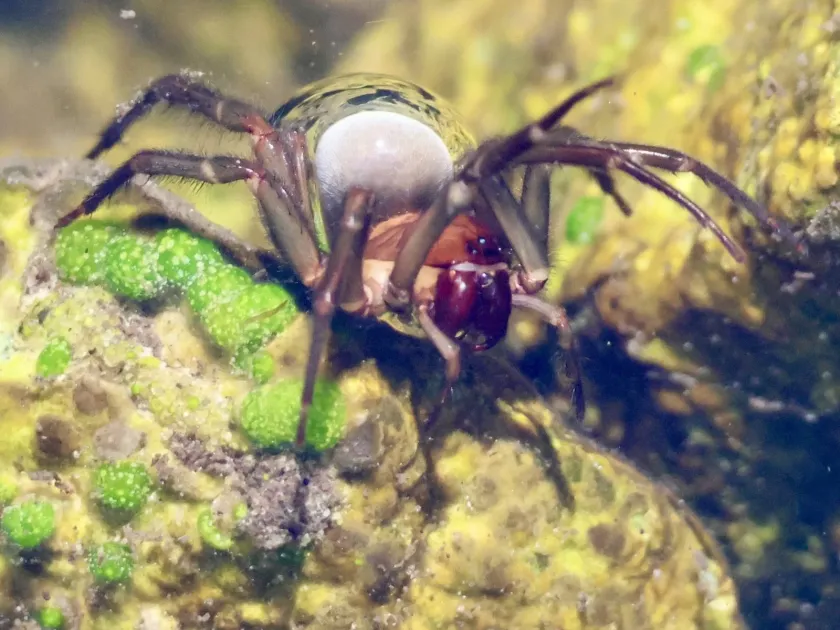
The diving bell spider (Argyroneta aquatica) is the only spider species in the world that spends its entire life cycle underwater.
It is characterized by a dense covering of hair on its body that traps air, appearing silvery in the water column.
The spider constructs a dome-shaped web (the "bell") among submerged plants, which it fills with air brought down from the surface.
They belong to the Cybaeidae family and are typically found in stagnant or slow-moving freshwater habitats.
Adult spiders range in size, with males often being slightly larger than females, which is uncommon for spiders.
What it damages
From an agronomic perspective, the diving bell spider is not a pest; it causes no damage to crops, foliage, or root systems.
The spider is a strictly carnivorous predator, feeding on small aquatic insects, crustaceans, and larvae.
It does not interact with terrestrial or aquatic crops in any way that would lead to harvest loss.
The species is considered a bioindicator, reflecting the health and purity of the local water system.
There are no documented instances of this spider harming agricultural productivity in any part of the world.
When it appears
The activity cycle of the diving bell spider is governed by water temperature and the availability of prey.
Spring marks the beginning of their active period as water temperatures rise, facilitating metabolic activity.
Summer is the primary phase for mating and the expansion of the population within suitable water bodies.
Autumn triggers the transition to overwintering, where spiders seek deeper, more thermally stable areas.
The life cycle involves several molting stages, with individuals overwintering in their submerged air-filled retreats.
Control measures
No pest control measures are required for the diving bell spider as it does not pose a threat to agricultural crops.
Management of water bodies for agricultural use should prioritize maintaining ecological balance rather than exterminating aquatic species.
Mechanical vegetation management in irrigation canals is sufficient to maintain water flow without affecting spider populations.
Chemical intervention is strictly discouraged as it may harm non-target aquatic organisms and disrupt the local food chain.
Agronomists should view this spider as part of the natural environment that contributes to regulating populations of harmful aquatic insect larvae.
Taxonomy
- Latin name
- Argyroneta aquatica
- Family
- Cybaeidae
- EPPO code
- ARGRAQ
Discussion
No discussions yet — be the first.