
Lugworm
Arenicola
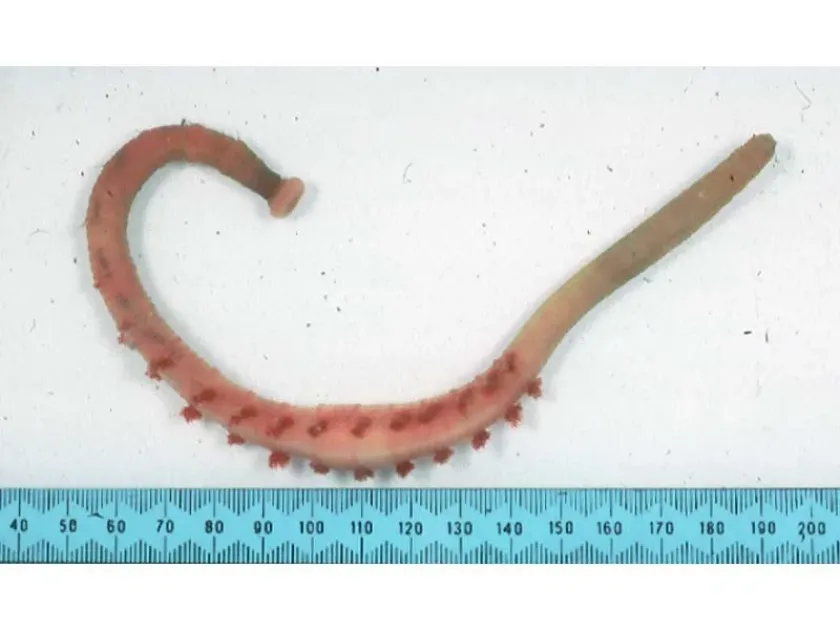
Description
How to identify
The lugworm (genus Arenicola) is a marine polychaete worm, commonly found in the intertidal zones of oceans across the globe. It is well-known to marine biologists for its distinct role in coastal sediments.
The organism features a segmented, muscular body that can reach lengths of up to 25 centimeters. It typically resides in a U-shaped burrow, maintaining a connection to the sediment surface.
Lugworms feed by ingesting large quantities of sand and organic matter, filtering the nutrients, and depositing the processed sediment as characteristic coils on the surface.
The reproductive cycle involves spawning in the water column, followed by a larval stage that eventually settles into the benthic environment to begin burrowing.
Their presence is a reliable indicator of sediment health, as they contribute significantly to the aeration and nutrient cycling of coastal marine habitats.
What it damages
The lugworm is not an agricultural pest. It is exclusively a marine organism and has no interaction with agricultural crops, soil-based gardens, or terrestrial farming systems.
There is no evidence or biological basis to classify the lugworm as a threat to plants, roots, or seeds. It cannot survive in terrestrial agricultural soils due to the lack of salt water and specific marine conditions.
Confusion often arises when gardeners encounter different types of soil-dwelling worms or larvae, leading to the misidentification of common pests as marine organisms.
In terms of economic impact, the lugworm is actually beneficial to the marine ecosystem, supporting fish populations and maintaining the quality of tidal areas.
As a result, no damage to your garden or field can be attributed to this species, and it should not be considered a concern for any farming operation.
Control measures
Since the lugworm is not a pest, there are no control measures, chemical treatments, or management strategies required to mitigate its presence in agricultural environments.
Farmers and gardeners should focus their efforts on managing recognized terrestrial pests such as root-feeding larvae, nematodes, or slugs that may affect plant health.
The use of pesticides in or near coastal habitats is strongly discouraged, as such chemicals are toxic to marine life and disrupt delicate biological balance.
Maintaining healthy soil, practicing crop rotation, and monitoring for genuine threats are the best ways to ensure plant protection and a successful harvest.
Always verify the identity of any organism found in your soil, as the lugworm is merely a fascinating inhabitant of the marine world, not a garden threat.
Taxonomy
- Latin name
- Arenicola
- Family
- Arenicolidae
- EPPO code
- ARCNSP
Discussion
No discussions yet — be the first.