
Archips striana moth
Archips striana
Description
How to identify
Archips striana is a member of the Tortricidae family within the order Lepidoptera. This moth species undergoes complete metamorphosis, consisting of egg, larva (caterpillar), pupa, and adult stages, each requiring specific conditions for survival and development.
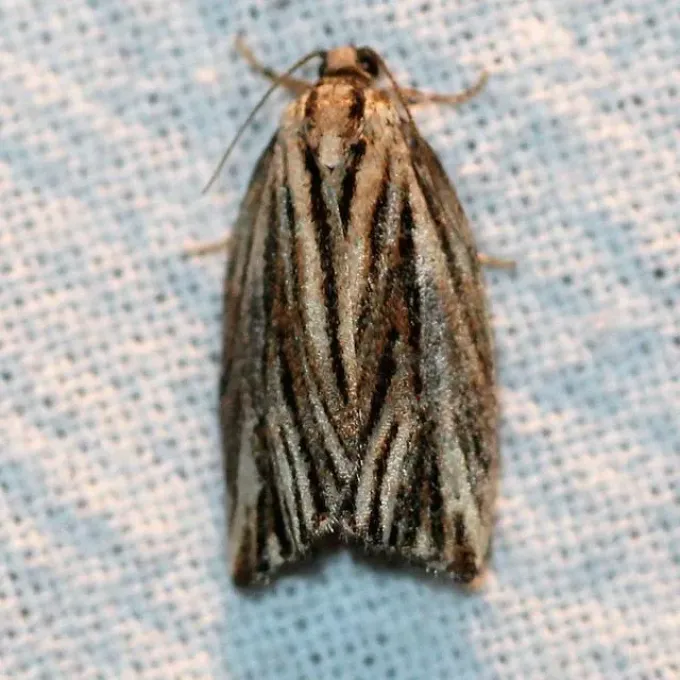
The adult moth is typically characterized by a distinct wing pattern featuring oblique bands and patches, which provides effective camouflage when resting on tree bark. The wingspan generally ranges between 18 and 25 millimeters.
The larvae, or caterpillars, possess a cylindrical body and are equipped with strong mandibles adapted for chewing plant tissues. Their coloration typically blends with the host plant, ranging from light green to brown, acting as a defense against predators.
Taxonomically, the species is classified based on adult morphology, specifically the genital structure, which is crucial for distinguishing it from other closely related leafroller species in the Tortricidae family.
Overwintering usually occurs at the larval stage. Caterpillars seek refuge in bark crevices or among fallen leaves, constructing silk-lined shelters to survive cold temperatures during the dormant season.
What it damages
Archips striana larvae are known to infest a variety of host plants, particularly fruit trees. They feed on buds, young leaves, and developing fruits, causing significant physiological and economic damage.
Early spring feeding often involves the destruction of leaf and flower buds. This prevents the normal development of new shoots and foliage, which weakens the plant and stunts its seasonal growth.
Larvae commonly roll or fold leaves using silk threads, creating protected chambers where they feed securely. This habit significantly reduces the photosynthetic area of the tree and impacts overall plant health.
Damage to fruits occurs when larvae feed on the surface or bore into the flesh. Such injuries not only reduce the aesthetic value but also open pathways for fungal pathogens and decay, rendering the harvest unsuitable for market.
Severe infestations can lead to substantial defoliation. A weakened tree with damaged buds and reduced leaf area is less likely to produce a viable crop and is more susceptible to secondary environmental stresses.
When it appears
The biological cycle is triggered by rising temperatures in spring. Larvae emerge from hibernation in synchronization with the bud-break stage of host trees to ensure an immediate food source.
Adult flights are typically observed throughout the summer, peaking in mid-summer. Moths are generally nocturnal or crepuscular, making them difficult to spot during daylight hours without specialized traps.
The duration of the life cycle is highly dependent on ambient temperature. Warmer seasons accelerate metabolic rates, potentially allowing for more rapid development and increased population density over a single growing season.
As autumn approaches, the final larval generation prepares for winter diapause. This is a critical period where environmental conditions dictate the survival rate of the population for the following year.
Monitoring the flight activity using pheromone traps is the standard practice for agricultural professionals to determine the precise timing for intervention and the overall intensity of the pest pressure.
Signs of infestation
The most visible sign of infestation is the presence of rolled, curled, or webbed leaves. These leaf nests are easy to identify upon inspection and usually house active caterpillars or their frass.
Bud damage appears as irregular holes or completely hollowed-out tissue early in the season. On young shoots, feeding marks on the leaf petiole or the base of the blade are common indicators of the pest's presence.
Fruits show surface scarring, shallow excavations, or deeper tunnels caused by larval feeding. These lesions often become discolored or necrotic as they age and are exposed to the elements.
Premature fruit drop and stunted branch development are common consequences of persistent feeding. In extreme cases, the canopy of an affected tree may look sparse due to heavy leaf consumption.
- Tightly rolled leaves bound by silk.
- Frass accumulation near feeding sites.
- Hollowed-out buds or stunted shoot tips.
Control measures
Cultural control practices, such as removing debris and scraping off loose, infested bark, help to destroy overwintering larvae and reduce the baseline population for the next growing season.
Biological control options involve the use of entomopathogenic bacteria like Bacillus thuringiensis, which target larvae specifically while preserving populations of beneficial insects and natural predators.
Chemical intervention should be strategically timed based on larval emergence. Systemic or contact insecticides are most effective when applied before the larvae have successfully created protected leaf rolls.
Integrated Pest Management (IPM) incorporates the use of pheromone traps to monitor population spikes. This allows for precise, targeted treatments rather than broad-spectrum spraying, which minimizes environmental impact.
Promoting a healthy orchard ecosystem by supporting natural enemies like parasitic wasps helps maintain the pest population below the economic injury level, ensuring sustainable agricultural productivity.
Taxonomy
- Latin name
- Archips striana
- Order
- Lepidoptera (butterflies)
- Family
- Tortricidae
- EPPO code
- ARCHST
Discussion
No discussions yet — be the first.