
Semi-structural leafroller
Archips semistructa
Description
How to identify
The semi-structural leafroller (Archips semistructa) is a moth species belonging to the family Tortricidae. This insect is a known pest in various temperate climate regions, primarily affecting orchard crops.
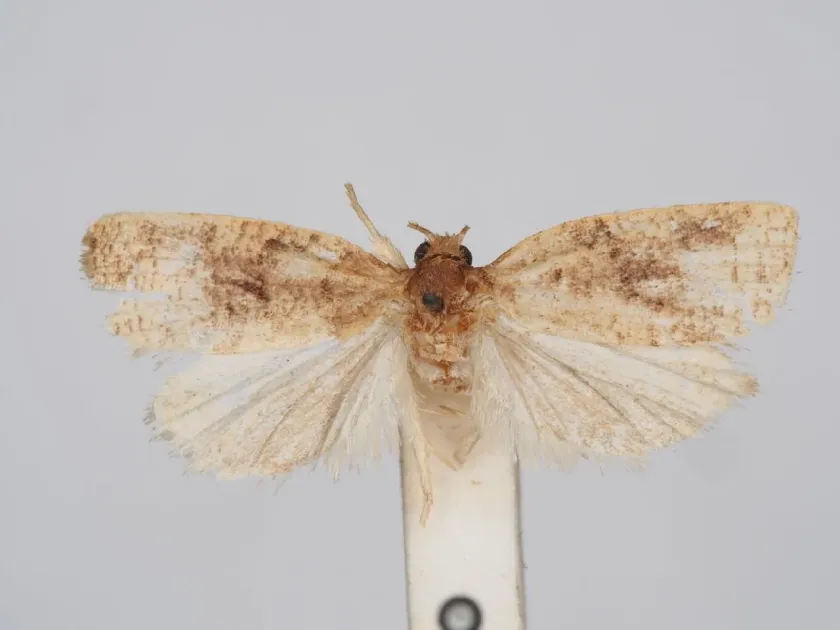
The adult moth has a wingspan of approximately 20–25 mm. The forewings are typically patterned with shades of brown, ochre, and dark grey, creating a mesh-like appearance that provides excellent camouflage against tree bark.
The larvae, or caterpillars, go through several instars. Early instars are often light green with darker head capsules, while later stages may darken in color as they feed and grow.
Pupation occurs within rolled leaves or silk nests. This protective behavior makes the pupae difficult to detect and shields them from various environmental stressors and natural predators.
Understanding the taxonomic position and biological traits of this species is essential for agronomists to develop effective control strategies that minimize damage to commercial orchards.
What it damages
The primary damage is caused by larvae that feed on the vegetative and reproductive parts of host plants. The most affected crops include apples, pears, plums, and other members of the Rosaceae family.
Caterpillars consume developing buds, young leaves, and developing fruit. Severe infestations can result in significant defoliation, which stresses the trees and reduces their photosynthetic capacity.
Fruit damage manifests as shallow feeding scars or cavities, which often leads to fruit drop or reduced shelf life. Such damage significantly degrades the market value of the harvest.
Wounds caused by leafroller feeding also create entry points for secondary infections, such as fungi and bacteria, which can cause further rot and plant tissue destruction.
Repeated yearly infestations weaken the tree's overall vigor, negatively impacting yield consistency and the long-term survival of the orchard plantations.
When it appears
The pest typically overwinters in the egg stage, with egg masses attached to the bark of fruit trees. Larval emergence coincides with the spring budburst of host trees.
The adult flight period generally occurs in the summer months. Timing is highly dependent on regional climate, with warmer seasons potentially accelerating the lifecycle and allowing for partial second generations.
The most intensive feeding phase occurs during the flowering and fruit-setting stages. This is the window when the caterpillars are most active and most susceptible to control measures.
By late summer, the final larval instars complete their development and pupate. The duration of the pupal stage varies based on ambient temperatures, usually lasting several weeks.
Monitoring the seasonal progression of Archips semistructa is crucial for timing interventions, as the effectiveness of control depends heavily on targeting the vulnerable early-instar larvae.
Signs of infestation
The most characteristic sign of infestation is the presence of leaves tightly rolled or tied together with silk threads. These nests serve as shelters for the caterpillars.
Visible feeding damage, such as irregularly shaped holes or skeletonized leaf areas, along with the presence of frass (larval excrement) within the silken nests, strongly indicates an active infestation.
Fruit damage is characterized by surface scarring or small pits covered by webbing. In some cases, the tissue around the feeding site may become corky or necrotic as the plant reacts to the injury.
A thin, web-like structure covering parts of the foliage is a tell-tale sign that a leafroller colony is present. High density of such nests can lead to a sparse, sickly appearance of the tree canopy.
Careful inspection of tree bark in late winter or early spring may reveal greyish or brownish, flat-shaped egg masses, which are the starting point of the next generation.
Control measures
Integrated pest management (IPM) is the most effective approach. Cultural practices, such as pruning and removing infested branches, help reduce the overwintering population.
Biological control using microbial insecticides based on Bacillus thuringiensis or the release of parasitic wasps (e.g., Trichogramma species) can significantly lower larval numbers without harming beneficial insects.
Chemical control should be applied strategically, targeting the window after egg hatch but before larvae establish protective rolled-leaf shelters. Systemic insecticides are often preferred during this critical period.
Pheromone traps are essential for monitoring adult flight patterns. These tools allow agronomists to determine the optimal timing for spray applications, reducing overall chemical usage.
Ongoing surveillance of the orchard is necessary to prevent population outbreaks, as early detection significantly increases the probability of successful suppression with minimal intervention.
Taxonomy
- Latin name
- Archips semistructa
- Order
- Lepidoptera (butterflies)
- Family
- Tortricidae
- EPPO code
- ARCHSM
Discussion
No discussions yet — be the first.