
Pine leaf roller
Archips oporana
Description
How to identify
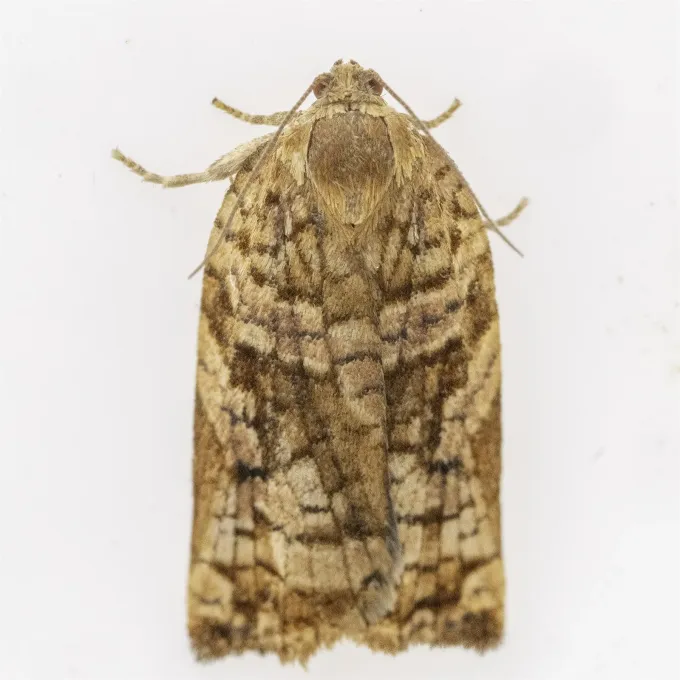
The pine leaf roller (Archips oporana) is a moth species belonging to the Tortricidae family. The adult moth has a wingspan ranging from 18 to 28 mm, with forewings that are typically ochre-yellow to brown, often marked with darker bands.
The larvae, or caterpillars, can grow up to 25 mm in length. They have a dark brown head and a body that varies from olive-green to greyish-green, with distinct pale tubercles on each body segment.
Pupae are generally dark brown and are found tucked away within spun foliage, protected by silk webs. This protection ensures the safety of the pupa during metamorphosis.
The species is primarily associated with coniferous trees, particularly pines, and follows a complete metamorphosis life cycle common to most Lepidoptera.
Adult moths are nocturnal and are rarely seen during the day, which often makes their presence go unnoticed until significant damage appears on the host trees.
What it damages
Larvae are the primary cause of damage, as they feed on the needles of pines, spruces, and larches. Their feeding behavior often involves spinning needles together with silk to create protective shelters.
Outbreaks can lead to severe defoliation, which causes significant stress to the trees, resulting in reduced annual growth and, in extreme cases, mortality.
Seedlings and young trees are particularly vulnerable to these pests. The loss of needles compromises the tree's photosynthetic capability and overall vigor.
Secondary infections and infestations by bark beetles frequently occur on trees already weakened by pine leaf roller activity, further damaging forest health.
Economic impacts include losses in commercial timber production, decreased value of nursery stock, and degradation of the aesthetic quality in urban landscapes.
When it appears
Adults emerge during the summer months, typically between June and July. During this flight period, females lay eggs on the needles or bark of host trees.
The species overwinters at the second larval stage. The caterpillars construct robust silk nests within crevices or branch forks to protect themselves against cold temperatures.
Feeding resumes in the spring when temperatures rise, as the larvae emerge to consume fresh, succulent new growth on the branches.
Pupation generally occurs in late spring or early summer, completing the single generation cycle typically observed in temperate regions.
Environmental factors, such as warm spring weather, play a critical role in the timing of larval emergence and the overall success of the pest's reproductive cycle.
Signs of infestation
The most prominent sign of an infestation is the presence of silk webbing, which binds needles together into small, tangled clusters or nests.
Frass, or caterpillar droppings, can often be found accumulated within the silk webbing or at the base of the needles where the larvae have been actively feeding.
Needles that have been fed upon often turn yellow, wither, and drop prematurely, leaving bare or stunted shoots at the tips of the branches.
Close inspection of the tree canopy reveals distorted growth and the presence of larvae or their empty pupal cases attached to the foliage.
- Yellowing and drying needles on shoot tips.
- Silk webbing visible between needles.
- Accumulation of frass on branches.
- Stunted or deformed new branch growth.
Control measures
Chemical control is an option for large-scale infestations, involving the use of insecticides approved for forest use, applied during the active larval stages.
Biological control, including the application of Bacillus thuringiensis, is a highly effective and eco-friendly strategy for managing caterpillar populations.
Good silvicultural practices, such as the removal of heavily infested or dead branches, can help limit the spread of the population within a plantation.
Monitoring populations using pheromone traps allows for the early detection of moths, which helps in timing control measures for maximum efficiency.
Preserving natural predators, including insectivorous birds and parasitic wasps, is essential for maintaining natural control and forest ecological balance.
Taxonomy
- Latin name
- Archips oporana
- Order
- Lepidoptera (butterflies)
- Family
- Tortricidae
- EPPO code
- ARCHOP
Discussion
No discussions yet — be the first.