
Western spruce leafroller
Archips occidentalis
Description
How to identify
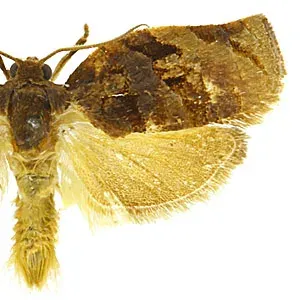
The Western spruce leafroller (Archips occidentalis) is a moth species belonging to the family Tortricidae. It is a known pest that primarily targets conifer species in its natural habitat.
The adult moth has a typical life cycle consisting of four distinct stages: egg, larva (caterpillar), pupa, and adult. Identification usually relies on wing patterns and larval behavior.
The larvae are known for their leaf-rolling habits, where they bind needles and shoots together using silk to create protective shelters.
Monitoring the population density of A. occidentalis is essential for forest managers and arborists to determine the necessity of intervention during the growing season.
Environmental factors, such as temperature and humidity, play a significant role in the timing of the moth's emergence and the speed of its developmental cycle.
What it damages
This pest is highly specialized in damaging coniferous trees, particularly spruce (Picea) and fir species. Young trees in plantations are the most susceptible to infestation.
The larvae feed extensively on current-year needles and tender new growth, causing significant defoliation and weakening the tree's health.
Terminal bud damage is a common occurrence, which frequently leads to growth retardation and permanent deformity of the tree's leader shoot.
Severe infestations reduce the photosynthetic capacity of the tree, making it prone to opportunistic secondary infestations by wood-boring insects.
In ornamental settings, the damage ruins the aesthetic appeal of the trees, as the foliage turns brown and sheds prematurely due to larval feeding.
Signs of infestation
Webbing present on the tips of branches is the most noticeable sign of a leafroller infestation. Larvae use this silk to hold needles together.
Discoloration of the needles, which eventually fade to a yellowish-brown color, indicates that the larvae have been feeding on the tissue.
Distorted or bent tips of shoots are clear evidence of mechanical damage caused by the larvae during the development of new growth.
Frass (larval waste) particles trapped within the webbing are a reliable indicator of active larval feeding within the canopy.
Egg masses laid by the female moths on the bark or needles during the late summer can sometimes be detected during thorough inspections of the canopy.
Control measures
Chemical control involves the application of appropriate insecticides during the larval stage, targeting the window when larvae are most active and exposed.
Biological control methods, such as utilizing Bacillus thuringiensis, provide an environmentally friendly alternative to traditional pesticides.
Cultural practices, including pruning and disposing of heavily infested branches, help in reducing the population load in the immediate environment.
Promoting a healthy environment for natural predators like birds and parasitic wasps helps to maintain the pest population at manageable levels.
- Application of systemic insecticides when necessary.
- Monitoring with pheromone-based traps to track population trends.
- Sanitation by removing infested foliage to disrupt the life cycle.
Taxonomy
- Latin name
- Archips occidentalis
- Order
- Lepidoptera (butterflies)
- Family
- Tortricidae
- EPPO code
- CHONOC
Discussion
No discussions yet — be the first.