
Oak leafroller
Archips fervidanus
Description
How to identify
The oak leafroller (Archips fervidanus) is a moth species belonging to the family Tortricidae. It is a well-known forest pest primarily affecting oak ecosystems.
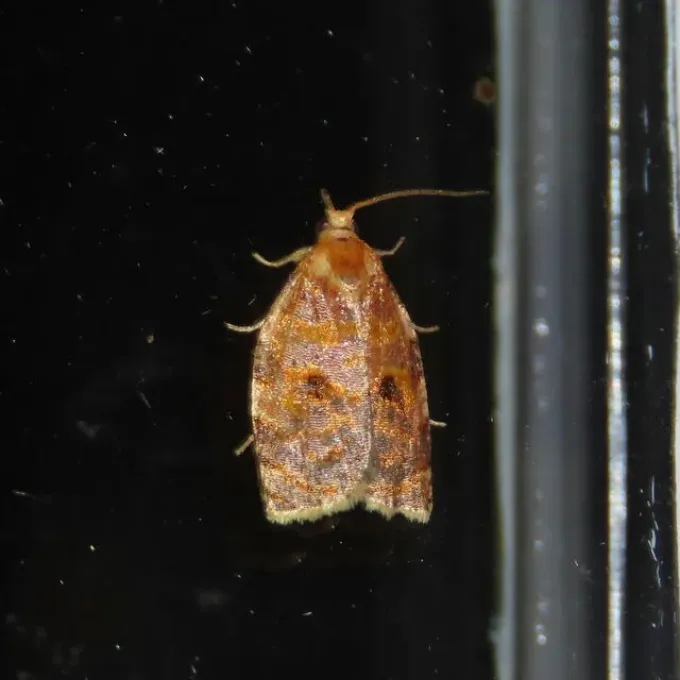
The adult moth has a wingspan ranging from 20 to 25 mm. The forewings are typically reddish-brown to ochre with a distinct dark network pattern, providing excellent camouflage against tree bark.
The larvae are small, slender caterpillars that undergo several molts. They generally possess a light green body with a dark, sclerotized head capsule, which hardens as they grow.
These moths are highly specialized, with their biological cycles tightly synchronized with the budding and foliage development of their primary host plants, specifically Quercus species.
Monitoring this species is usually conducted via pheromone traps, which allow foresters to track population dynamics and determine the peak flight period of the adult moths.
What it damages
The primary hosts of the oak leafroller are various species of oak. The larvae feed extensively on the buds, leaves, and sometimes the tender shoots of the trees.
During severe outbreaks, the caterpillars can cause significant defoliation, stripping the trees of their leaves early in the growing season and impacting the tree's overall vigor.
Repeated defoliation over several consecutive years leads to branch dieback, reduced timber growth, and increased vulnerability to secondary pests such as borers and wood-decay fungi.
Young trees in nurseries are particularly susceptible to damage, which can stunt their growth and significantly lower their survival rates if not treated in time.
While the economic impact is most felt in forestry, ornamental oak trees in parks and gardens can also suffer aesthetic damage due to the leaf-rolling behavior of the caterpillars.
When it appears
The oak leafroller completes one generation per year. The species overwinters in the egg stage, with eggs deposited in clusters on the branches and trunks of host trees.
Hatching occurs in the spring, generally aligning with the swelling and opening of oak buds. This ensures that the newly emerged larvae have immediate access to fresh, nutritious food.
The larval stage lasts for approximately 4 to 6 weeks. Throughout this phase, they spin silken threads to roll or fold leaves, creating protective shelters for feeding and molting.
Pupation takes place inside these rolled-leaf shelters in early to mid-summer. The pupal stage typically lasts for about two weeks before the adult moth emerges.
Adult moths are active during the mid-summer period. After mating, females lay their eggs on twigs, which remain dormant until the following spring, completing the cycle.
Signs of infestation
The most diagnostic sign of an infestation is the presence of rolled or folded leaves bound together with white silk webbing, often located at the tips of branches.
Extensive defoliation is visible from the ground, as the canopy may appear sparse or riddled with holes. Leaves that have been fed upon often show significant skeletonization.
The accumulation of frass (larval droppings) on the leaves below or on the forest floor is another clear indicator of active feeding activity in the upper canopy.
In the evenings during the flight season, moths may be seen fluttering near the host trees, especially when attracted to artificial light sources near forest edges.
Identifying the specific type of leaf shelter and the appearance of the larvae can help distinguish this species from other common defoliators found in oak forests.
Control measures
Integrated Pest Management (IPM) is the preferred approach for controlling oak leafrollers. This includes fostering natural predators such as insectivorous birds and parasitic wasps.
In high-value forestry or urban landscape settings, biological insecticides containing Bacillus thuringiensis (Bt) are highly effective and environmentally friendly options.
Chemical control with systemic or contact insecticides is reserved for severe outbreaks that threaten the long-term health of valuable oak stands.
Sanitation efforts, such as the removal of heavily infested or weakened trees, can help reduce the population density in a specific area.
- Implement regular monitoring using pheromone-baited traps.
- Encourage bird nesting to naturally reduce larval populations.
- Apply targeted insecticides during the early larval stage if necessary.
Taxonomy
- Latin name
- Archips fervidanus
- Order
- Lepidoptera (butterflies)
- Family
- Tortricidae
- EPPO code
- ARCHFE
Discussion
No discussions yet — be the first.