
Fruittree leafroller
Archips argyrospilus
Description
How to identify
The fruittree leafroller (Archips argyrospilus) is a moth belonging to the family Tortricidae. Adult moths have a wingspan of approximately 20–24 mm and feature distinct forewings with mottled brown, gold, and silver patterns, providing excellent camouflage against bark.
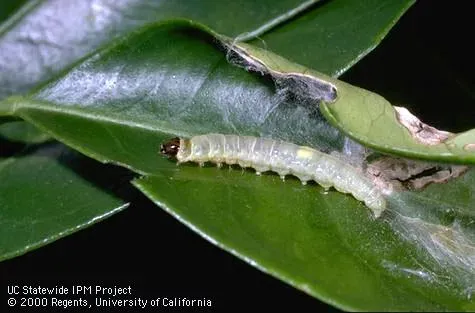
Larvae are initially pale green with dark heads and progress through several instars. They are highly active and, when disturbed, will drop from the foliage on a silken thread to escape potential threats or predators.
Eggs are laid in compact, flat masses on the branches and trunks of host trees. These egg masses are covered with a protective substance that matches the color of the tree bark, making them extremely difficult to spot during routine garden inspections.
The species completes one generation per year, overwintering as egg masses. Larval emergence typically coincides with the bud break stage of fruit trees, linking their development closely to the phenological stages of their host plants.
As a highly adaptable species, the fruittree leafroller has established itself in a wide range of temperate climates, thriving in both managed orchards and wild settings where host trees are present.
What it damages
This pest is highly polyphagous, attacking a wide variety of fruit trees, including apples, pears, cherries, plums, and peaches. It can also infest various ornamental shrubs and bushes found in or near orchard environments.
Primary damage is caused by the larvae, which feed on expanding buds, often destroying them completely before they can blossom. This significantly reduces the fruit-bearing capacity of the tree early in the season.
As the leaves unfold, larvae use silk to roll or web them together, creating protective shelters. Within these structures, they feed on the leaf tissue, which reduces the plant's photosynthetic efficiency and weakens the tree's health.
Young fruit is also a target, as larvae feed on the surface, creating deep, irregular cavities. These wounds cause the fruit to deform, scar, or drop prematurely, rendering the crop unmarketable for fresh consumption.
Heavy infestations can lead to significant defoliation, particularly in young or stressed trees. This loss of foliage limits the tree's ability to store carbohydrates for the following year, leading to long-term productivity issues.
Signs of infestation
Visible webbing on terminal shoots and leaves is the most common indicator of an active fruittree leafroller infestation. When leaves are found rolled or webbed together, it is a clear sign of larval presence.
Buds that fail to develop or appear hollowed out in early spring are early warning signs. Close examination often reveals small entrance holes or the presence of larvae hiding within the damaged tissue.
Fruit damage manifests as irregular scarring or surface feeding, usually visible from late spring onwards. These areas are prone to developing secondary rot infections, which further degrade the quality of the harvested fruit.
Winter scouting for egg masses on the bark of twigs and small branches can help growers determine if intervention will be required the following spring. This preemptive step is vital for integrated pest management.
The use of pheromone traps during the adult flight period provides an effective method for monitoring population levels. A sudden increase in moth catches indicates a need for intensified management strategies.
Control measures
Cultural control involves pruning and destroying infested twigs and branches during winter. This method physically removes the overwintering egg masses and reduces the initial population in the orchard.
Biological control methods, including the use of B.t. (Bacillus thuringiensis) based sprays, are effective against young larvae while remaining safe for beneficial insects, such as pollinators and predatory mites.
Pheromone-based mating disruption can be utilized in larger orchards to keep populations below the economic threshold by preventing successful reproduction without the need for broad-spectrum chemicals.
Chemical intervention should be timed precisely to target larvae before they successfully hide inside rolled leaves. Monitoring degree-day models helps growers apply treatments at the most susceptible stage of the pest's life cycle.
- Regular monitoring with pheromone traps.
- Encouraging natural predators like birds and parasitic wasps.
- Pruning to remove egg masses in dormant months.
- Applying selective insecticides at the early larval stage.
- Maintaining healthy trees to increase tolerance to minor damage.
Taxonomy
- Latin name
- Archips argyrospilus
- Order
- Lepidoptera (butterflies)
- Family
- Tortricidae
- EPPO code
- ARCHAR
Discussion
No discussions yet — be the first.