
Aracanthus
Aracanthus
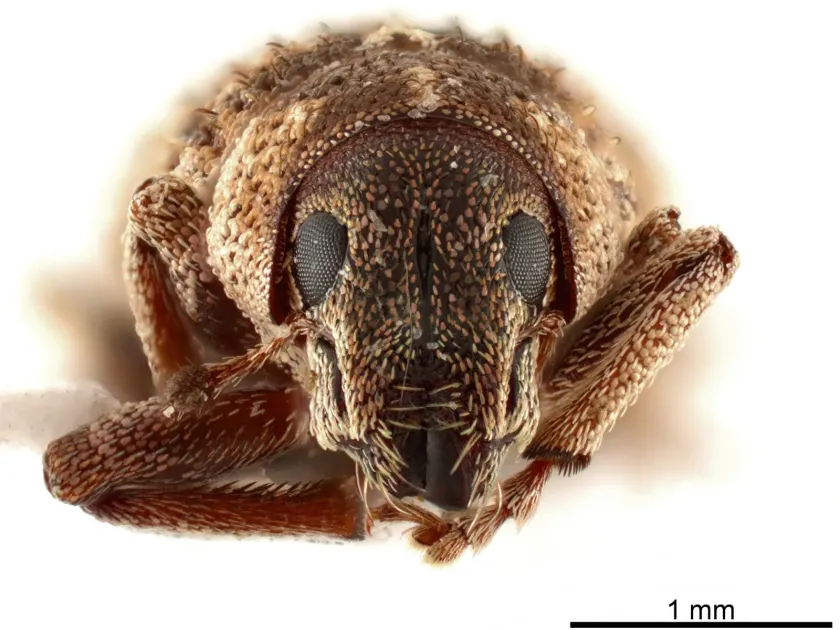
Description
How to identify
The genus Aracanthus (often classified within the Curculionidae family or broad-nosed weevils) consists of specialized insects frequently found in cereal crop agroecosystems. These are small beetles characterized by a distinct snout-like rostrum typical of weevils.
Adult specimens feature a dense chitinous exoskeleton, often possessing cryptic coloration that allows them to camouflage against the vegetative parts of host plants. Precise species identification requires microscopic examination of genitalia morphology and the scale pattern on the elytra.
Larvae are typically legless and develop cryptically inside plant tissues or within the soil, depending on the specific lifecycle of the species. They possess robust mandibles adapted for boring tunnels through tough stems or grains.
Systematically, this object belongs to the order Coleoptera. Identification at the field level is often complicated by the fact that these insects are primarily nocturnal or crepuscular, hiding in the root zone during daylight hours.
For accurate species identification, agronomists utilize entomological sweep nets or soil excavation methods. Monitoring population density during the early spring is critical to prevent mass reproduction of the pest within cereal fields.
What it damages
The primary crops susceptible to damage by Aracanthus species are cereals, including wheat, barley, and rye. The economic impact is evident from the seedling stage through to the spike formation phase.
Significant economic loss occurs when larvae damage the tillering nodes of young plants, leading to shoot death and uneven crop stand density. This directly affects the final yield capacity before harvest.
Adult beetles may feed on leaves, creating irregularly shaped holes that reduce the photosynthetic surface area. At high population densities, a noticeable decline in the plant's overall photosynthetic activity is observed.
Damage to the reproductive organs of cereals results in shriveled grains or total spike sterility. This reduces not only the total harvest volume but also the market quality and nutritional value of the grain.
Indirect damage involves creating entry points for phytopathogenic fungi and bacteria through feeding wounds. Damaged plants become increasingly vulnerable to environmental stressors, such as drought or frost.
When it appears
The activity of the pest is closely linked to soil and air temperature regimes. The first emergence of adults is observed in early spring when mean daily temperatures exceed the threshold for insect emergence from overwintering sites.
The peak of adult activity occurs during the stem-elongation phase of cereal crops, when plants are actively growing. During this period, the pests are highly mobile and feed intensively before egg-laying commences.
The larval development stage spans several weeks and often coincides with the flowering and grain-filling periods of cereals. Pupation primarily occurs in the soil, where the pest undergoes its most vulnerable transformation stage.
The number of generations per season depends on the climatic zone, though a single generation per year is most common. In conditions of a long, warm autumn, an extended egg-laying phase may occur, complicating population dynamics forecasting.
Overwintering of adults takes place in surface soil layers, under plant debris, or in shelterbelts adjacent to fields. This makes pest management a cyclical task that requires rigorous control throughout all stages of crop rotation.
Signs of infestation
A visual indicator of pest presence is the presence of holes or notched edges on leaves during morning hours. In cases of heavy infestation, yellowing and wilting of individual stems occur, which can be easily pulled from the soil due to root system damage.
When inspecting fields, pay attention to the following:
- Presence of beetles on the underside of leaves during overcast weather.
- Appearance of "windows" or small holes in young foliage.
- Specific damage to the tillering node discovered during soil excavation.
- Damaged grains containing internal tunnels filled with frass.
- Discoloration of the spike during the milk-ripe stage, caused by impaired nutrient flow.
Early detection is challenging, so it is recommended to use yellow sticky traps for monitoring. Mass appearance of beetles often aligns with the period of active crop growth, necessitating immediate field surveys.
If crops appear stunted without obvious signs of disease, a thorough inspection of the root zone should be conducted. Often, damage caused by Aracanthus is mistakenly attributed to soil-borne root diseases.
Constant monitoring of field borders allows for the identification of the pest before it spreads deeper into the crop. Rapid reaction to initial signs allows for the containment of infestation hotspots at minimal cost.
Control measures
The protection system includes agrotechnical methods such as strict crop rotation, incorporating non-host crops. Deep autumn plowing contributes to the destruction of the overwintering adult population residing in the soil.
Chemical control relies on the application of systemic and contact-stomach insecticides during periods of peak pest activity. The selection of the insecticide should be based on population counts and the established economic threshold of damage.
Border treatments of fields with insecticides at the onset of pest migration are highly effective. This strategy significantly reduces the chemical load on the agroecosystem and prevents mass colonization of the entire cereal field.
Biological methods, including the use of entomopathogenic fungi and the conservation of natural enemy populations (entomophages), demonstrate moderate effectiveness. Their application is encouraged within integrated pest management (IPM) programs.
An essential element of control is managing weed density in fields and along boundaries, as these areas serve as reservoirs for the pest. Maintaining optimal agronomic practices fosters plant immunity and resilience against pest feeding.
Taxonomy
- Latin name
- Aracanthus
- Order
- Coleoptera (beetles)
- Family
- Curculionidae
- EPPO code
- ARAASP
Discussion
No discussions yet — be the first.