
Common swift
Apus apus
Description
How to identify
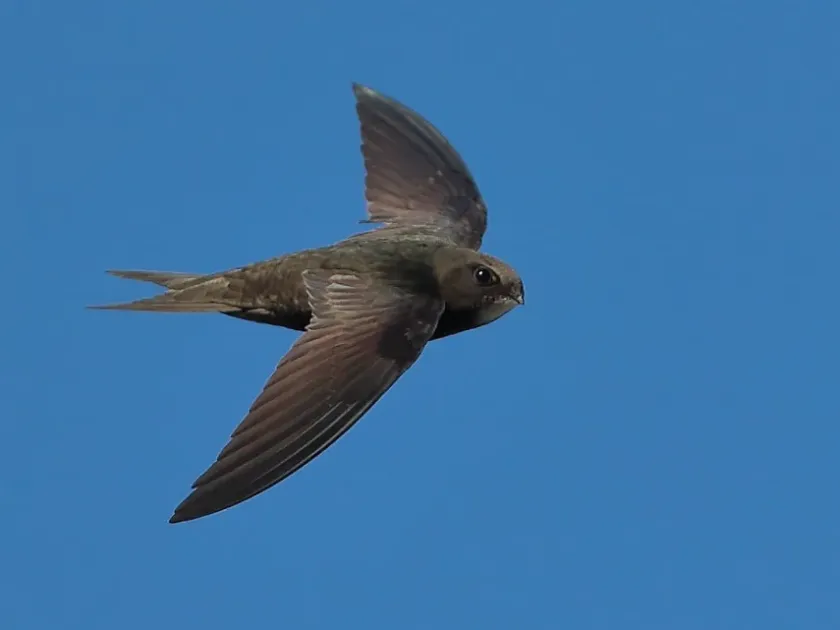
The common swift (Apus apus) is a small bird of the order Apodiformes, easily recognized by its long, sickle-shaped wings and dark, streamlined body.
These birds are master flyers, spending almost their entire lives in the air, including eating, drinking, and even sleeping on the wing.
In terms of agricultural impact, the common swift is not a pest, as it strictly feeds on aerial insects and does not touch any crops or vegetation.
They have short, weak legs that are unsuitable for perching or walking, forcing them to nest in high crevices, walls, or under roof tiles.
Their plumage is dark, almost black, with a small pale patch at the throat, which helps them blend into the sky during high-altitude hunting.
What it damages
The common swift causes no damage to crops, seeds, fruits, or any other part of agricultural plants, as it is strictly an insectivore.
It acts as a beneficial organism by consuming massive quantities of flying insects that are often agricultural pests or vectors for plant diseases.
By preying on midges, mosquitoes, and small beetles, the swift helps maintain a natural balance in the field, reducing the need for chemical intervention.
There are no recorded instances of swift activity causing structural or agricultural damage to farming equipment or crops.
Farmers benefit from their presence as these birds serve as a biological control mechanism, keeping the insect population in check during the growing season.
When it appears
Common swifts are migratory birds that arrive in temperate regions during late spring, usually in May, when insect activity begins to peak.
The core of their activity occurs during the summer months when they are actively rearing their chicks and require consistent hunting grounds over meadows and fields.
In late summer, around August, they begin their migration back to Africa, as the cooling temperatures reduce the abundance of flying insects.
Their presence on farmland is strictly seasonal and correlates perfectly with the period when many insect-based threats to crops are most active.
During the off-season, they are completely absent from the fields, meaning they have no impact on autumn or winter crop development.
Signs of infestation
The most common sign of their presence is the high-pitched, screaming call they make while flying in rapid groups over fields and urban areas.
Unlike true pests, there are no physical signs such as gnawed leaves, wilting stems, or pecked fruit associated with swift presence.
Observation of their nests under the eaves of farm buildings is the only direct evidence of their presence in the immediate vicinity.
If you see these birds flying erratically over your crops, they are simply hunting for insects, which is a positive sign for crop health.
Absence of damage is the hallmark of the swift, confirming its status as a beneficial bird rather than an agricultural nuisance.
Control measures
There is no need for control measures against the common swift; in fact, they should be protected as valuable natural pest control agents.
Farmers are encouraged to maintain nesting sites in barns or outbuildings to support the local population of these useful birds.
Avoid excessive insecticide use, as it can reduce the swifts' food source and have secondary poisoning effects on the bird population.
Many jurisdictions provide legal protection for the common swift and its nesting sites, making any removal or disruption illegal.
Integrating the presence of beneficial birds into farm management is a key aspect of biological control and sustainable agriculture practices.
Taxonomy
- Latin name
- Apus apus
- Family
- Apodidae
- EPPO code
- APUSAP
Discussion
No discussions yet — be the first.