
Tadpole shrimp
Apus
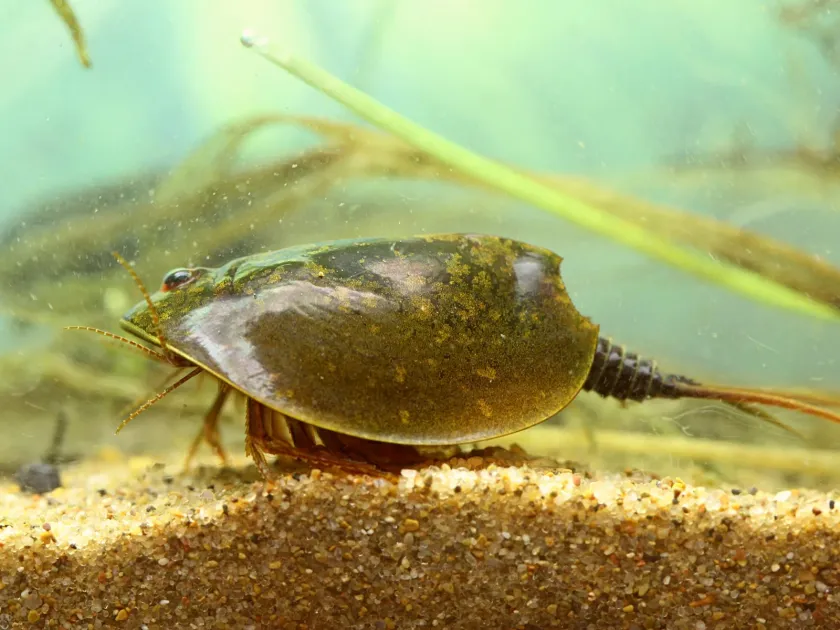
Description
How to identify
The tadpole shrimp (Triops, Apus) belongs to the order Notostraca within the class Branchiopoda. These prehistoric-looking crustaceans have remained virtually unchanged for millions of years, adapting perfectly to transient freshwater environments.
The body is characterized by a broad, shield-like carapace covering the dorsal side. It possesses numerous pairs of swimming legs used both for movement through the water column and for churning the substrate at the bottom of rice paddies.
Adult tadpole shrimp typically measure between 5 and 10 centimeters. Their most distinct feature is the three-eye arrangement, consisting of two compound eyes and a single median ocellus, which defines the genus Triops.
Their life cycle is remarkably adapted to water scarcity. They produce drought-resistant cysts that can survive in the soil for years, waiting for the paddies to be flooded to restart their rapid developmental cycle.
They are efficient swimmers and foragers. Once hatched, they grow very quickly, reaching maturity in a matter of days. This rapid biological progression allows them to dominate the flooded field environment shortly after irrigation begins.
##damage##The tadpole shrimp is a significant pest in rice cultivation, specifically targeting young seedlings. During the early stages of crop development, the shrimp feed voraciously on the tender roots and stems of the rice plants.
By churning the bottom substrate, they effectively uproot young rice plants. This mechanical disturbance is lethal for seedlings that have not yet established a deep root system, leading to widespread stand loss.
Aside from direct herbivory, tadpole shrimp create significant turbidity in the water. This murky condition limits the sunlight reaching the rice plants, which severely hampers photosynthesis and inhibits early development.
Infestations often result in patchy, thin crops where large areas of the paddy may need to be replanted. This not only increases production costs but also delays the overall harvest cycle and affects yield uniformity.
The period of maximum vulnerability occurs within the first two weeks following water flooding. During this time, the shrimp can decimate a newly sown field if populations are left unchecked by agronomists.
##season##The seasonal activity of the tadpole shrimp is entirely dependent on the flooding of rice fields. Once the water temperature rises to favorable levels, usually in the spring, the dormant cysts hatch.
Their activity peaks early in the season, immediately following sowing. As the rice plants mature and their root systems become more robust, the damage caused by the shrimp significantly decreases, making the plants more resilient.
Under optimal conditions, the shrimp complete their life cycle in just a few weeks. However, if the paddy is drained and reflooded, it can trigger subsequent generations of hatching, extending the period of risk.
Environmental conditions such as water temperature and light intensity play critical roles in regulating their population dynamics. Warmer water generally accelerates their growth and reproduction, heightening the threat to the crop.
By the time the paddies are drained for the mid-season or harvest, the shrimp have typically completed their cycle and deposited their cysts into the sediment, where they await the next cycle of environmental triggers.
##signs##A primary indicator of a tadpole shrimp infestation is persistent water turbidity. Even when the field is calm, the water remains muddy because the shrimp are constantly disturbing the bottom layer of the soil.
Floating bits of rice foliage are a clear sign of damage. Because the shrimp cut the plants at the root zone, the seedlings lose their anchorage and float to the surface, where they can be easily spotted by field scouts.
Visual inspection of the soil often reveals empty or damaged seed hulls. Since the shrimp are opportunistic feeders, they will also consume the germinated seeds if they are not fully buried or established.
Field maps showing localized areas of crop failure or "bald spots" often correlate with high densities of tadpole shrimp. These areas are typically the wettest parts of the field where the shrimp population thrives.
When samples of mud and water are collected using a net, the presence of the shrimp can be confirmed. They appear as erratic, active swimmers that are difficult to capture due to their rapid movements through the murky substrate.
##control##Management of the tadpole shrimp involves a combination of mechanical and cultural practices. Deep plowing and proper soil preparation can help bury the cysts deeper, reducing the hatching rate at the surface.
Drainage is one of the most effective control measures. If a heavy infestation is detected early, draining the paddy for several days will cause the shrimp to desiccate, effectively stopping the damage without chemical intervention.
When cultural methods are insufficient, specific insecticides labeled for rice are applied to the water. These must be used carefully to prevent runoff into surrounding water bodies and to protect the local ecosystem.
Early detection through frequent scouting is vital. By identifying the problem during the first week of irrigation, farmers can apply control measures before the population reaches an uncontrollable threshold.
- Implement thorough soil tillage to manage the cyst bank in the sediment.
- Practice water management, including periodic drainage, to disrupt the life cycle.
- Use selective insecticides as a last resort in accordance with label instructions.
- Ensure uniform land leveling to prevent stagnant areas that favor shrimp breeding.
- Select rice varieties that exhibit rapid germination and early vigor.
Taxonomy
- Latin name
- Apus
- Family
- Apodidae
- EPPO code
- APUSSP
Discussion
No discussions yet — be the first.