
Aptinothrips
Aptinothrips
Description
How to identify
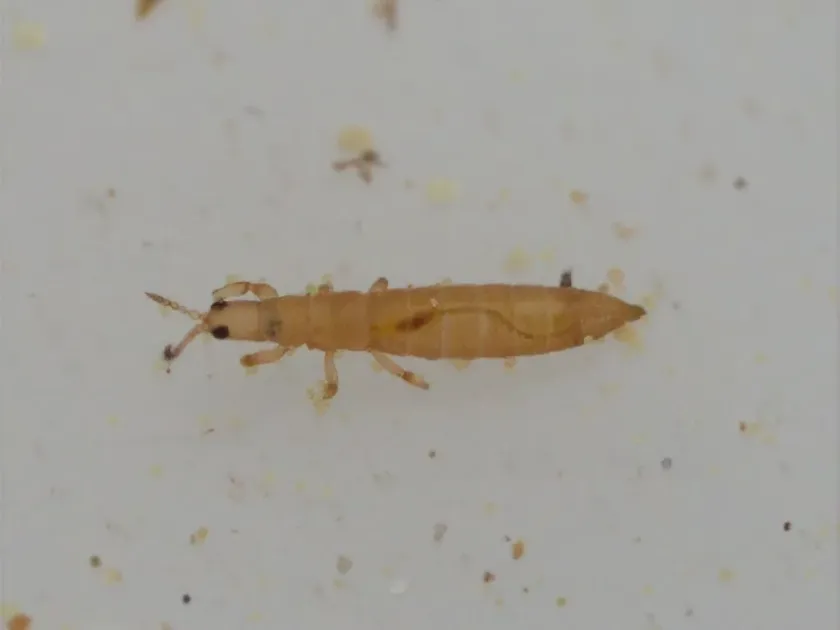
Aptinothrips is a genus of insects belonging to the order Thysanoptera and the family Thripidae. These are small, mostly wingless insects characterized by the absence of ocelli and highly reduced wings, which limits their active flight ability.
The adult body is elongated, with a coloration ranging from pale yellow to brownish. Larvae resemble adults in appearance but are smaller in size and possess lighter body pigmentation, making them difficult to spot on leaf surfaces.
The taxonomy of the genus includes several species, with Aptinothrips rufus being the most well-known and widely distributed in temperate climate regions.
Reproduction of this species is frequently parthenogenetic, which enables the population to expand rapidly in numbers even in the absence of males.
These insects prefer a hidden lifestyle, concentrating within the leaf sheaths of cereal grasses, which complicates their detection during routine visual inspection of crops.
What it damages
The primary hosts for Aptinothrips are monocotyledonous plants, particularly cereal grasses and crops such as wheat, barley, oats, and ryegrass.
The pest feeds on cell sap by piercing the epidermis of leaves and stems with its piercing-sucking mouthparts, leading to the depletion of the plant's vital energy.
The most significant damage occurs during the tillering and stem elongation stages, when intensive sap extraction slows vegetative growth and disrupts metabolic processes.
When population density is high, the pest may damage glumes, which negatively impacts grain formation and reduces total harvest yield.
Under mass infestation conditions, plants become susceptible to secondary infections due to the disruption of tissue integrity, making them vulnerable to phytopathogens.
When it appears
Aptinothrips activity begins in early spring when daily average temperatures exceed 8–10 degrees Celsius, prompting insects to emerge from their overwintering sites.
The main growing season for the pest coincides with the active growth of cereal crops, peaking in early summer when stable warm weather conditions are established.
Several generations develop throughout the season, with reproduction rates directly dependent on hydrothermal conditions: moderate humidity promotes population growth.
By autumn, as cereals reach maturity, the number of adults gradually declines, and the insects enter diapause, seeking shelter in stubble, turf, or plant debris.
Overwintering of adults occurs in the soil or within dense plant residues, where they successfully survive low temperatures under the protection of snow cover.
Signs of infestation
The first sign of infestation is the appearance of characteristic light spots and streaks on leaves, formed in areas where sap has been extracted from the tissues.
Damaged areas eventually yellow and wither, creating an effect of premature yellowing of lower leaf tiers in young crops.
- Deformation and curling of leaves in areas where the pest congregates.
- Presence of excrement in the form of tiny black dots on leaf blades.
- Stunted plant growth and general distressed condition of the crop.
- Disruption of normal ear development if flower organs are infested.
Upon careful inspection of the stem base inside the leaf sheath, one can discover adult insects and colonies of yellowish larvae.
Control measures
Agronomic management practices include stubble cultivation and deep autumn plowing, which help destroy overwintering sites and reduce the pest population.
Strict adherence to crop rotation, avoiding planting cereals after cereals, significantly reduces the risk of mass thrips outbreaks in the fields.
An important technique is timely weed control, as weeds serve as intermediate hosts for Aptinothrips during the off-season and early spring.
When the economic threshold of damage is reached, systemic or contact-stomach insecticides approved for use on cereal crops should be applied.
Spraying should be conducted during morning or evening hours to ensure thorough coverage of the leaf surface with the prepared solution.
Taxonomy
- Latin name
- Aptinothrips
- Order
- Thrips
- Family
- Thripidae
- EPPO code
- APTISP
Discussion
No discussions yet — be the first.