
Southern brown kiwi
Apteryx australis
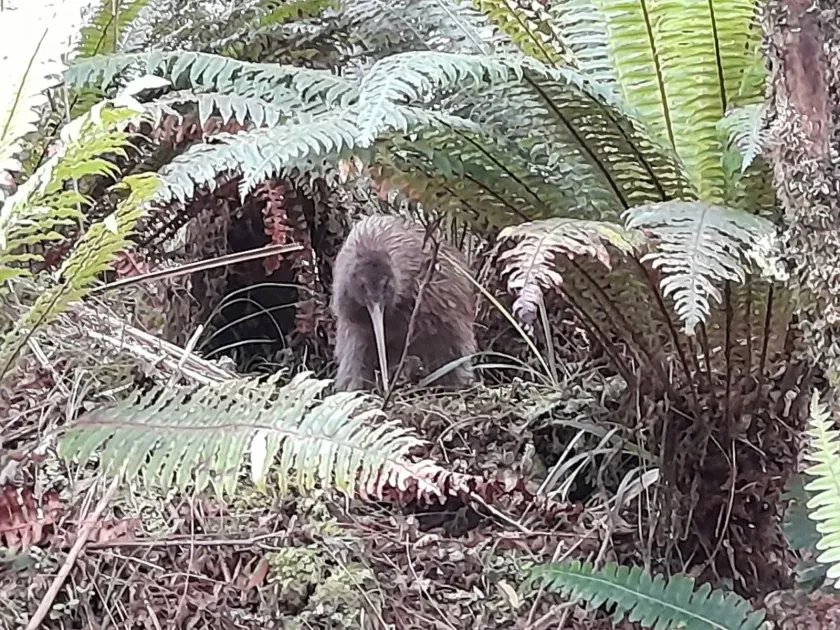
Description
How to identify
The Southern brown kiwi (Apteryx australis) is a flightless bird species native to the South Island of New Zealand, belonging to the Apterygidae family.
It is characterized by its small, pear-shaped body, hair-like feathers, and a lack of wings and tail, making it one of the most distinctive birds in the world.
The bird possesses a long, thin, and slightly downward-curving bill with nostrils at the very tip, which is used to probe the soil for food.
These birds are nocturnal and rely heavily on their acute sense of smell and hearing rather than vision to navigate their dense forest habitats.
Critically, the Southern brown kiwi is a native wild species and is not classified as a pest or a threat to commercial plant production.
What it damages
The Southern brown kiwi is an insectivore, feeding primarily on earthworms, larvae, spiders, and fallen fruits found on the forest floor.
There is no evidence that this bird consumes agricultural crops, seeds, or vegetative tissues, meaning it poses no risk to horticultural or arable land.
Unlike true pests, the kiwi does not cause structural damage to trees, roots, or fruit production systems in any capacity.
In fact, their foraging habits assist in the turnover of soil and the regulation of soil invertebrate populations within their natural habitat.
Therefore, farmers do not need to worry about the impact of this species on their produce or field health.
When it appears
Kiwis do not follow the seasonal cycles of agriculture; they maintain stable, year-round territories within indigenous forests.
They do not migrate to farmland or commercial orchards, ensuring they remain separate from agricultural production cycles.
Their activity levels are consistent regardless of the harvest season, and they have no interest in cultivated crops or field plants.
As wild birds restricted to specific habitats, they do not present any seasonal risk factors or infestation cycles for growers.
Interaction between kiwi territories and active agricultural land is extremely rare and biologically insignificant.
Signs of infestation
Signs of their presence are limited to small, narrow holes in the soil caused by their bill when probing for insects in forest litter.
These markings are localized and do not cause damage to agricultural plants, standing crops, or irrigation systems.
Any damage to leaves, stems, or fruits on a farm is likely caused by actual vertebrate or invertebrate pests, not by the kiwi.
Identifying the kiwi is important for conservation, but spotting one does not indicate a need for agricultural intervention or pest management.
Growers should monitor their fields for traditional pests while leaving wild bird species undisturbed.
Control measures
The Southern brown kiwi is a protected species under New Zealand law, and any attempt to harm or trap them is strictly prohibited.
Effective management involves protecting their natural habitat rather than implementing control measures, as they are not pests.
Farmers operating near kiwi habitats should minimize the use of harmful pesticides to prevent secondary poisoning of the local wildlife.
Maintaining buffer zones of native vegetation is the best practice to encourage biodiversity while keeping agricultural operations separate from wild zones.
No agricultural control methods are applicable, necessary, or legal concerning the Southern brown kiwi.
Taxonomy
- Latin name
- Apteryx australis
- Family
- Apterygidae
- EPPO code
- APTXAU
Discussion
No discussions yet — be the first.