
Kiwi (bird)
Apteryx
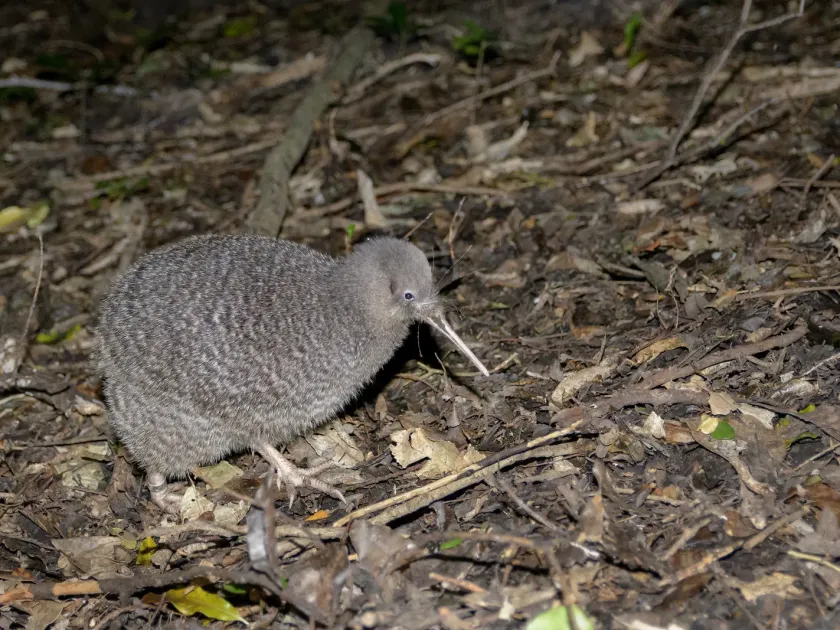
Description
How to identify
The kiwi (genus Apteryx) is a flightless bird species native to New Zealand, belonging to the order Apterygiformes.
They are characterized by their small, vestigial wings, lack of a tail, and hair-like plumage that provides excellent camouflage.
The kiwi is unique among birds for having nostrils at the end of its long, flexible beak, which it uses to probe the soil.
These birds are strictly nocturnal and rely heavily on their acute sense of smell and hearing to navigate the forest floor.
Being ground-dwelling creatures, they inhabit dense shrublands and forest environments where they dig burrows for shelter.
What it damages
It is critical to note that the kiwi is not an agricultural pest and causes no damage to crops, orchards, or plantations.
Their diet consists entirely of soil-dwelling invertebrates such as earthworms, insect larvae, and sometimes fallen forest fruits.
They have no interactions with agricultural produce, as they strictly avoid open fields and developed farmland.
There is no economic harm associated with this species; instead, they are recognized as a biological asset to their native ecosystems.
Any concerns regarding the kiwi as a pest are scientifically unfounded and incorrect in an agricultural context.
When it appears
The breeding season for kiwi varies but generally occurs between late winter and autumn when environmental conditions are optimal.
Incubation is performed primarily by the male and lasts for a notably long duration, often exceeding 70 days per clutch.
Kiwi are non-migratory and remain within their established home ranges throughout the entire year.
The species exhibits slow reproductive rates, which makes them highly vulnerable to changes in their natural habitat.
Seasonal patterns in kiwi behavior are mostly linked to food availability in the forest floor litter rather than agricultural cycles.
Control measures
Because the kiwi is a threatened species, management strategies focus entirely on conservation rather than control measures.
The primary threat to the kiwi population is predation by introduced mammals such as stoats, cats, and dogs.
Conservation efforts involve predator-proof fencing, intensive trapping of invasive species, and habitat restoration programs.
Farmers operating near protected areas are encouraged to maintain native vegetation and minimize the use of harmful pesticides.
Protecting the kiwi involves maintaining ecological corridors that allow safe movement and nesting for these unique birds.
Taxonomy
- Latin name
- Apteryx
- Family
- Apterygidae
- EPPO code
- APTXSP
Discussion
No discussions yet — be the first.