
Wingless thrips
Apterothrips apteris
Description
How to identify
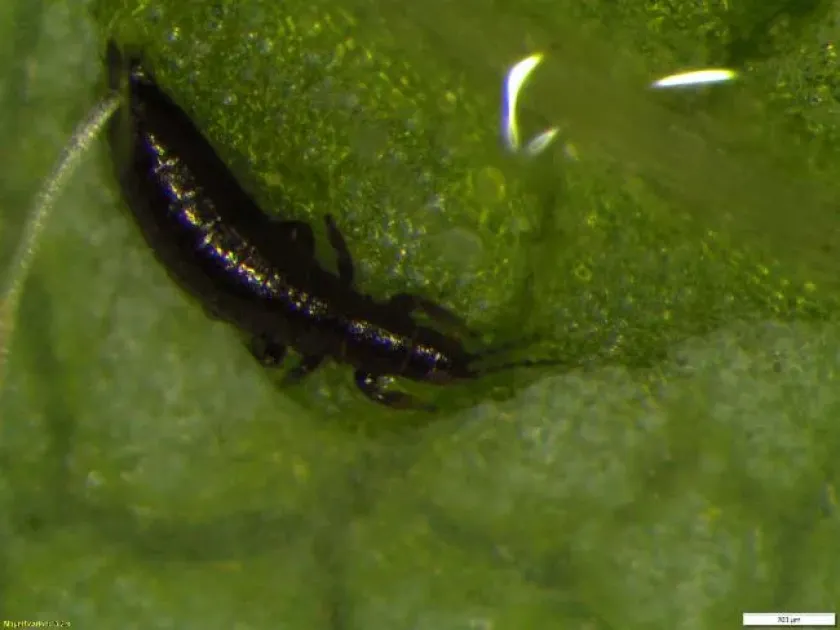
The wingless thrips (Apterothrips apteris) belongs to the order Thysanoptera and the family Thripidae. This tiny insect is characterized by the absence of fully developed, functional wings in the adult stage.
The body of an adult is usually yellowish or brownish, providing effective camouflage on leaf surfaces and stems of host plants. Adults typically measure between 1 and 1.5 millimeters in length.
Unlike many other thrips species, the life of Apterothrips apteris is confined to the lower parts of plants, as their lack of wings limits their ability to travel significant distances.
The larvae are visually similar to the adults but smaller and lighter in color. Due to their minute size and cryptic behavior, identifying them in the field requires a magnifying glass or careful observation.
The life cycle involves incomplete metamorphosis, progressing through egg, larval, prepupal, pupal, and adult stages.
What it damages
This species is a polyphage, known to infest a wide variety of ornamental, vegetable, and wild plant species. It is most commonly reported on plants from the Asteraceae and Fabaceae families.
In both greenhouse environments and open field crops, these insects feed on plant sap by piercing and sucking, leading to the gradual depletion of the host plant's energy reserves.
Both larvae and adults cause damage by feeding on young shoots and leaves, which often results in the curling, deformation, and stunted growth of affected plant tissues.
Beyond mechanical tissue damage, these thrips are potential vectors for various plant viruses, which can lead to widespread crop failure and significant economic losses.
- Reduction in photosynthetic efficiency of leaves.
- Diminished aesthetic value of ornamental plants.
- Stunting of overall plant development.
- Increased susceptibility to secondary infections in damaged areas.
When it appears
The population growth of the wingless thrips is heavily dependent on temperature and humidity. Their activity usually peaks during warm weather conditions in spring and summer.
In controlled environments such as greenhouses, the wingless thrips can breed throughout the year, as the climate supports continuous development without a dormant stage.
Multiple generations can occur within a single growing season, with the rate of reproduction being directly proportional to the accumulation of heat units.
Population density often reaches its peak in late summer, as the accumulated generations exploit the available succulent plant material for feeding and oviposition.
Adults typically overwinter in plant debris, soil crevices, or protected areas on perennial host plants, emerging when conditions become favorable in the new season.
Signs of infestation
The initial signs of infestation include tiny light-colored or silvery streaks on leaf surfaces, which eventually merge into larger necrotic patches or discolored areas.
Close inspection of the underside of leaves often reveals small dark fecal spots, which are a characteristic indicator of a persistent thrips infestation.
Terminal shoots and developing leaves may show signs of curling or wilting, as the insects concentrate their feeding on the most succulent parts of the plant.
On flowering plants, infestation can cause the deformation of flower buds and early petal drop, significantly lowering the market quality of the crop.
Heavy infestations may give the plant an overall chlorotic, sickly appearance, frequently mistaken for nutritional deficiencies unless closely examined for the pests themselves.
Control measures
Effective management requires an integrated approach, utilizing blue sticky traps to monitor adult population levels and detect the arrival of the pest early.
Good sanitation practices are crucial; removing plant debris, weeds, and remnants of previous crops significantly reduces the available overwintering sites for the population.
Chemical control involving systemic insecticides is often necessary when infestations cross economic injury thresholds, as systemic products can reach the insects in their hidden locations.
Biological control methods, such as introducing predatory mites or bugs (e.g., Orius species), can be highly effective in reducing thrips populations in greenhouses.
Regular monitoring and rapid intervention are essential to preventing the spread of the wingless thrips, especially in high-density crop production areas.
Taxonomy
- Latin name
- Apterothrips apteris
- Order
- Thrips
- Family
- Thripidae
- EPPO code
- APTTAP
Discussion
No discussions yet — be the first.