
Apteromechus ferratus
Apteromechus ferratus
Description
How to identify
Apteromechus ferratus belongs to the order Coleoptera and the family Curculionidae (weevils). This insect has a body structure typical of its family, featuring a developed rostrum adapted for feeding on plant tissues.
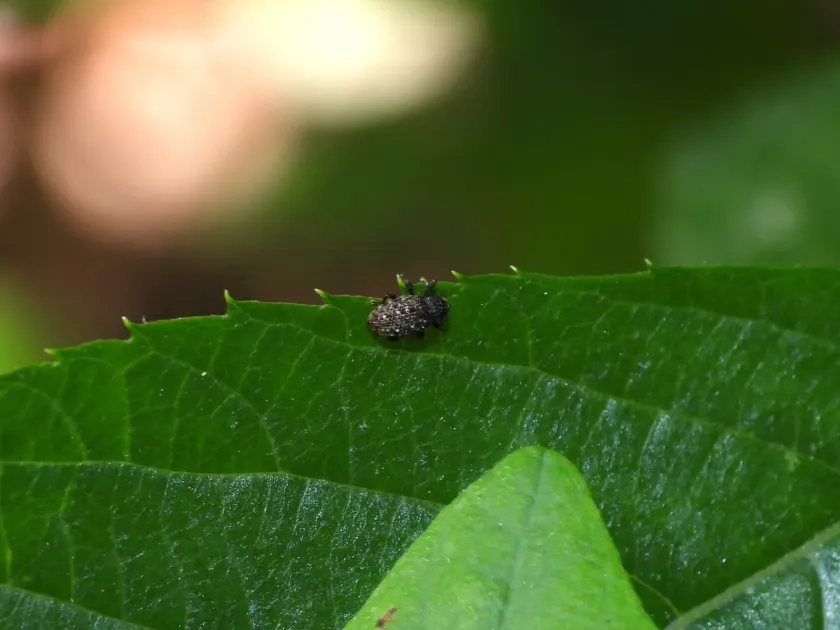
Adult specimens are characterized by a dense, dark-colored covering that often blends with tree bark or soil substrates, making them difficult to detect during visual inspection.
The larvae of this species develop covertly inside plant tissues, which significantly complicates their identification during the early stages of the pest's development.
Species identification requires entomological analysis of morphological features, such as the shape of the pronotum, the structure of the elytra, and the configuration of the legs.
To monitor population levels, agronomists utilize pheromone traps or conduct regular inspections of potential infestation sites in orchards and woodlands.
What it damages
This pest primarily affects woody plants and shrubs, damaging their vegetative and reproductive organs during the feeding process.
Adult beetles feed on buds, young shoots, and leaves, causing mechanical injuries that open pathways for secondary infections.
The larval stage is the most destructive, as it bores tunnels under the bark or within the wood, disrupting nutrient flow and weakening the plant's immune system.
Mass reproduction of these insects leads to shoot deformation, premature leaf fall, and, eventually, the drying out of individual branches or entire trees.
In intensive cultivation, the pest's activity causes substantial yield losses and a decrease in the commercial quality of fruit production.
When it appears
The activity of adult Apteromechus ferratus typically occurs during the spring and summer, when stable positive temperatures are established.
Emergence from overwintering sites coincides with the bud-break phase, making young spring growth most vulnerable to beetle attacks.
The insect's life cycle is closely linked to the phenological stages of host plant development, allowing for the strategic planning of control measures.
The highest intensity of damage is observed during periods of drought or when plants are stressed, as metabolic processes are slowed down.
With the onset of autumn, adult beetles and late-stage larvae enter diapause, preparing to overwinter in the soil or plant debris.
Signs of infestation
A primary sign of the pest's presence includes characteristic holes and frass found at the adult feeding sites on leaves and young shoots.
The presence of larvae is evidenced by brown spots or necroses on the bark, from which gum or plant sap may exude.
The gradual wilting of shoot tips, accompanied by curling or complete necrosis, indicates internal tissue damage caused by the larvae.
By peeling back the bark on infested areas, one can discover the winding tunnels created by the larvae, which serves as a diagnostic feature for the species.
- Presence of "frass" (sawdust-like waste) at the base of trunks or on branches.
- Development of chlorotic zones on leaves around puncture sites.
- Premature fruit drop resulting from damage to flower stalks.
Control measures
The protection strategy includes cultural practices aimed at increasing plant vigor and creating unfavorable conditions for the pest.
An essential step is sanitary pruning and the timely removal of infested branches where larvae may be residing.
The application of systemic and contact insecticides is justified during peak beetle activity, based on data collected from monitoring efforts.
Biological control, including the use of beneficial entomophagous insects, helps keep population numbers at an economically safe level.
Regular maintenance of the area under the tree canopy and general orchard hygiene significantly reduce the risk of re-infestation in the following season.
Taxonomy
- Latin name
- Apteromechus ferratus
- Order
- Coleoptera (beetles)
- Family
- Curculionidae
- EPPO code
- APTMFE
Discussion
No discussions yet — be the first.