
Apteromechus
Apteromechus
Description
How to identify
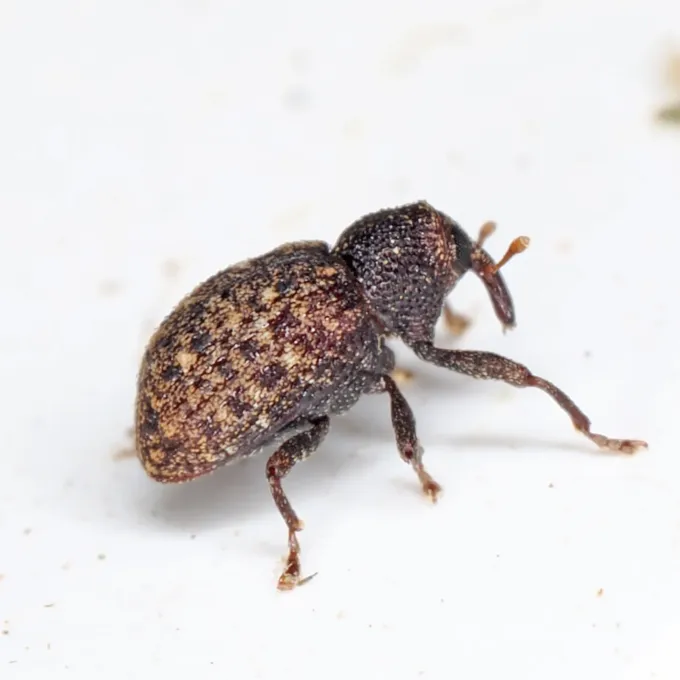
Apteromechus is a genus of weevils (Curculionidae family) within the order Coleoptera. These insects are characterized by their elongated rostrum, which is typical for the family.
The adult weevils are small, dense-bodied insects. They are usually dark-colored, ranging from brownish to black, allowing them to blend in with tree bark or stems.
Larvae have the typical weevil body structure: white, legless, and curved, with a well-developed chitinous head capsule, living deep inside plant tissues.
Identification to the species level can be challenging for non-specialists, as it requires microscopic examination of the pronotum, rostrum, and legs to distinguish it from related genera.
These pests are primarily nocturnal, which makes them difficult to observe and count during standard daytime inspections of orchards or nursery stock.
What it damages
Both adult weevils and their larvae cause significant damage to plants. Adults feed on leaves, buds, and young shoots, often leading to stunted growth or deformed foliage.
Larvae are internal feeders, tunneling through stems, branches, or root systems. This internal boring activity disrupts the plant's vascular system, hindering water and nutrient transport.
As the larvae create tunnels, the plant's structural integrity is compromised, leading to branch dieback or even the total death of the plant if the infestation is severe.
The exit and entry holes made by these insects create entry points for secondary infections, such as fungi and pathogenic bacteria, causing further decay of the host plant.
Young, non-established plants are particularly vulnerable, as their smaller biomass cannot withstand the severe tissue damage caused by the larvae.
When it appears
Adult activity begins in the spring when temperatures consistently rise above the threshold for insect emergence and feeding post-hibernation.
The mating and oviposition phase typically occurs in late spring and early summer. Females deposit eggs into small crevices gnawed into the plant bark or soft tissue.
Larval development occurs throughout the summer months. Depending on the species and environmental conditions, the life cycle may range from a few months to a full year.
As autumn approaches, both the new generation of adults and mature larvae move to overwintering sites, often in the soil or beneath leaf litter near the host plants.
Monitoring the peak emergence of adults is crucial for timing control measures. Pheromone-baited traps or sticky bands on trunks are effective tools for detecting their presence.
Signs of infestation
The earliest signs of infestation include small, irregular holes on the leaves, known as shot-hole damage, caused by the feeding of adult weevils.
Signs of larval activity include small entrance holes in the bark or stem, often accompanied by sap bleeding or gumming on the exterior of the plant.
Sudden wilting or chlorosis of leaves on specific branches is a strong indicator of internal larval activity, suggesting that the branch's vascular supply is being severed.
Stunted growth or the curvature of young, succulent shoots is another common symptom that indicates the presence of larvae tunneling inside the shoot.
If suspicious symptoms appear, growers should perform a careful inspection or dissection of a limb to identify the presence of larval tunnels filled with frass (wood dust).
Control measures
Cultural control is the first line of defense: prune and destroy infested plant parts immediately to reduce the overall population pressure in the area.
Maintaining optimal plant health through balanced fertilization and correct irrigation is essential to help plants recover from insect-related stress.
Chemical intervention should be timed to match the peak adult emergence. Systemic insecticides are preferred as they penetrate plant tissues where larvae reside.
Biological control agents, such as entomopathogenic nematodes, can be applied to the soil or stems to target and parasitize larvae in their protected stages.
- Enforce strict quarantine of new nursery stock before introduction.
- Perform regular night inspections using flashlights for adult monitoring.
- Clear and compost plant debris to eliminate potential overwintering sites.
Taxonomy
- Latin name
- Apteromechus
- Order
- Coleoptera (beetles)
- Family
- Curculionidae
- EPPO code
- APTMSP
Discussion
No discussions yet — be the first.