
Leafroller (Apoctena)
Apoctena
Description
How to identify
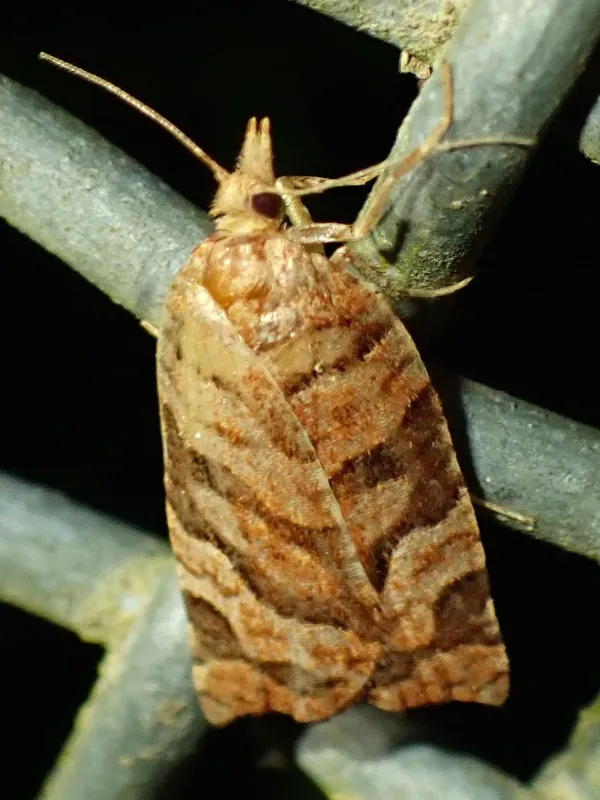
The leafroller Apoctena belongs to the Tortricidae family within the order Lepidoptera. These moths are relatively small, characterized by a wing structure that, when at rest, forms a distinctive trapezoidal shape, often resembling a roof.
Adult moths usually feature shades of brown or buff with cryptic patterning, which acts as camouflage against tree bark. The larvae, or caterpillars, are highly mobile and possess strong mandibles for feeding on plant tissues.
A key identifying feature of the larvae is the presence of prominent setae on their bodies, which assist in adhesion to leaf surfaces. Pupation typically occurs within rolled leaves or in crevices of the tree bark, providing protection against environmental stress.
The life cycle involves four stages: egg, larva, pupa, and adult. Depending on the species and the climate, the insect may complete one or several generations within a single growing season.
Understanding the biology of Apoctena is essential for effective pest management, as the timing of life stages can vary based on local weather conditions and specific host plant species.
What it damages
The primary hosts for Apoctena leafrollers include fruit trees of the Rosaceae family, such as apple, pear, and plum trees. They may also infest ornamental shrubs and various forest trees.
Larvae cause damage by consuming young leaves, which they roll into tubes or cigar-like structures held together by silk. This feeding behavior significantly reduces the photosynthetic capacity of the tree.
In addition to foliage, larvae often feed on flower buds and emerging fruit. This destruction can lead to a drastic reduction in harvest yield and quality, as damaged fruits are often deformed or prone to fungal infections.
In cases of high population density, trees can become severely defoliated, which impacts the overall physiological health of the plant, making it more susceptible to winter frost and opportunistic diseases.
Agricultural experts determine the need for intervention based on economic thresholds, usually calculated by the density of rolled leaves per branch or tree during the early growing season.
When it appears
Activity begins in early spring, as temperatures rise above 10-12 degrees Celsius. The overwintered larvae emerge from their dormancy to begin feeding on opening buds and young leaves.
The most critical period for plant protection is the "green cluster" to "pink bud" stage. At this time, larvae are actively feeding and are more exposed to contact insecticides before they secure themselves inside rolled leaves.
The second generation of moths typically appears during the summer months. These moths lay eggs that produce larvae that can cause significant damage to ripening fruit and late-season foliage.
Pupation generally occurs in mid-summer. The adult moths then emerge, mate, and deposit eggs on leaves or bark, where they enter diapause until the following spring.
Weather patterns, including cold springs or excessive rainfall during egg-laying periods, can suppress population growth, thereby reducing the need for chemical intervention.
Signs of infestation
The most recognizable symptom of a leafroller infestation is the presence of leaves rolled into tubes or clumps held together by fine silk webbing. Inspecting these rolls often reveals the larva inside.
Early-stage feeding damage manifests as small holes or windowing on leaves. As the larvae grow, they consume larger portions of the leaf tissue, leading to browning and necrosis of the foliage.
The presence of webbing on blossoms and young fruit clusters is a clear indication of infestation. Infested blossoms often fail to open properly and eventually abort.
Adult moths are nocturnal and can sometimes be observed flying around the canopy at dusk. Their presence can be confirmed using pheromone-baited traps which are specific to the species.
- Leaves rolled into tubes or nests with silk webbing.
- Frass (larval excrement) found within the rolled leaves.
- Damaged or webbed flower buds.
- Superficial scarring or gouging on the surface of young fruit.
- Skeletonization of leaves during heavy infestations.
Control measures
Cultural control methods include diligent orchard sanitation, such as removing infested leaves and pruning away branches harboring pupae, which helps reduce the overwintering population.
Biological control involves the use of beneficial insects such as Trichogramma wasps, which parasitize leafroller eggs. Bacillus thuringiensis-based sprays are also effective for targeting larvae while remaining safe for other beneficial insects.
Monitoring using pheromone traps is highly recommended to pinpoint the flight peak of adult moths. This allows for precise timing of chemical applications to ensure maximum effectiveness.
Chemical control should be targeted during the larval emergence period. It is crucial to rotate chemical classes to prevent the development of resistance within the leafroller population.
Effective management requires consistent scouting throughout the growing season, particularly during the transition from dormant buds to full leaf development to prevent outbreaks.
Taxonomy
- Latin name
- Apoctena
- Order
- Lepidoptera (butterflies)
- Family
- Tortricidae
- EPPO code
- APCTSP
Discussion
No discussions yet — be the first.