
Apanteles
Apanteles theclae
Description
How to identify
Apanteles is a genus of tiny parasitic wasps within the family Braconidae, order Hymenoptera. Adult individuals are small, typically measuring 2 to 5 millimeters in length, and generally possess a dark, slender body with transparent wings.
These insects are highly specialized parasitoids, meaning their larvae develop inside or on the bodies of host insects, primarily the larvae of butterflies and moths.
Proper identification of Apanteles is essential for agronomists, as they are key components in natural pest suppression systems across various agricultural landscapes.
While the genus comprises numerous species, they share distinct morphological traits and behaviors, making them recognizable to trained agricultural professionals during field surveys.
The life cycle of Apanteles is intricately synchronized with the phenology of its caterpillar hosts, allowing it to respond rapidly to pest outbreaks in the field.
What it damages
It is crucial to clarify that Apanteles is not a plant pest. In fact, it is an extremely beneficial organism that significantly reduces the damage caused by agricultural caterpillars.
By parasitizing larvae that feed on vegetables, fruits, and grain crops, these wasps naturally limit pest populations, thereby serving as a form of biological pest control.
The economic value of these wasps is found in the reduced need for synthetic pesticides, leading to healthier crops and more sustainable farming practices.
The absence of such natural enemies in an agroecosystem often leads to uncontrollable pest surges, which negatively impact yield quantity and quality.
Thus, Apanteles should be viewed as a valuable asset in integrated pest management (IPM) rather than a threat to production.
When it appears
The activity period of Apanteles is largely determined by local climatic conditions and the emergence of target butterfly or moth hosts in the early spring.
Depending on the region and the species, multiple generations can occur throughout the growing season, providing continuous pressure on pest populations during the summer months.
Peak activity is usually observed during warm, stable weather, which facilitates the host-seeking behavior of the adult wasps.
As temperatures decline in late summer or autumn, the wasps enter overwintering stages, often remaining inside cocoons or within host remains until the following season.
Understanding these seasonal patterns allows farmers to optimize field management practices to favor the persistence of these beneficial parasitoids.
Signs of infestation
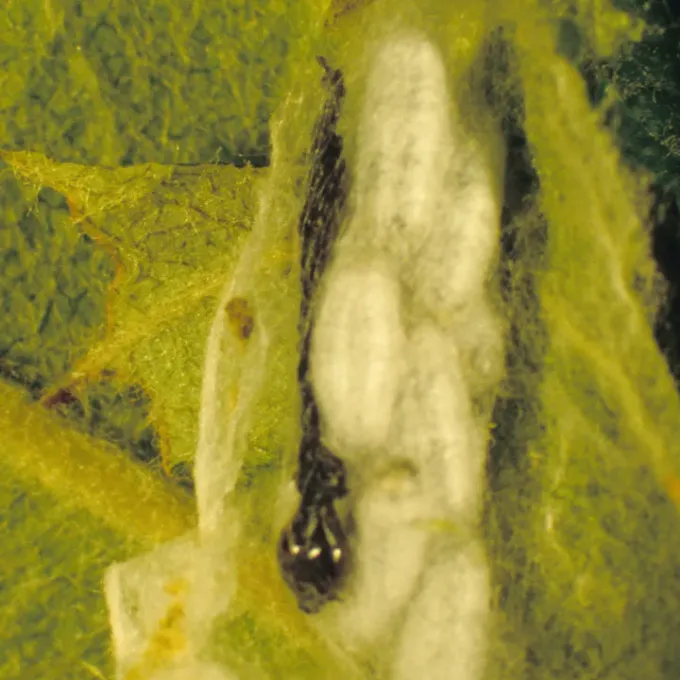
A primary indicator of Apanteles presence is the appearance of clusters of tiny, silk-like cocoons, typically white or yellowish, near dead or sluggish caterpillars.
If caterpillars are observed to be lethargic, unresponsive, or covered in small, oval structures, this is a clear sign that parasitoids are actively regulating the population.
These clusters of cocoons are often found on leaves or stems near the sites where the pests have been feeding throughout their developmental stage.
Regular monitoring for these signs enables agronomists to determine the efficacy of biological control and make informed decisions regarding the necessity of insecticide use.
Detection of these cocoons often serves as a stop sign for non-selective pesticide applications, protecting the beneficial wasp population.
Control measures
No control measures are needed against Apanteles, as it is a beneficial insect. The objective for the agronomist is to conserve and encourage these natural enemies.
The most critical practice is the avoidance of broad-spectrum, high-toxicity insecticides that indiscriminately kill both pests and their natural enemies.
- Utilize selective, low-impact pesticides that target specific pests without harming parasitoids.
- Establish flower strips or hedgerows to provide nectar and habitat for adult wasps.
- Time pesticide applications to avoid periods when adult wasps are most active and vulnerable.
- Adopt integrated pest management (IPM) strategies that prioritize biological and ecological balance.
By actively promoting the survival of Apanteles, farmers can rely on natural processes to manage pests, leading to lower costs and more eco-friendly agriculture.
Taxonomy
- Latin name
- Apanteles theclae
- Order
- Hymenoptera
- Family
- Braconidae
- EPPO code
- APANTH
Discussion
No discussions yet — be the first.