
Apanteles
Apanteles staintoni
Description
How to identify
Apanteles (scientific name Apanteles staintoni) is a small parasitoid wasp belonging to the family Braconidae. These insects are essential natural enemies of many lepidopteran pests, playing a crucial role in maintaining ecological balance.
Adults are typically small, measuring just a few millimeters in length, with dark bodies that make them hard to spot in the field. They are highly specialized to seek out host caterpillars using chemical signals emitted by the plants.
The female wasp uses a sharp, needle-like ovipositor to inject her eggs directly into the body of the host caterpillar. This behavior is the hallmark of their parasitic lifestyle.
Inside the caterpillar, the larvae hatch and begin feeding on the host's internal tissues, specifically targeting non-vital organs first to ensure the host survives long enough for the larvae to complete their development.
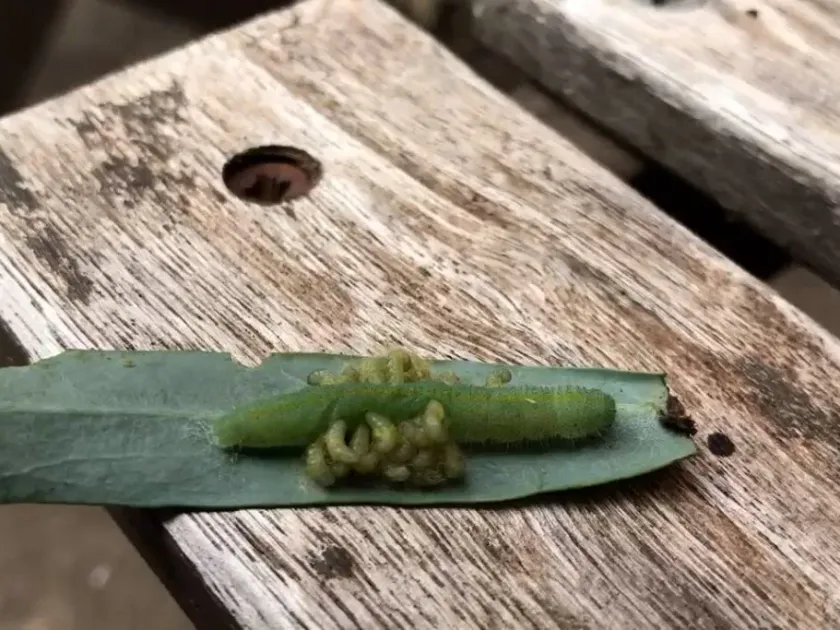
Once the larvae reach maturity, they emerge through the caterpillar's skin to spin individual or mass cocoons. These white or yellowish cocoons are the most visible stage of the parasitoid's life cycle in the field.
What it damages
In agronomy, Apanteles staintoni is not a pest but a beneficial biological control agent. It parasitizes various moth and butterfly caterpillars that would otherwise cause significant damage to crops.
By infecting host caterpillars, these wasps prevent them from consuming leaves, stems, or fruits. As the internal parasitism progresses, the host stops feeding and eventually dies, effectively halting further damage to the crop.
Although Apanteles wasps are not harmful to plants, their presence in high numbers is usually correlated with a high density of host pests. Farmers should view them as partners in integrated pest management.
The impact of this wasp on pest populations can be substantial, as a single wasp can parasitize multiple caterpillars, and one caterpillar can host dozens of wasp larvae.
Leveraging the natural presence of Apanteles reduces the reliance on synthetic chemical pesticides, promoting more sustainable and environmentally friendly agricultural practices.
When it appears
The activity of Apanteles is tightly synchronized with the presence of its host caterpillars throughout the growing season. The first generation emerges in early spring when the first pest larvae appear.
Depending on local climate conditions and host availability, these wasps can complete several generations per season, providing ongoing suppression of pest populations during the summer months.
Mid-summer often marks the period of highest activity, corresponding with the peak growth stages of major lepidopteran pests in vegetable and field crops.
As the weather cools in autumn, the wasps enter a state of dormancy. They spend the winter inside their cocoons, hidden within plant debris, soil, or sheltered crevices until the following spring.
Environmental factors like temperature and humidity play a significant role in their success, with stable conditions helping the population recover and thrive year after year.
Signs of infestation
A key sign of Apanteles activity is finding caterpillars that appear listless or lethargic, as they are no longer able to feed due to the internal infection.
Observers often see clusters of tiny, white, silk-like cocoons either surrounding a dead caterpillar or attached directly to its shriveled remains on the host plant.
In some cases, the skin of the host may show small bumps or swellings, indicating the larval development of the parasite taking place just beneath the surface.
Empty pupal cases of the parasitoids, found scattered on leaves or near host remains, confirm that a new generation of wasps has successfully completed its development and emerged.
A high density of "mummified" or parasitized host larvae in a field is a clear indicator that the Apanteles population is actively suppressing the local pest outbreak.
Control measures
To support Apanteles populations, growers should avoid using broad-spectrum insecticides that kill beneficial insects alongside pests. Targeted applications are always preferred.
Planting nectar-rich flower borders around crop fields provides essential food sources for adult wasps, increasing their lifespan and egg-laying efficiency.
Reducing soil disturbance, such as minimizing deep tilling, helps protect the cocoons overwintering in the surface debris, ensuring higher emergence rates in the spring.
Integrated Pest Management (IPM) practices should prioritize the use of biorational pesticides that are selective and safe for natural enemies, preserving the delicate balance of the farm ecosystem.
Regular field scouting and monitoring are essential to assess the level of natural parasitism before deciding if additional intervention is required, ensuring that biological control is given every opportunity to work.
Taxonomy
- Latin name
- Apanteles staintoni
- Order
- Hymenoptera
- Family
- Braconidae
- EPPO code
- APANST
Discussion
No discussions yet — be the first.