
Apanteles
Apanteles spurius
Description
How to identify
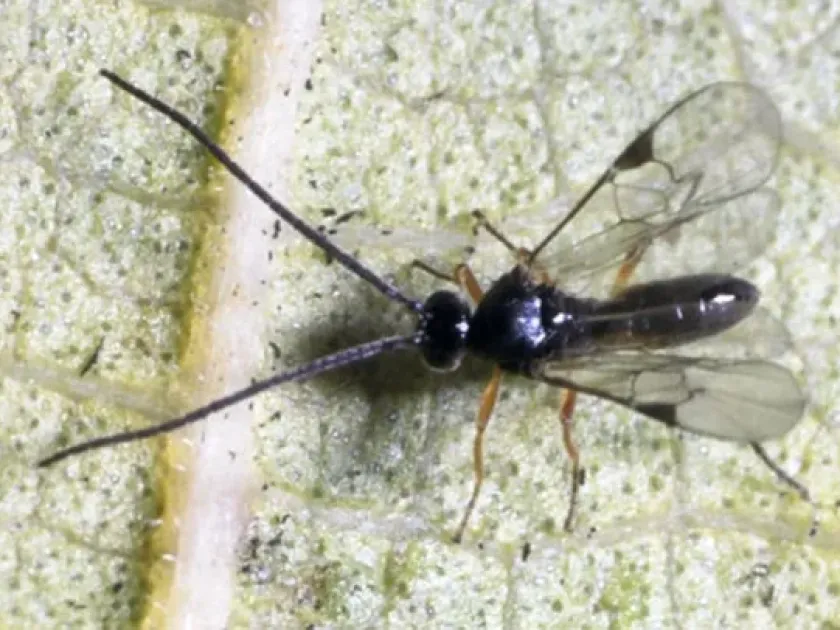
Apanteles (Apanteles spurius) belongs to the order Hymenoptera and the family Braconidae. These are tiny wasps that serve as highly effective natural enemies of many agricultural pests.
Adult specimens are typically dark-colored with transparent wings and measure only a few millimeters in length, making them difficult to spot without close observation.
In agronomy, Apanteles is classified as a parasitoid because its larvae complete their development inside or on the surface of host caterpillars, ultimately killing the host.
The female wasp searches for specific hosts to lay eggs, demonstrating a remarkable level of specialization in choosing prey for their offspring.
They are essential components of sustainable agriculture, as they provide natural regulation of pest populations without the need for synthetic chemicals.
What it damages
Apanteles does not cause any damage to crops; on the contrary, it provides a vital service by destroying caterpillars that feed on leaves, stems, and fruits.
They target various species of harmful Lepidoptera, including loopers, cabbage worms, and leafrollers, which are major threats to vegetable and fruit farming.
By consuming the host from within, these parasitoids effectively stop the feeding activity of the caterpillar before it can cause significant damage to the plant.
The presence of these wasps contributes to higher yields and reduced crop losses by keeping pest populations well below economic injury levels.
Protecting these wasps is a key aspect of sustainable farming, as their removal often leads to a rapid increase in the number of primary crop pests.
When it appears
The active period for adult Apanteles generally spans from spring to late autumn, aligning with the life cycles of their host caterpillars.
They can produce multiple generations per season, allowing them to rapidly increase their population in response to spikes in pest activity.
Wintering occurs primarily in the pupal stage, often protected by silk cocoons located within plant debris or in the upper layers of the soil.
Population densities tend to peak in mid-summer, providing natural control during the most critical growth stages of many vegetable and orchard crops.
Environmental conditions, such as temperature and humidity, significantly influence the speed of development and the overall success of each generation.
Signs of infestation
The most distinctive sign of Apanteles activity is the presence of numerous small, creamy or white cocoons found clustered on or near the body of a dying caterpillar.
Affected caterpillars become lethargic, stop feeding almost entirely, and eventually perish, signaling that the biological control agent has successfully fulfilled its role.
Spotting these cocoons on crops serves as a positive indicator that natural biocontrol is active and may reduce the necessity for insecticide applications.
After the adult wasps emerge, the empty cocoons may remain, which is another sign that a successful generation of beneficial insects has been completed.
Growers should carefully distinguish these cocoons from pest eggs or other structures to ensure that these beneficial allies are not accidentally destroyed.
Control measures
The most effective strategy for managing Apanteles is the adoption of integrated pest management (IPM) practices that prioritize the survival of beneficial insects.
Avoiding the use of broad-spectrum insecticides is crucial, as these chemicals frequently kill natural enemies, leading to secondary outbreaks of pests.
Incorporating flower strips or refuges of nectar-producing plants around the field provides adult wasps with the energy resources they need for longevity and reproduction.
Reduced tillage practices help preserve the overwintering sites, ensuring that populations can re-establish themselves successfully in the following season.
By monitoring for the presence of cocoons, farmers can make informed decisions about whether intervention is truly needed or if biological agents are managing the threat.
Taxonomy
- Latin name
- Apanteles spurius
- Order
- Hymenoptera
- Family
- Braconidae
- EPPO code
- APANSS
Discussion
No discussions yet — be the first.