
Apanteles
Apanteles solitarius
Description
How to identify
Apanteles solitarius is a species of parasitic wasp belonging to the family Braconidae, a significant group in the order Hymenoptera.
These wasps are quite small, typically measuring only a few millimeters in length, making them easy to overlook in the field.
The adults are characterized by a slender body, dark coloration, and intricate wing venation, typical of many braconid wasps.
They are specialized parasitoids, meaning their life cycle is intimately linked to the survival of specific caterpillar species.
Unlike many other insects, they are highly specialized in their host selection, which makes them effective tools for natural control.
What it damages
Contrary to the status of a pest, Apanteles solitarius is actually a beneficial insect that contributes to crop protection.
It does not feed on plant foliage, fruits, or roots, meaning it does not cause any direct damage to agricultural production.
Instead, it helps to suppress populations of various lepidopteran caterpillars that are recognized as serious agricultural pests.
By parasitizing larvae of moths and other pests, the wasp significantly reduces their density and the damage they cause to crops.
Their role in maintaining ecosystem services within farming systems is invaluable, especially in reduced-pesticide farming models.
When it appears
The seasonal activity of adult wasps is highly synchronized with the emergence and growth stages of their host caterpillars.
During the spring and summer months, adult females actively search for suitable hosts to deposit their eggs inside.
Multiple generations can occur throughout the growing season, allowing for continuous suppression of host populations.
The winter period is usually spent in a dormant state, either as larvae inside the host or as pupae within protective cocoons.
Climate factors such as temperature and humidity levels play a critical role in determining the efficacy of each generation.
Signs of infestation
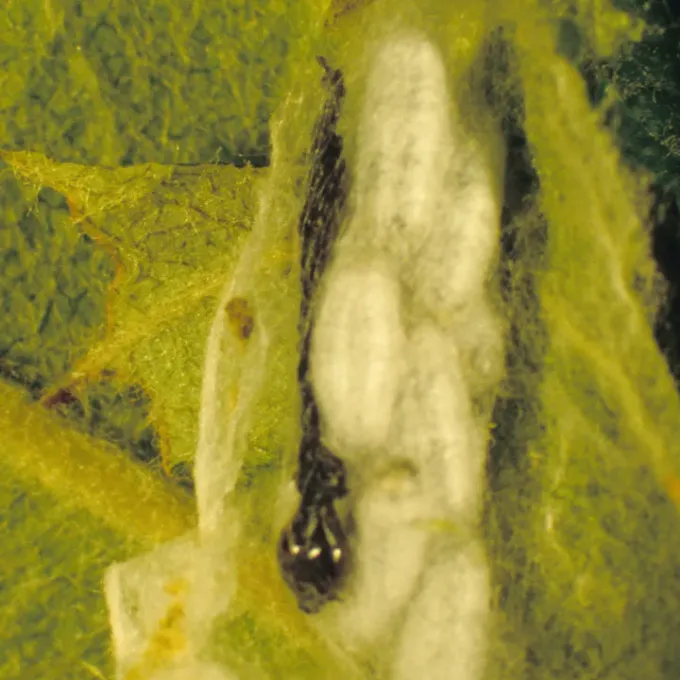
The most visible sign of Apanteles solitarius activity is the presence of small, white or yellow cocoons found near host remains.
When the host caterpillar stops feeding and shows signs of lethargy, it is often a clear indication of successful parasitism.
After the parasitic larvae finish developing inside the caterpillar, they emerge through the skin to spin their cocoons on the outside.
Field scouting often reveals groups of these small cocoons attached to leaves or stems in areas with high caterpillar activity.
The reduction in overall pest damage in treated areas serves as a functional measure of the activity of these natural enemies.
Control measures
Protecting Apanteles solitarius populations requires a transition away from broad-spectrum insecticides that kill beneficials.
Farmers should prioritize the use of selective and biological control agents to ensure the survival of parasitoid wasps.
Establishing floral strips with nectar-producing plants provides essential nutrition for adult wasps, which in turn boosts their parasitism rates.
Integrated Pest Management (IPM) practices should be employed to balance the need for pest control with the conservation of natural predators.
Maintaining non-crop areas or field margins helps sustain populations of these insects throughout the off-season, ensuring long-term control.
Taxonomy
- Latin name
- Apanteles solitarius
- Order
- Hymenoptera
- Family
- Braconidae
- EPPO code
- APANSO
Discussion
No discussions yet — be the first.