
Apanteles
Apanteles popularis
Description
How to identify
Apanteles popularis is a species of parasitic wasp belonging to the family Braconidae. It is not an agricultural pest but rather a highly beneficial parasitoid that naturally manages populations of various harmful insects.
These wasps are small, typically measuring only a few millimeters in length. Their dark, slender bodies are specialized for the delicate task of identifying and parasitizing specific caterpillar hosts found on various crops.
Taxonomically, they are endoparasitoids, meaning their larvae develop entirely within the host's body. This specialized life strategy makes them excellent candidates for integrated pest management programs.
It is crucial for agronomists to distinguish Apanteles from pests, as they are essential allies in maintaining ecological balance within fields and preventing large-scale outbreaks of crop-destroying caterpillars.
The morphological characteristics of the adult wasps include distinct wing venation and sensory organs, which facilitate their search for suitable hosts across agricultural landscapes.
What it damages
Apanteles popularis does not cause any damage to plants, as it does not consume plant tissues. Instead, it contributes to the health of the crop by significantly reducing the population density of caterpillars.
By parasitizing host larvae, these wasps interrupt the feeding process of harmful caterpillars. Infected larvae consume significantly less plant matter, thus mitigating the direct damage to foliage and fruit.
The presence of this parasitoid is a sign of a functioning biological control system. Its role in the agro-ecosystem is to suppress the growth of pest populations, which helps maintain high yield quality and reduces dependence on synthetic insecticides.
Farmers who observe Apanteles activity should view it as a positive indication of natural pest suppression rather than a threat to their cultivation efforts.
Consequently, the agricultural impact of Apanteles is strictly positive, serving as a natural biological control agent that protects various horticultural and field crops from lepidopteran pests.
When it appears
The lifecycle of Apanteles popularis is closely synchronized with the phenology of its caterpillar hosts. Their activity typically spans from late spring through the harvest season, depending on regional climatic conditions.
The female wasp uses its ovipositor to inject eggs directly into the body of the host. Upon hatching, the wasp larvae feed on the host's internal fluids, gradually consuming it from the inside out.
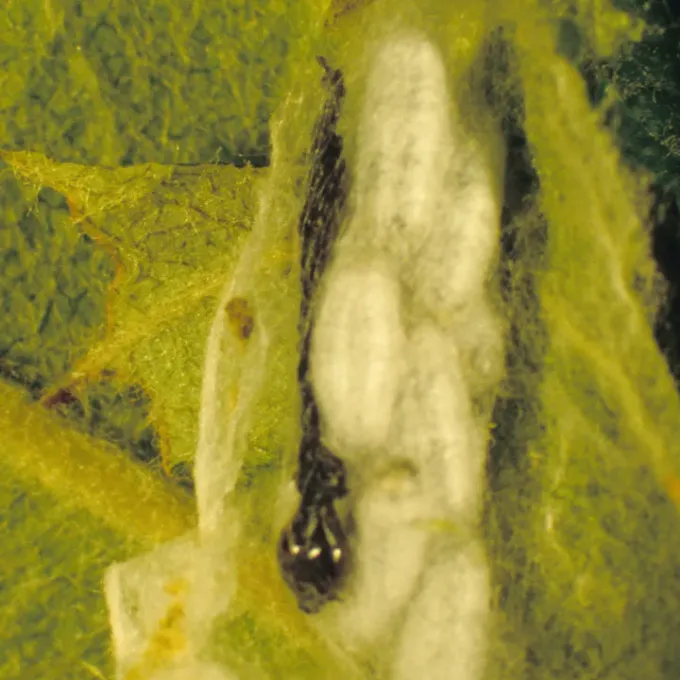
Once the larvae reach maturity, they emerge from the host to pupate, forming clusters of small, white or yellow cocoons often attached to the remnants of the host or nearby vegetation.
Depending on environmental conditions and the availability of hosts, several generations can be completed in a single growing season, allowing for a rapid population increase in response to pest outbreaks.
Overwintering occurs in the pupal stage within the cocoons, which are often found in sheltered locations, allowing the population to survive winter conditions and re-emerge in the following spring.
Signs of infestation
The most prominent sign of Apanteles activity is the discovery of parasitized caterpillars that appear weak, inactive, or dead, surrounded by clusters of silk cocoons.
When scouting fields, agronomists should look for these white or yellow cocoons attached to plants or host bodies. Finding these structures is a clear indicator that natural biological control is actively suppressing pest populations.
Parasitized larvae demonstrate reduced feeding behavior, which is a key diagnostic feature for growers evaluating the need for intervention. This natural reduction in feeding activity can significantly lessen the need for chemical treatments.
It is important to monitor for the presence of hyperparasitoids, as they may occasionally attack Apanteles cocoons, potentially diminishing the efficiency of the primary parasitoid.
Regular visual inspections of the crop canopy help agronomists determine the rate of parasitism, which is essential for making informed, sustainable crop management decisions.
Control measures
Management of Apanteles focuses on preservation rather than suppression. They are beneficial insects, and agricultural practices should aim to protect their population.
- Minimize the use of broad-spectrum insecticides that kill beneficial wasps.
- Provide floral resources around field margins to sustain adult wasps.
- Conduct scouting to assess parasitism levels before deciding on chemical applications.
- Avoid tillage practices that could destroy over-wintering pupae in field debris.
Implementing selective, soft pesticides is a core component of sustainable agriculture, as it allows natural enemies like Apanteles to thrive while targeting only specific harmful pests.
By fostering a diverse ecosystem that supports these parasitoids, growers can achieve long-term pest control and improve the overall resilience of their agricultural operations.
Taxonomy
- Latin name
- Apanteles popularis
- Order
- Hymenoptera
- Family
- Braconidae
- EPPO code
- APANPP
Discussion
No discussions yet — be the first.