
Apanteles ocneriae
Apanteles ocneriae
Description
How to identify
Apanteles ocneriae is a species of parasitic wasp belonging to the Braconidae family, known for its role as a natural enemy of the Gypsy moth.
The adult form is a very small, dark-colored wasp that possesses specialized behaviors to locate its host among foliage.
The larvae are endoparasitic, meaning they develop internally within the host caterpillar, effectively feeding on its tissues.
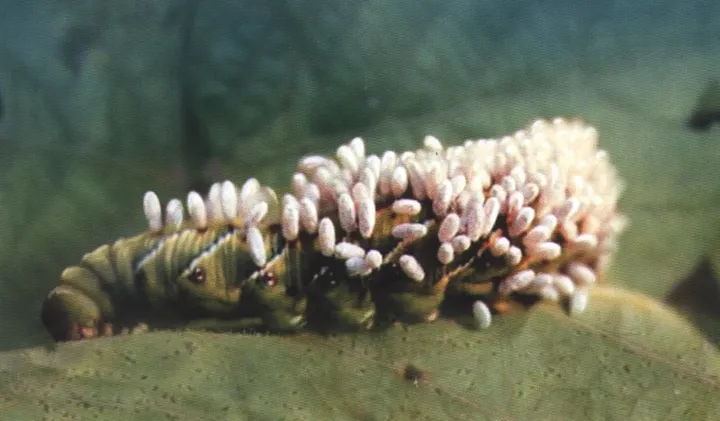
Identification in the field is usually associated with the characteristic appearance of white, silk-like cocoons found in clusters near the remains of the host.
This species is highly specialized, meaning it has evolved specifically to target certain types of caterpillars, making it a key biological control agent.
What it damages
It is important to clarify that Apanteles ocneriae does not damage plants; rather, it protects them by limiting the population of the Gypsy moth.
The Gypsy moth (Lymantria dispar) is a devastating forest pest that causes severe defoliation of various deciduous tree species.
By parasitizing the caterpillars, the wasp halts their development, preventing them from causing further damage to the tree canopy.
The death of the host caterpillar is the end result of the internal feeding process, which directly reduces the impact of the pest outbreak.
Therefore, Apanteles ocneriae acts as a natural defender of forest and garden health, keeping the population of harmful pests under control.
When it appears
The life cycle of this wasp is strictly synchronized with the phenology of its host, the Gypsy moth caterpillar.
Adult wasps emerge in spring when the young caterpillars are in their early larval stages, which is the prime time for infestation.
The development from egg to adult occurs within a few weeks, allowing for multiple generations if host conditions are favorable.
The period of highest activity typically peaks in late spring, matching the development of the Gypsy moth population.
Environmental factors such as ambient temperature and humidity significantly influence the survival rate and efficiency of the wasps during the season.
Signs of infestation
Visual signs of the presence of this wasp include the presence of dead or dying caterpillars on the undersides of leaves.
Clusters of small, white, cylindrical cocoons clustered near the host's body are the most definitive sign of successful parasitism.
A noticeable decrease in the population of caterpillars on a tree that was previously infested suggests the impact of natural enemies.
The sluggish movement of caterpillars followed by their failure to grow indicates that they have been parasitized.
The remains of the host often show evidence of larval exit holes, confirming that the wasp larvae have completed their development.
Control measures
To preserve Apanteles ocneriae, it is essential to minimize the use of broad-spectrum chemical insecticides that can kill beneficial insects.
Promoting a diverse environment helps sustain the population of these wasps throughout the year, even when Gypsy moth numbers are low.
When pest management is necessary, selective biopesticides should be utilized to protect the natural balance between parasites and hosts.
Maintaining healthy tree stands encourages the stability of natural predator and parasite populations, which is the goal of sustainable forestry.
Integrating biological control methods with careful monitoring ensures that the effectiveness of Apanteles ocneriae is maximized in the long term.
Taxonomy
- Latin name
- Apanteles ocneriae
- Order
- Hymenoptera
- Family
- Braconidae
- EPPO code
- APANOC
Discussion
No discussions yet — be the first.