
Apanteles
Apanteles myeloenta
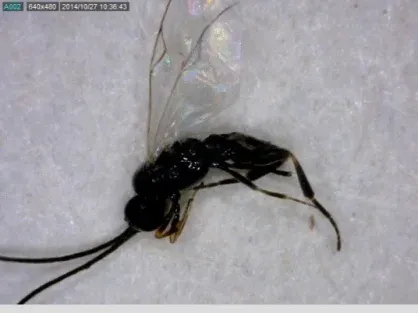
Description
How to identify
Apanteles (Apanteles myeloenta) is a small insect belonging to the order Hymenoptera and the Braconidae family. While some members of this genus are beneficial parasitoids, specific species like this one require careful identification in an agricultural context.
Adults are tiny, dark-colored insects with well-developed wings. Their morphology allows them to be agile and efficient flyers, making them difficult to detect without specialized entomological monitoring equipment.
The life cycle follows a complete metamorphosis, including egg, larval, pupal, and adult stages. The larvae are typically associated with caterpillar hosts, which they use as a growth medium during development.
Accurate identification of this species often requires expert analysis of wing venation patterns and morphological characteristics. Field agronomists should use magnifying tools to observe physical traits of specimens collected from the field.
Understanding the taxonomy of this group is crucial, as misidentifying a beneficial parasitoid as a harmful pest can lead to unnecessary and potentially damaging chemical applications on crops.
What it damages
Damage caused by Apanteles species is primarily related to their interaction with the host organism. When they act as pests, they can compromise the overall health and structural integrity of the crop plants.
These pests often attack the internal tissues of stems and fruits. This activity disrupts the flow of nutrients and water, which ultimately leads to stunted growth and reduced yields in various agricultural commodities.
High infestation levels can trigger secondary infections. Once the plant's tissue is damaged, it becomes vulnerable to various fungal and bacterial pathogens that further degrade crop quality.
The economic impact depends on the crop's developmental stage. Damage during the early growth phase is usually more severe, potentially leading to significant stand loss in the fields.
Agronomic assessment of the damage involves checking for presence of larvae inside plant tissues and monitoring the overall vigor of the crop, especially in identified "hotspots" within the field.
Signs of infestation
Identifying an infestation often starts with noticing subtle visual changes in the crop's appearance. Yellowing leaves and deformed stems are common early indicators of an active pest population.
The presence of entry holes or localized necrotic spots on the plant surface is another critical sign. These marks are often accompanied by residues of the insect's activity, such as excrement or silk-like strands.
Wilting, particularly during the hottest parts of the day, suggests that the internal vascular system of the plant has been compromised by the feeding activity of larvae.
Stunted development of fruits and premature abscission are also common symptoms. If a significant portion of the plant is affected, the plant may fail to reach maturity or produce viable seeds.
- Premature leaf drop
- Evidence of larval boring in stems
- Chlorotic patches on foliage
- Reduced crop vigor and growth rate
- Abnormal fruit development
Control measures
Management of Apanteles requires an Integrated Pest Management (IPM) approach. Prevention is the first line of defense, emphasizing cultural practices that keep the population below the economic threshold.
Cultural control measures include deep plowing after harvest to destroy overwintering sites. Crop rotation and maintaining field sanitation by removing weeds are essential to eliminate alternative hosts.
Chemical control should be limited to instances where pest density exceeds established thresholds. Using systemic insecticides can provide effective protection by targeting the larvae within the plant tissues.
Biological control methods, such as the use of selective biopesticides or enhancing local natural enemy populations, provide sustainable ways to manage the pest without disrupting the ecological balance.
Constant monitoring using pheromone traps and visual inspections allows for the precise timing of interventions. This minimizes costs while maximizing the success rate of the control strategy.
Taxonomy
- Latin name
- Apanteles myeloenta
- Order
- Hymenoptera
- Family
- Braconidae
- EPPO code
- APANMY
Discussion
No discussions yet — be the first.